Waiting for the Electoral Law- Comparing The 1960 Law To Its Opposite

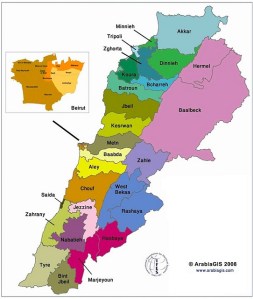
Electoral map of Lebanon according to the modified 1960 law

Electoral map of Lebanon according to the modified 1960 law

It seems we’re heading to the elections with the 1960 modified electoral law of Doha. Most of the politicians blame the law for the problems Lebanon is facing. But few are the ones than understand why the 1960 electoral law is an unrepresentative law that promotes sectarianism, vote-buying and neo-feudalism. I’m going to compare our current law – Small Districts and Majoritarian Representation – with its complete opposite, a virtual law promoting Lebanon as one single district under proportional representation, and perhaps, things might get a bit clearer.

Vote Buying. Take the example of the Metn district. The competition is always very close in that district, and the margin can be as narrow as 194 votes like in 2009. Which means that if you buy 98 votes, you can win the elections in the district by one vote. (more…)
Privacy, Protection, And Politicians

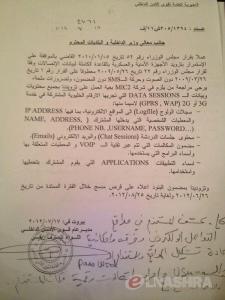
The Information Branch's request

The Information Branch’s request (Update: It shows on the document that it’s from summer, so apparently it’s an early request before the assassination). Courtesy of Elnashra

To hand over the telecom data to the ISF or not to hand over the telecom data to the ISF, that is the question.
Every once in a while, the same issue surfaces again. It’s a normal dilemma any country can have. It’s a choice one makes: The right to privacy or the right to protection. Handing the data can be useful to strengthen Lebanon’s security, but it’s a serious threat to our privacy and freedom.


Sehnaoui’s Call
(more…)

A Closer Look At Lebanon’s Dissociation Policy And Riad El Solh’s Ministerial Statement

Riad El Solh

Riad El Solh

A couple of days ago, I came across El Solh’s ministerial statement of the 7th of November 1943. His speech, considered to be more or less a written sample of the National Pact, doesn’t look as if it comes from the 1940s. You can see it [here] (I couldn’t find an english version).

It tackles contemporary issues we are facing today. (more…)

Football and Politics (Or How The Lebanese React The Same Everywhere)

Hassan is raised in celebration of Lebanon’s win over Iran. (Image Courtesy of the Daily Star).

If we’re to believe Fifa.com, Lebanon faces an uphill battle in Qatar on 14 November in their next outing, with victory potentially lift them into the section’s top two. I think everyone remembers the day we made it to the fourth round for the first time in our history last year. I also see that it’s noteworthy to highlight how the Lebanese react to Football in Lebanon and how – in a way or another – we react to politics the same way we react to sports.

Opportunist Media. Felix Baumgartner, the Fassouh Building and the Ashrafieh Explosion are only examples of times when the Lebanese Television Channels can boost their popularity. Last year they found in the Korean-Lebanese Match (That ended 2-1 in the favor of Lebanon) the perfect event to show that they support the National team. The “Mabrouk Lebnen” 5 min-advertisement for the following few days is a perfect investment of the human market that had just emerged: Lebanese National team fans. (more…)

Why Wouldn’t Jumblatt Leave The Coalition?

Saad Hariri on Walid Jumblatt- Twitter

After the Ashrafieh explosion, one of the loudest accusations to the Syrian Regime came from Walid Jumblatt. Everyone expected the Jumblatti ministers to resign from the government , but until this very moment, the PSP didn’t leave the governmental coalition yet, and Hariri made an issue out of it on twitter. The moment Jumblatt leaves, Mikati will have to resign. The seven PSP MPs are enough to make a no-confidence vote successful. Walid Jumblatt is afraid of two things: a governmental vacuum, or an alternate efficient government. (more…)

What The Events Following Wissam Al-Hassan’s Assassination Tell Us

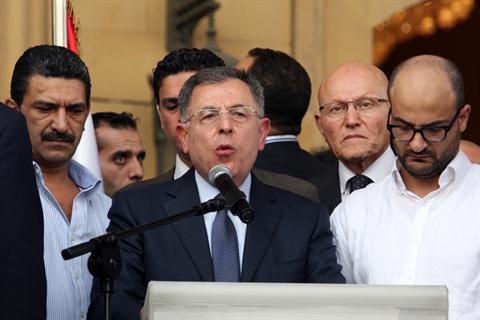
Siniora giving his speech in Wissam Al-Hassan’s funeral, Nadim Koteich is on his left.

Nadim Koteich calls the demonstrators to storm the Grand Serail.  Few minutes later, on the ground, Nouhad El Machnouk says that the protesters won’t stop  attacking the Serail until the government falls. Half an hour later, Hariri tells his supporters to withdraw from the streets. Geagea and Gemayel quickly imitate Hariri and do the same. Fifteen minutes later, Elias Atallah says that the supporters won’t leave the streets. Siniora initially stays silent then calls for calamity. The protesters confused, don’t leave but rather reorganize themselves peacefully. One day later, Mouin Al-Merehbe incite the protesters in Tripoli to start a civil disobedience. Meanwhile, his colleagues in the FM refuse to call for civil disobedience. (more…)

How Three Words Destroyed a Political Comeback

Protesters Trying To Storm The Grand Serail

“Ya Shabeib, Ya Sabaya, Yalla Yalla A’al Saraya!! Yalla Yalla Al Saraya!!”

It’s amazing how few seconds can change a nation. The assassination of the General happened within seconds, but its repercussions will shape Lebanon’s political future. It’s amazing how few seconds can change a nation. The calls of Nadim Koteich happened within seconds, and their repercussions might destroy every possible chance M14 miraculously had because of what happened in the past few days.

Siniora’s Silence

Nadim Koteich made his calls while Siniora was next to him. So why didn’t Siniora stop the crowds immediately? why didn’t he ask for them to halt their movement? Because it would have been too awkward to stop Koteich who was enthusiastically singing his words while Siniora’s speech was itself inciting and taunting against Mikati. What could be the worst result after all? Deep down, he knew that if the couple of thousands succeeded to storm the Serail, every political detail would have changed in this country. (more…)