Lebanese Politics

Legislation of Necessity and a Christian Boycott

How the parliament looked like before the war. Found on the internet.

How the parliament looked like before the war. Found on the internet.

The Chamber meeting to elect the President of the Republic shall be considered an electoral body and not a legislative assembly. It must proceed immediately, without discussion of any other act, to elect the Head of the State.

Lebanon, meet article 75 of the Lebanese Constitution. Article 75 of the Lebanese constitution, meet Lebanon. For this week, the parliament of Lebanon is answering the call of its speaker and is meeting – in the middle of a presidential vacancy – in order to legislate.

It is not the first time something like that happens. On the 5th of November 2014, the Lebanese parliament legislated and extended its own term. As if meeting to legislate wasn’t by itself contradictory to article 75 of the constitution (You really don’t have to be an expert to see that), the constitutional council considered that the extension law was unconstitutional. In other words, it’s like telling a little kid that he can’t eat pizza and that he can’t eat in his room, and the little kid proceeds to eat a pizza, in his room. And since the kid wasn’t grounded, he plans on eating the whole kitchen this week (38 draft laws are listed on the agenda of the Thursday and Friday sessions).

What is a priority?

For the past year, the Lebanese political system became a vicious circle. Most of the parties in power (except the FPM) are asking for the election of a president before early parliamentary elections. The FPM (as well as the protesters) have asked for early parliamentary elections before the presidential elections. For the FPM, it’s because they don’t have the majority necessary to elect Aoun, and for the Hirak (the Lebanese protests movement), it’s because the Lebanese parliament is a de facto unconstitutional non-elected one that doesn’t have the legitimacy to elect a president who will rule for 6 years. Now, once this debate is solved, and that all of Lebanon’s people and politicians agree on the identity of the priority (good luck), another problem arises: All of Lebanon’s politicians say that the current electoral law is bad, yet cannot agree on an alternative one. To make things even worse, internal struggles between different parties in the government have left Lebanon drowning in a garbage crisis since July. Even after four months of protests and outrage, there is still no solution in sight as the bickering in the cabinet continues.

To sum things up, Lebanon’s current political crisis is caused by the disagreement of the politicians on the timing of the parliamentary elections, the timing of the presidential elections, the electoral law, the name of the president, and on the way things work within the cabinet. That was until last week. This week, things become a bit more complicated: There’s a disagreement on a parliamentary session too. Is it a priority? What does the word “priority” mean in Lebanon anyway?

Muslim vs Christian

For the first time since the ice age, the biggest three Christian parties in the Lebanese parliament are sticking together. The Lebanese Forces, the Kataeb and the Free Patriotic Movement say that what Berri calls “legislation of necessity” isn’t the priority. The Christian parties consider the election of the president to be the first and foremost priority, and if the parliament should convene, it’s in order to elect a president (Ironically, the FPM are the ones denying quorum in the presidential elections). It’s for obvious reasons: The Christian parties want to keep the presidential elections alive, especially that the main candidates are current/former leaders of the FPM, LF and Kataeb. They consider that legislating in the absence of the president is considered to be unconstitutional, although all of those parties accepted ( = They still consider their MPs to be MPs) the results of a previous legislation in the absence of the president (the extension law of November 5, 2014)  even if they boycotted the session. The FPM and the LF have said that they would participate in case the electoral law would be on the agenda. This more friendly approach than the Kataeb’s absolute boycott stance is probably due to the fact that the presidential front-runners of M8 and M14 are still Aoun and Geagea.

But forget about being friendly right now. Once the main three Christian parties in parliament – they account to approximately the two thirds of the Christian seats –  boycott the session, a much bigger problem will arise: The Lebanese Muslim parties – planning on participating in the legislative sessions – will be (more or less) legislating in the absence of “Christian legitimacy”, which would permit the Christian parties to use March 8’s weapon of 2006: A vague constitutional principle from the preamble stipulating that There shall be no constitutional legitimacy for any authority which contradicts the ‘pact of mutual existence. Hezbollah used it to combat the Siniora government (whose Shia ministers all resigned) almost a decade ago, and almost anyone who claims to represent a sect can use it to veto anything. Another thing that the Christians parties and their electorate fear the most about legislating in the absence of a president is the idea of passing laws without having the highest Christian civil servant in power. True, the president doesn’t have a lot of say in the post-Taef era, but he can still challenge laws via the constitutional council or maneuver via his cabinet share (or via other ways). For the Christians parties (and electorate), passing laws without the signature of the Christian president is very scary.

In other words, all the Christian parties – in a historic moment – are joining up together to play the Christian sectarian card against their Muslim allies. That is a huge precedent in the modern history of Lebanon. And what is even more dangerous is that their Muslim allies seem not to care about this move, which might eventually lead in the future to a Christian-Muslim clash transcending the M8-M14 rivalry. You know, because Lebanon needs even more problems.

Revenge is a dish best served cold

Among the 38 draft laws on the table this week is a proposal that is supposed to lure the Christian parties and push them to take part in the legislative sessions: A draft law that would grant citizenship to the descendants of Lebanese expatriates. For ages, that was one of the main requests of the Christian parties (they believe that most of the expatriates are Christians which would strengthen their position ahead of parliamentary elections). So why aren’t the Christian parties participating?

For the LF and the Kataeb, boycotting the legislative session means that they’re pissing off the leadership of the March 8 alliance and that they too – and not only the FPM – are ready to stand up for Christian rights (= the priority of electing a Christian president before legislating in this case).

For the FPM, their boycott of the session is probably a mini-retaliation on Berri for letting the extension of Kahwagi in the army command pass and for not standing with them on the Chamel Roukoz issue. Revenge is a dish best served cold.

So as Lebanon’s Christian parties boycott a legislative session and as the Muslim parties say that the boycott doesn’t make the session any less legitimate, here’s a little lovely reminder: We still don’t have a president (and if we had one, we wouldn’t be discussing the pros and cons of legislating in the absence of a president).

535 days sincwe the 25th of May. 371 days since the 5th of November. 81 days since the 22nd of August.

Kahwagi, WikiLeaks, and the Ongoing Presidential Race

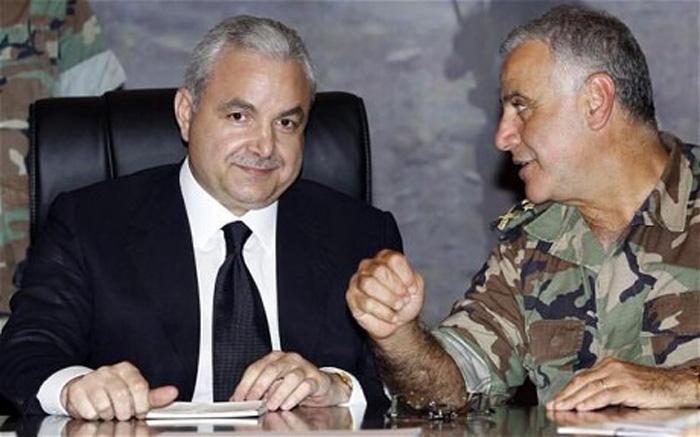
Former defense minister Elias Murr with Kahwagi


This is the 10th post in a series of monthly posts covering (forgotten/ignored) WikiLeaks cables about Lebanon. 

With all the events currently happening in Lebanon such as the trash crisis, the protests, and the intergovernmental chaos,  we tend to forget that we don’t have a president. Which is why, and in honor to the seventeenth month of presidential vacancy, this month’s WikiLeaks cables are about Lebanon’s (favorite) consensus candidate, the current commander of the Lebanese army Jean Kahwagi. He is rumored (1) to be close to Hezbollah, (2) to have a rivalry with Aoun (since they’re arguably the strongest two presidential candidates), and (3) to have the support of M14, probably because of the rivalry with Aoun (proof: The recent extension of Kahwagi’s term that happened without Aoun’s green light).

I picked four interesting cables for this post. The first one is about Kahwagi’s appointment as commander of the army in 2008 (why Aoun didn’t object, why Jumblatt didn’t veto him). The second one is about Kahwagi telling DM Murr before the elections, in 2009, that there would be a resignation en masse in the army if Murr wouldn’t be appointed as minister after the elections. The third and fourth cables are meetings with Hariri before and after the 2009 elections: Before the 2009 elections, Hariri said that Kahwagi “was too weak regarding Hizballah”. After the elections, Hariri said that Kahwagi “would never be fit to be President” (how awesome will this quote be in case Hariri would one day rule as prime minister under Kahwagi ? 😛 )

(of course, everything is according to WikiLeaks)

Voila. Enjoy the cables.

Cable 1:

LEBANON: DEFENSE MINISTER MURR DISCUSSES URGENCY OF NEEDS FOR LEBANESE ARMED FORCES
2008 September 4, 15:49 (Thursday)
08BEIRUT1302_a

12. (C) Murr reported that the cabinet would meet on Friday, August 29 to select the next LAF Commander. (Note: Cabinet approved Jean Kahwagi, whom Murr supported, on August 29. End note.) This is the first time that Murr has the occasion to have so much input concerning officer slating throughout the Army. Murr intends to present the candidates for LAF Commander to the cabinet based solely on their military qualifications and nothing to do with their political affiliations. Murr said he would present ten names to the Cabinet. Murr still believes that BG Jean Kahwagi is the best candidate for the job as he has been trained in the United States under the International Military Education and Training Program as well as in Italy and Germany.

13. (C) Murr said he will have to closely manage Kahwagi during the first year because Kahwagi does not know anything about politics. In fact, Murr believes there will be problems changing his image among some people. “Sometimes you have to use visual flight rules, sometimes you have to follow the instruments,” quipped Murr, a reference to both general and technical mentoring that will be required on the political fronts. (Note: Murr is very comfortable with Kahwagi on both the technical and political levels when it comes to USG programs. “He is hated by all political sides, but Aoun cannot veto him,” said Murr. Kahwagi’s battalion was nearly erased by a Syrian Special Forces battalion that attacked then-President Aoun in the Baabda Presidential Palace in 1989. Kahwagi lost 300 men in this battle while the Syrian Battalion suffered 750 killed. Aoun and his family safely escaped this dangerous situation because of Kahwagi’s efforts. End Note.)

14. (C) Murr assessed that the opposition to Kahwagi by Progressive Socialist Party Leader Walid Jumblatt, a March 14 stalwart, is part of Jumblatt’s initiative to achieve some level of rapprochment with Hizballah. Murr said that while negotiations regarding the LAF commander were ongoing, Parliament Speaker Nabih Berri, a Shia ally of Hizballah, told Murr “You are going to nominate someone that is anti-Hizballah, so I am going to be with you.” In the cabinet vote on Kawhagi, Berri’s and Hizballah’s deputies expressed no reservations and joined the consensus approving him for the position.

(link for the full cable on WikiLeaks)

Cable 2:

LEBANON: DDEFMIN MURR ON FOUR GENERALS, MARCH 14
2009 April 30, 16:57 (Thursday)
09BEIRUT496_a
CONFIDENTIAL
CONFIDENTIAL

17. (C) Murr also expressed his intention to stay on as Minister of Defense in the new cabinet, “if” the majority, whichever side that may be, agreed. (Note: Although he was not explicit, he intimated that President Sleiman was on board with this plan. End note.) Murr expected, however, that Aoun would try to veto his selection. Murr told the Ambassador that General Kahwagi had paid him a visit because he had worried that Murr may not accept the position. Kahwagi told Murr that soldiers, including Kahwagi and the LAF Chief of Intelligence (G-2 General Edmond Fadel), would leave en masse if Murr were replaced.

(Link for the full cable on WikiLeaks)

Cable 3:

LEBANON: HARIRI ON MARCH 14 ELECTION PREPARATIONS, STL
2009 February 17, 17:30 (Tuesday)
09BEIRUT186_a
CONFIDENTIAL
CONFIDENTIAL


7. (C) Confirming his opposition to a post-election national unity government, Hariri said he would not be held accountable for actions taken by “the other side.” Assuming March 14 victory in the elections, Hariri said March 8 would be welcome in the new government, but would not receive a blocking third of cabinet portfolios. (Note: In a February 16 speech to commemorate the anniversary of the killing of Hizballah figure Imad Mugniyeh, Hizballah SYG Hassan Nasrallah offered March 14 a veto share in a future March 8 majority government. End note.)

8. (C) On potential U.S.-Syria engagement, Hariri said he did not oppose engagement as long as the interests of Lebanon were protected. However, he opined that the U.S. would learn quickly for itself that the Syrians were “a bunch of liars.” Hariri also expressed concern regarding LAF Commander Jean Kahwagi who, according to Hariri, was “too weak regarding Hizballah.” He asked the USG to “put (Kahwagi) on the spot” during the general’s upcoming visit to the United States.

(link for the full cable on Wikileaks)

Cable 4:

LEBANON: HARIRI PREPARED TO BECOME PRIME MINISTER BY JUNE 29; MEETS NASRALLAH
2009 June 26, 15:38 (Friday)
09BEIRUT715_a
CONFIDENTIAL
CONFIDENTIAL

1. (C) Presumptive PM-designate Saad Hariri confirmed to the Ambassador June 26 that he had met with Hizballah Secretary General Hassan Nasrallah the previous day. Nasrallah did not request any “guarantees” from the new government, and Hariri did not offer any, Hariri said. Although mandatory bloc consultations to name the new Prime Minister are still ongoing, Hariri said he was prepared to begin his own consultations as the Prime Minister-designate by June 29 and was confident that cabinet formation would not be a protracted process. He was not certain whether opposition Christian leader Michel Aoun would participate in the government, asserting that Aoun “does not know how to be happy.” Without Aoun’s participation, Hariri believed a cabinet of fewer than 30 seats could be a possibility. Separately, Minister of Interior Ziad Baroud was critical of Hariri’s management of his majority so far, and said he would decline to become a minister in the new cabinet if Aoun boycotted, due to concern that a non-participatory model would soon lead to public disorder. Hariri said he preferred both Lebanese Armed Forces Commander Jean Kahwagi and G-2 Brigadier General Edmond Fadel remain in their positions, but he was prepared to take a hard line with them. He advised the United States to push Kahwagi and Fadel a “little more.”

8. (C) Hariri characterized his relationship with President Sleiman as “excellent.” He said the “chemistry” between them was good, despite not agreeing on every issue. He advised the U.S. to encourage and “pull the ears” of LAF Commander Jean Kahwagi and G-2 Brigadier General Edmond Fadel. He reported that he had not met with Kahwagi since the elections, but had met Fadel. He claimed to have told Fadel that he needed “to work more and to shape up,” reminding Fadel (as he had with Nasrallah) that he was “not Fouad Siniora.” Specifically, he admonished Fadel for not forming a Special Security Directorate under the LAF G-2 under pressure or fear from Hizballah. Hariri affirmed that the creation of the directorate would occur under his premiership.

BEIRUT 00000715 003 OF 003

9. (C) On Kahwagi, Hariri postulated that Kahwagi’s alleged moves closer towards the March 8 opposition prior to the election may not have been genuine, but rather wrongly gaming the outcome of the June 7 elections. He believed that Kahwagi should remain as LAF Commander, but opined that Kahwagi’s relationship with Sleiman was “not very good.” Kahwagi, he said, would “never be fit to be President” but is thinking that way.

(Link to the full cable on WikiLeaks)

Chamel Roukoz and a Struggling Lebanese Government

Chamel Roukoz. the newcomer to Lebanon's crowded political arena

Chamel Roukoz, the latest newcomer to Lebanon’s already crowded political arena

This is the 14th post in a series of monthly posts covering the presidential elections. This post is about the months of August, September and October 2015.

If I haven’t written any monthly analysis post since July 2015, it’s for a reason: In the summer of 2015, Lebanese citizens decided to protest and ask for their rights. The parliament was unconstitutional, parliamentary elections had been cancelled twice, presidential elections had been postponed for lack of quorum for the past year, and the government was an epic failure. Lebanon was arguably facing one of the biggest refugees crisis since World War II, and as if the electricity and water shortages and the corruption weren’t enough, a new garbage crisis had become unbearable. And what was the cabinet fighting (and in a way, still fighting) about? If Michel Aoun’s son-in-law was going to become commander of the army or not. BECAUSE PRIORITIES. There was nothing to analyze there. September 2015 was almost the same, with the government not responding to the basic protest demands (such as an environmentally friendly trash solution) being the extra cherry on the top.

But this month was (politically speaking) awesome. Forget for a moment that there is a protest movement in Beirut today. Sit back and relax. It’s time to enjoy the complexity of Lebanon’s politics.

Ending the war for Chamel Roukoz

Perhaps the most important events these past few weeks were the ones related to Michel Aoun’s sons-in-law, Chamel Roukoz – the commander of the Lebanese Army’s special forces – and Gebran Bassil. For Roukoz, the matter might seem at first a bit complicated, but it’s actually quite simple: Aoun wanted to appoint Roukoz as commander of the army when LAF commander Kahwagi’s term was about to expire. At some point, there were rumors that Aoun would be ready to give up his presidential candidacy and discuss a consensual presidential candidate in case Roukoz would have been made as commander. The fact that Kahwagi was – and still is – the strongest consensual candidate out there (Lebanon’s last two presidents have been army commanders) only made the possibility of a deal more likely: (1) Kahwagi becomes president, (2) a vacancy happens in the army command, (3) Roukoz becomes commander of the army. Even some rival parties opposing Aoun’s FPM indirectly hinted about the possibility of a Roukoz-Kahwagi deal. Yet today, that very deal is history. At the time, the FPM felt that it had the upper hand: It could have kept blocking the presidential elections forever, and at the same time, the government wouldn’t have dared to keep Kahwagi for another year without consensus on the extension of his term, especially since Aoun had been playing the sectarian card and calling for “Christian rights” for some time now. At least that’s what the Aounists thought.

Yet motivated by an indirect green light by Berri and an absence of veto from Hezbollah (probably in order to avoid an unnecessary – especially in the current circumstances – political clash with an army command the party of God has no problem with), M14 responded to Aoun’s maneuvering by extending Kahwagi’s term. It was a clear message to Aoun that M14 weren’t going to succumb to his blackmail in the cabinet, that the FPM would only be awarded the army command in case they halt their presidential quest, and that the FPM would not see Roukoz appointed as commander without something else in exchange. M14 was trying to force the deal on Aoun: By then, the only way through for Roukoz was by vacating the army command and the fastest way to vacate the army command was by electing the commander president.

The FPM saw it as a declaration of war and escalated their discourse while calling for protests in the name of Christian rights (For the FPM, that meant electing Aoun as president and appointing his son-in-law as commander).  When it was finally clear to everyone that Berri doesn’t care about the FPM interests in the army, that Hezbollah had bigger problems than a local feud about two generals, and that Aoun had no intentions of giving up the presidency for the army command, Roukoz – who had reached the age of retirement – did not see his term as commando regiment commander extended. In the  early days of October even potential compromises on keeping the status-quo in the army were dismissed. On the 15th of October 2015, only days after an FPM rally in Baabda, and weeks after another FPM rally in which Gebran Bassil was introduced as the new FPM chief, Chamel Roukoz spoke to a group of protesters that gathered  to support him at a rally and told them that he “was promoted to the rank of Lebanese citizen“. Congratulations, Lebanese citizens: Your politics just became slightly more complicated.

Divide and conquer

Rewind four months. By June, the FPM had  managed to maximize their dominance in Lebanese politics: The Lebanese Forces gave them the Christian upper hand when Geagea signed the declaration of intent in Rabieh, and the Kataeb, who had just finished a transfer of powers, were isolated by their exclusion from the declaration of intent talks and were in no postion to compete. The FPM had only one head, its second-in-command was the no.2 in the cabinet, and it was fighting to control the army command and the presidency.

Now the FPM has a godfather (Aoun), a president (Bassil), two vice presidents, an isolated nephew (Alain Aoun), a son-in-law who might as well be more popular than all of the above, and currently looks like a Neapolitan mafia (the amount of sons-in-law in the party is too damn high) where no one knows who’s in charge. For the FPM, October 2015 was one of the worst months since the 2009 elections: A potential negotiation card  for the presidency was lost, the war they had started in the cabinet ended in a humiliating defeat, a key asset in a key institution (army) was lost, the FPM’s most popular / influential ally in the Bekaa – Elias Skaff –  passed away last week leaving a vacancy that other parties in Lebanon’s west could quickly fill – especially that Skaff’s sons are young, and that Skaff himself had been already outside power for too long (6 years is huge for politician who served as an MP from 1992 till 2009). Elias Skaff had distanced himself from the FPM since the 2009 elections, but then again, he was the only local ally the FPM could have reached out to in the Bekaa before the upcoming parliamentary elections. To make things worse, instead of figuring things out in the summertime internal elections, the FPM is now in a pre-chaotic state. Who gives the orders in the FPM? Aoun? Bassil? Who does the FPM answer to? Bassil? Aoun? What to do with Roukoz? Bring him in since he’s too popular? (Or keep him outside since he’s too popular?) Can the FPM nominate Roukoz instead of Aoun to the presidency? What would that make of Bassil? These are dangerous times for the FPM. They are losing to M14, losing support within M8, losing to rival Christian parties, and – most importantly – facing the biggest administrative crisis in the history of the party (and they’re in denial about it). The pro-Roukoz protests happened way too early after his retirement, and that means that the former commander of the maghaweer might be onto something which would pose a threat to Bassil’s already weak fan base. Even the rumors – saying that Roukoz might be appointed as Lebanon’s ambassador in France – hint at a potential Roukoz-Bassil political clash. And the best way for Aoun – and the FPM – to avoid that clash would be by separating both men by thousands of Kilometers until Gebran Bassil gains a bit more ground within the FPM. So to sum things up, M14 didn’t just humiliate the FPM. By refusing to keep Roukoz in the army and in the shadows of Lebanese politics, they gave the FPM the ingredients necessary to start a succession war.

Changing the discourse

Another interesting thing about the transfer of power within the FPM is the change of discourse. For years, the Aounists have talked in a secular and “anti-corruption” way. Now they no longer focus a lot on the corruption talk and instead take a more sectarian approach. Deep down, it’s a natural transition: They can’t really blame the parties in power for the corruption with the same intensity – especially since they have been in power more than any party for the past 7 years and that the new FPM president wasn’t even elected and isn’t exactly what you call a role-model for an anti-corruption discourse (M14 keep accusing him of corrupt measures during his time in government) – so they had to take the sectarian way (“Christian rights”) in order to counter the rising threats from the LF, the Kataeb and from the more popular underdogs within or even allied with the FPM. The shift, that slowly started around 2013 (remember the Orthodox gathering electoral law?) became the cornerstone of the FPM’s new political strategy. In the end, the fastest way to win the heart of your sect (and party) back is by boosting your supporters’ ego and telling them you’re here for them (and their rights). The whole “reforming the system and rooting out corruption from within” doesn’t work so much anymore, especially with the recent waves of anti-government protests.

Bring the government down (or not)

Anyway, enough of FPM politics for today. Time to focus on the recent dynamics of Lebanon’s cabinet crisis. The Lebanese cabinet is made up of most of Lebanon’s parties, and hence sums up the awkwardness of Lebanese politics:

(1) The FPM clearly isn’t planning on ending the boycott on the government that refuses to comply to their demands and that threw Roukoz outside.

(2) Marwan Hamade of the PSP and the FM’s highest ranking minister (interior, Machnouk) in the government threaten to bring the government down after criticizing and accusing M8 of obstructing the cabinet’s work.

Then, (3) Hezbollah, via Nasrallah, tells the FM that they’re too cool to care about the Mustaqbal maneuvers, and defends the premier while also sending the following message to M14: “if you want to leave, leave“(♫♫♫)

Then, (4) Jumblatt, fearing on his kingmaker role that he might lose in case the government falls (Michel Sleiman is no longer in power which – if the cabinet resigns – leaves him all by himself in the so-called “Lebanese center”) sends Abou Faour on the offensive to undermine Hamadeh’s stance.

Then, (5) THE KATAEB CRITICIZE THE PREMIER. I would like to note here that the Kataeb’s share in the cabinet is the one of the biggest (if not the biggest) share they have ever had in a government – especially for a 5 MPs party – so throwing it all on the prime minister can be compared to digging your own grave. Oh, and they also undermined the FM by hinting that Mustaqbal adopted their “M14-ish” line of thought, and not the other way around. In a parallel universe, that was the Kataeb’s way of saying to the Christian electorate that they care about their feelings too and that they – unlike Aoun – are ready to piss off the Muslim boss (in the name of “Christian rights”?). Beat that, FPM!

(Meanwhile, the Lebanese Forces have decided to leave politics and focus on drug awareness campaigns, because Lebanese Forces).

Finally, (6) the premier, who probably knows – like everyone else – that no one is ready to bring down a government in which they thrive on the status-quo, took it upon himself to end this “my dad is stronger than yours which is why I will bring the government down” discourse and indirectly told everyone that (his dad is Saeb Salim Salam which makes him stronger than everyone) if they won’t calm down and try (or at least pretend) to figure out how to solve the trash crisis, he will be the one who will bring down the government. That wasn’t the first or even second time he made such a resignation threat. Maybe third time’s the charm?

Welcome to Lebanon’s rejuvenated politics: As the FM and Hezbollah start another round of political clashes, Jumblatt and Berri are trying to keep the cabinet – under pressure from everyone in power and everyone outside power – from collapsing. On the other side of the political spectrum, in the Christian autonomous political kingdom where the sun and moon never meet, things are changing fast: The FPM is the new LF. The LF is the new Kataeb. The Kataeb are the new FPM. And most importantly, the FPM lost their war and now plan on moving on with two heads and a different discourse.

Time will tell if their strategy will work. But for now, enjoy the deadlock (and the big dumpster the world calls Lebanon).

520 days since the 25th of May. 355 days since the 5th of November.

Media, Freedom of Speech, Protests, and Abdallah Machnouk

As the anti-government protests in Lebanon continue and the crackdown on activists and protesters intensifies, the freedom of speech myth is quickly disappearing. A mini Lebanese awakening made all of us realize that we live in a republic where oppression seems to be the daily bread nowadays. After almost every protest or sit-in, several activists are arrested and sometimes beaten. Even censorship in Lebanon is at an all-time high. The country found out last month that the editors of a comic-book were ordered to pay a fine of 20000$ because of a Joke. In fact, a Lebanese security official has probably already read this sentence before you (and although you might be smiling after finishing it, he probably isn’t). Lebanon’s political class isn’t only turning a deaf ear to the rightful demands (accountability, an eco-friendly solution to the trash crisis, and parliamentary elections – They were cancelled twice, in 2013 and 2014 and postponed till 2017), but it is also trying to silence its own citizens. The most symbolic example: After pro-Berri men assaulted a man who was holding a banner criticizing the speaker of the parliament at one of the protests, Nabih Berri filed a lawsuit against that man for slander and defamation.

The sit-in protesters were treated like animals. One of YouStink’s best photographers, Hassan Chamoun, was recently beaten after being dragged from his car. Apparently, in Lebanon, you can be a photographer as long as you don’t photograph protests. Unless you want to end up with a black eye. The list goes on: Tear gas, water cannons, arrests, and many more. An activist was even held because he wrote “You Stink” on a Lebanese flag.)

That’s not all of it. The media – that is mostly controlled and owned by the political class – is waging a propaganda war against the protests. Future newspaper said on its 30 August front page – The day after the historic 29 August protest – that the “people wanted to elect a president and that “muchaghibin” wanted to bring down the regime” (الشعب يطالب برئيس.. والشغب يريد إسقاط النظام). In fact, electing a president wasn’t even one of the movement’s four priorities. Parliamentary elections – not a priority for the Future Movement – on the other hand, were. Another front page from Future newspaper in July said the trash crisis was over, and that Beirut could now breathe (أزمة النفايات حُلّت.. وبيروت «تتنفس» الصعداء). I would like to confirm that more than two month later, the trash crisis isn’t over and I’m currently smelling the lovely perfume of burned garbage while writing this sentence. The Al-Joumhouria’s front pages weren’t any better: ِThey accused some of the activists of being CIA agents, the source being a conspiracy theory blog that was closed the next day. Very professional, no? Another front page mentioned how “Thugs occupied Beirut” ” الزعران يحتلّون بيروت “(during one of the protests on the 8th of October, some chaos happened and a hotel’s glass was shattered. You Stink volunteered to fix it back. However, for the media, because a glass was shattered after protesters were hosed down, beaten, and suffocated with tear gas, the protesters all became thugs and our political class should thus be allowed to keep postponing elections and ignoring the trash crisis). Annahar also complained how the Journalists couldn’t get to their work in Down Town anymore because of the protests (don’t miss Elie’s criticism on the article).

Again, the list goes on. Oh, and that was just the print media.

I don’t think there are other ways from the media or the political class to insult our intelligence (or maybe there are, we’ll have to wait and see).

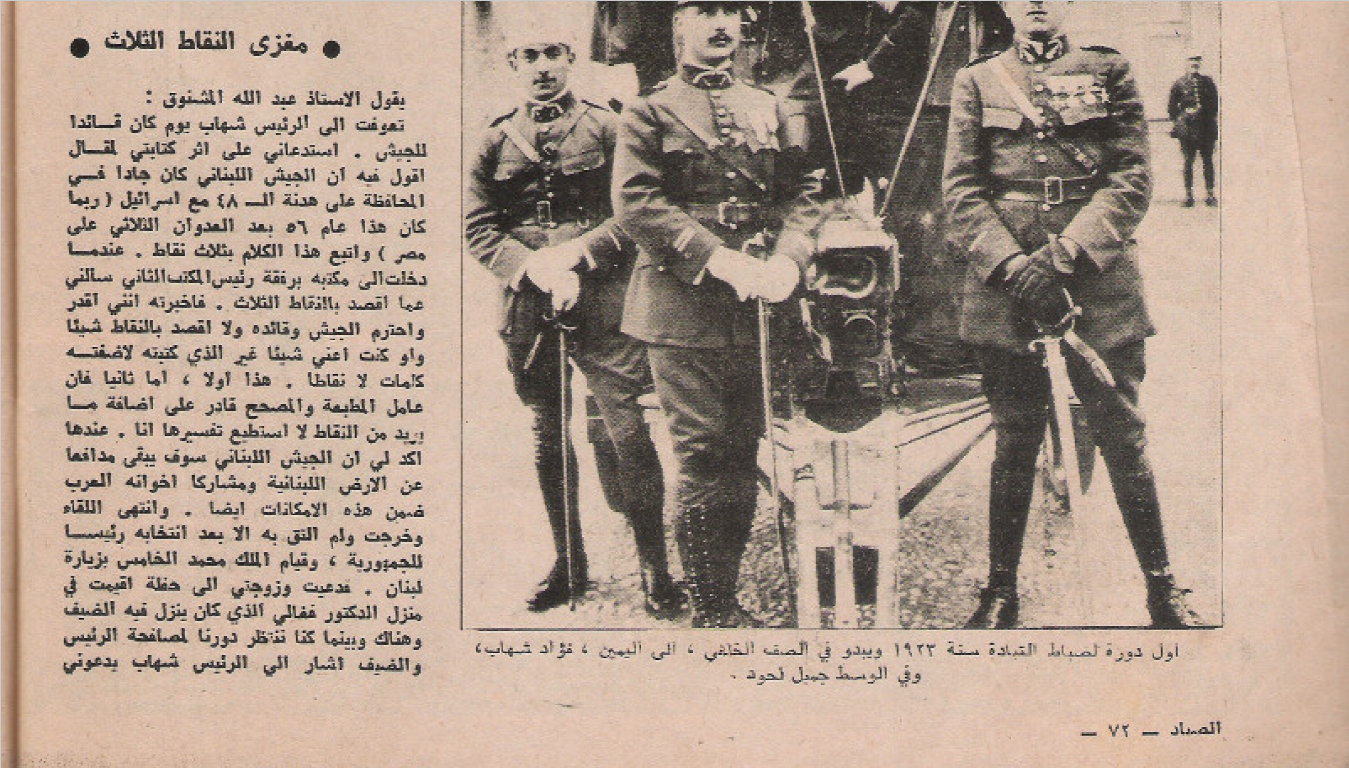
Anyway, and since it seems to be the all-time low of professionalism for Lebanon’s media outlets and since the crackdown on freedom of speech is getting more important by the day, here’s an article Abdallah Machnouk – Mohammad Machnouk’s father – wrote in Assayad after Fuad Chehab’s death in 1973. Machnouk talks about how Chehab asked for him in 1956 and questioned him because he added “…” (literally three points) after a sentence. He made him apologize for writing the “…”, and then kept on bullying him with the “…” even after he was elected president.

I’m republishing the “…” story for two reasons:

  • Abdallah Machnouk was clearly a victim of Chehabist oppression – he waited 16 years for Chehab to die in order to tell the story –  and now – the irony – his son is a minister who belongs to a political class that could teach methods of oppression and propaganda in universities.
  • In the end, Chehab died, and Machnouk told the story in what was supposed to be Chehab’s eulogy in Assayad. You can censor as much as you like, but it will eventually strike back at you: It’s an 1956 story that was told in 1973 and is being retold today, 60 years later, in 2015.

Freedom of speech always wins, and when it does, the story sticks even more.

Here’s the article (sorry, no English version. If anyone would like to translate it and post it in the comment section, please do.)

UPDATE:

One of the readers of the blog kindly translated the article in English and posted it on the post’s comment section on Facebook. Here it is:

I have met president ” Shehab” the time he was chief commander of the Lebanese army .
He summoned me upon writing my article in which I stated that the Lebanese army was adamant in preserving the 1948 ceasefire with Israel ( probably that was in 1956 after the triple attack ( France Britain and Israel ) on Egypt ) and followed these words with three points …
When I walked into his office accompanied by the head of the ” deuxieme bureau” (The name of the Army Mukhabarat at the time) he asked me about what I meant with the ” three points” or etc..
My reply was that I respect and value the Lebanese army and its leader and I did not mean a thing other than what I have mentioned otherwise I would have written it in words not in punctuation.
That is to begin with, secondly the editor and the worker can add  whatever they want in the printing including as many points as they want to which I am incapable of explaining.
Then he assured me that the Lebanese army will remain a defendant of Lebanon and will participate with fellow Arab countries in doing so. The meeting ended and I left and I didn’t meet with him until after he was elected as president of the Republic, and upon king Mohamad the fifth’s visit to Lebanon .
I was then invited along with my wife to attend a reception at the host’s house, Dr Feghali. As we were waiting in queue to meet and greet the president and his guest , president ” Shehab ” gestured for me to approach and when I did he told me that he shall introduce me to the king as the editor in chief of a Baathist newspaper published in Beirut where an article was published in that very same day attacking the Moroccan system and the monarchy .
I implored not to do so and that I will not repeat the mistake of the extra points. I went back to my place in the queue and when our turn was up he asked me : ” so mr abdallah? Are there any points ? ” so I smiled . Then he told the king ” I present to you mr abdallah el mashnouk the editor in chief of “Beirut El massa ” newspaper.
Time went by and I got elected as a deputy, then later I’ve become a minister for a period of 18 months in which I saw him once weekly at the cabinet session for a period of 6 hours each time. And even after his term ended, I visited intermittently at his house in Jounieh.
– And your impression about him ?
– Honest, objective, a great reader and doesn’t lack a sense of serious humour .. A bit withdrawn, tough and self-controlled which was fairly demonstrated during the incident of his cousin’s ” Henry Shehab ” death at the barbir’s hospital entrance during the events of 1958.. And despite all that he kept a neutral position preserving the unity of Lebanon .
– How do you explain his withdrawal from the public?
– I asked him once about the reason of him not inviting people over to his house and not throwing parties, he replied that he can’t come to a mutual understanding with exploiters and flatterers and bootlickers and I believe with this description he ruled out the majority of people.


Abdallah Machnouk Article

Abdallah Machnouk Article 2

WikiLeaks, Drugs and Lebanese Politicians

This is the 9th post in a series of monthly posts covering (forgotten/ignored) WikiLeaks cables about Lebanon. 

The Lebanese have been circulating a video – The Lebanese Forces supporters seriously, almost everyone else sarcastically – of the Lebanese Forces leader Samir Geagea warning the youth about drugs and their repercussions on society [note the inspirational soundtrack in the background and the “Samir Geagea” at the end. We’re definitely going to win the Oscars this year] . Since there hasn’t been a lot of political breakthroughs recently (the past three months have basically been about protests, the government not responding to protests, unfruitful dialogues – who knew, right? – and epic fistfights in the Lebanese parliament), I thought it would be interesting to unearth WikiLeaks cables mentioning drugs and Lebanese politics. I’m publishing three cables. The first one is from the war and ironically mentions how the drug exportation trade isn’t working out for the Lebanese Forces finances. The second one quotes Michel El Khoury (the son of Lebanon’s first post-independence president and a former minister of defense and central bank governor)  saying that “Hariri’s judgment might be impeded by some kind of narcotic addiction”. The third one is a conversation with the PSP’s second-in-command, Duraid Yaghi, in which he says that “increased cultivation of illegal drugs is feeding into Hizballah’s strength in the Bekaa region” and that “The sale of the crops feed into Hizballah’s weapons network”.

Take a look at the three cables. In case you’re too lazy, the drug parts are in bold.

LEBANESE FORCES FINANCES
1985 April 4, 14:34 (Thursday)
85BEIRUT2048_a
SECRET
SECRET
— Not Assigned —
1. S-ENTIRE TEXT.
2. LEBANESE FORCES OFFICIAL WHO REMAINS LOYAL TO DEPOSED CHIEF FUAD ABU NADER CONTENDS THAT PART OF REBEL LEADER JA’JA’S APPEAL TO RANK AND FILE IS HIS PROMISES THAT ECONOMY MOVES INTRODUCED BY ABU NADER WOULD END. HE OBSERVES, HOWEVER, THAT PROMISES WILL BE DIFFICULT FOR JA’JA’ TO KEEP.
3. ACCORDING TO THIS OFFICIAL, LF OPERATING EXPENSES ALONE AMOUNT TO 26 MILLION POUNDS A MONTH, MOSTLY STRAIGHT SALARY PAYMENTS. THIS FIGURE PROVIDED NOTHING FOR AMMUNITION REPLACEMENT (BADLY NEEDED), SPARE PARTS FOR EQUIPMENT (BADLY NEEDED — ACCORDING TO OFFICIAL LF TANKS COULDN’T MOVE INTO ACTION NOW WITHOUT SIGNIFICANT REPAIR), UNIFORMS,TRAINING, ETC.
4. OFFICIAL SAID INCOME SIDE WILL PRESENT JA’JA’ WITH DIFFICULT PROBLEM, BEFORE UPRISING, OFFICIAL SAID,INCOME
5. OFFICIAL NOTED THAT LF HAD RE-OPENED NIGHT OPERATIONS AT FIFTH BASIN AT BEIRUT PORT TWELVE DAYS BEFORE UPRISING BECAUSE OF NEED FOR FUNDS, SO JA’JA’ WILL CONTINUE TO BENEFIT FROM THIS SOURCE. ON OTHER HAND, HE SAID, WITH SYRIANS OPENING ROADBLOCK AT MADFOUN BRIDGE, LF REVENUES FROM BARBARA CHECKPOINT HAVE DISAPPEARED; HE OPINED THAT JA’JA’ MIGHT GO AS FAR AS TO OFFER UP CLOSING OF BARBARAH CHECKPOINT AS PEACE OFFERING TO SYRIA NOW THAT SYRIAN ACTION HAS MADE IT FINANCIALLY IRRELEVANT. EVEN ASSUMING LF TIGHTENS UP TAXATION IN AREAS UNDER ITS CONTROL AND PERHAPS EXPAND FIFTH BASIN OPERATIONS, IT WILL STILL LEAVE THEM, HE ESTIMATED, MINIMUM OF 6 MILLION POUNDS SHORT EACH MONTH.
6. OFFICIAL OBSERVED THAT EFFECTIVENESS OF DEA OPERATIONS MADE EXPORTATION OF HASHISH AN UNPROFITABLE OPTION.
7. ANOTHER OPTION WOULD BE CONTRIBUTIONS BY KEY LF REBEL FINANCIAL ANGELS; HE MENTIONED SPECIFICALLY PIERRE ASHKAR AND MICHEL MURR BUT HE QUESTIONED HOW LONG THEY WOULD WANT TO PICK UP THE DIFFERENCE. REMAINING OPTION WOULD BE ONE LF WAS MOVING TOWARD BEFORE UPRISING: COMBINATION OF ECONOMY MOVES AND OF SELLING MILITARY RESOURCES ON CIVILIAN ECONOMY. MOVES IN THAT DIRECTION HAD BEGUN PRIOR TO MARCH 12 UPRISING, SPECIFICALLY IN COMPUTER AREA, WHERE OFFICIAL SAID LF HAS MOST SOPHISTICATED OPERATION IN COUNTRY; AND IN VEHICLE MAINTENANCE.
BARTHOLOMEW
MGLE01: A STRATEGY SESSION WITH PRIME MINISTER SINIORA AND HIS FRIENDS
2006 July 7, 14:00 (Friday)
06BEIRUT2291_a
CONFIDENTIAL,NOFORN
CONFIDENTIAL,NOFORN
— Not Assigned —
BEIRUT 00002291 001.2 OF 004
Classified By: Ambassador Jeffrey D. Feltman for reasons 1.4 (b) and (d ).
SUMMARY ——-
1. (C/NF) The current weakness of the “March 14” parliamentary majority — and the deleterious effect this has on Prime Minister Siniora’s ability to govern — has become a matter of great concern for supporters of Siniora, such as former Central Bank Governor Michel el Khoury. At a 7/3 dinner he hosted, Sheikh Michel el Khoury worried about disorder within the Hariri family and the supposed weak personality traits of majority leader Saad Hariri (who, he claimed, may even be suffering from a narcotic addiction). Sheikh Michel proposed that “March 14” be headed by a (non-Hariri-associated) Secretary-General. Better organization within “March 14” is necessary to counter a massive flow (Sheikh Michel estimated it at USD 100 million per month, over half from Iran) of external funding for Hizballah.
2. (C/NF) Summary, continued: Siniora’s Telecommunications Minister, Walid Jumblatt-allied Druze politician Marwan Hamadeh, called for using Saudi petrodollars to neutralize Iran’s financial support for Hizballah and its allies. Hamadeh suggested that there is even a bright side to the threat of Sunni-Shia strife in Lebanon, in that it helps to restrain Hizballah’s behavior. Prime Minister Siniora, who eventually joined Sheikh Michel’s dinner at which these exchanges took place, expressed frustration with his government’s current “standstill,” but expressed determination to forge ahead, particularly on privatization. End summary.
SHEIKH MICHEL CONVENES A STRATEGY SESSION —————————————–
3. (C/NF) Former Central Bank governor Michel el Khoury gathered the Ambassador and emboff at a dinner with Prime Minister Siniora, Telecommunications Minister Marwan Hamadeh, and Siniora’s chief advisor, Mohamad Chatah. While waiting for Siniora — who was detained at the office by a meeting on transportation policy that lasted well past 9 PM — to arrive, Sheikh Michel explained that the purpose of the dinner was to map out strategies for bucking up Siniora’s government and the flagging “March 14” parliamentary majority that makes up its base of support.
4. (C/NF) Sheikh Michel goes back a long way with Siniora, himself a former Central Bank official. He insisted that despite the slow progress Siniora’s government has made and the multiple obstacles it has faced in its nearly one year of existence, Siniora was an “irreplaceable” leader. “I would do anything to help him,” Sheikh Michel said, “not just because he’s my friend,” but because Siniora’s success was the only hope for the country.
NEEDED: CHRISTIAN SUPPORT FOR SINIORA, “MARCH 14” ————————–
5. (C/NF) Sheikh Michel spoke of the need to translate Siniora’s personal popularity into political support for “March 14.” This was of particular importance within the Christian community. Among Christians, Siniora remains personally popular — even if not at the same high levels as initially — while support for “March 14” had plummeted under what Sheikh Michel described as a demagogic assault by Michel Aoun and his supporters.
6. (C/NF) To this end, Siniora’s most recent meeting with the Maronite Patriarch had been very useful, according to Sheikh Michel. (Comment: Siniora likewise was very positive in describing his relationship with the Patriarch during a separate meeting with the Ambassador, claiming that he and the Patriarch had “agreed on every issue” in this last meeting. See reftel. End Comment.) Sheikh Michel said that he was working with the Patriarch and others in the Maronite community to build grassroots support for Siniora.
BEIRUT 00002291 002.2 OF 004
7. (C/NF) One constraint on Christian political support for Siniora has been the unpopularity of the parliamentary majority leader, Saad Hariri. As they waited for Prime Minister Siniora to arrive, Sheikh Michel, Minister Hamadeh, and Dr. Chatah all expressed frustration with the susceptibility of Christians to anti-Sunni Muslim sentiment, much of it directed against Hariri. Sheikh Michel expressed frustration with the fact that the same Christians who approved Aoun’s alliance with Hizballah have been ready to entertain the worst possible suspicions about Hariri and his Sunni Muslim supporters, seeing them as a Trojan horse for Saudi-style Wahhabism in Lebanon.
SOLUTIONS START AT (THE HARIRI) HOME ————————————
8. (C/NF) In part, Sheikh Michel and his Lebanese guests agreed, this has much to do with poor organization within “March 14,” and within the Hariri family as well. For a start, Saad Hariri’s relationship with Siniora has been rocky, although Hamadeh suggested that there had been improvements recently. Beyond that, Saad Hariri arguably has political responsibilities equal to those of his father, Rafiq Hariri, with all the financial implications — given the importance of patronage in Lebanon — that that entails. Yet Saad had only a fraction of the wealth that Rafiq had to draw upon, as Rafiq’s fortune had been divided up, following his assassination in February 2005, among a number of family members, with Saad, Rafiq’s second-born son, being only one among them. Other family members, such as Saad’s reputedly miserly stepmother, Nazek, were unresponsive to the patronage needs of the Hariri-led Future Current and its “March 14” allies.
DANGER: IRANIAN MONEY, “SHIA-IZATION” ————————————–
9. (C/NF) All the while, Iranian money continues to pour into Lebanon, funding the political and social activities of Hizballah and, according to some reports, those of pro-Hizballah, pro-Syrian groups in predominantly Sunni areas of the country, such as the rural and impoverished Akkar region in the North. Sheikh Michel, citing contacts in Lebanon’s banking sector, claimed that the amount of revenue Hizballah brings in from abroad each month equals approximately USD 100 million. Of this, some USD 60 million comes from Iran; the remainder comes from other external sources, such as pro-Hizballah fundraisers in West Africa.
CAN “MARCH 14” NEUTRALIZE IT WITH SAUDI HELP? ———————————————
10. (C/NF) As a result, we are seeing the “tashyi’i” (“Shia-ization”) of many predominantly Sunni parts of the country, Hamadeh complained. (Comment: Another term used to describe this seeming surge of Iranian influence — one that, from all appearances, annoys Hizballah Secretary-General Hassan Nasrallah to no end — is “tafris,” “Persianization.” End Comment.) Hamadeh could not explain Saad Hariri’s ongoing cash-flow problem with the Kingdom of Saudi Arabia, the royal family of which reportedly has been slow to pay Hariri-owned business enterprises the billions it owes them. Even so, the only antidote to Iran’s relentless policy of cash-for-“tashyi’i” was to neutralize it with an equal flow of Saudi petrodollars, Hamadeh said. This had been a topic of discussion when he and Druse leader Walid Jumblatt met with Saudi King Abdullah in Jeddah recently.
11. (C/NF) Hamadeh said that he and Jumblatt had emphasized to King Abdullah that they were not asking for money for themselves. Rather, they wanted the KSA to play a direct role in alleviating poverty, supporting economic development, and bolstering its friends on the Lebanese political scene. Part of this could be accomplished by donations for charitable institutions, but part of it also had to be “political money,” Hamadeh said. He expressed confidence that Lebanon could absorb an influx of Saudi cash while keeping it out of the hands of radical Sunni Muslim groups.
CONCERNS ABOUT SAAD HARIRI ————————–
12. (C/NF) Patronage aside, Sheikh Michel and his Lebanese
BEIRUT 00002291 003.2 OF 004
guests saw Saad Hariri as no match for Nasrallah politically. The Hizballah leader took advantage of the young, reluctant politician’s inexperience and seemingly weak personality. In an aside with the Ambassador, Sheikh Michel also expressed concern about the possibility that Hariri’s judgment might be impeded by some kind of narcotic addiction. He understood that Hariri had used drugs as an undergraduate at Georgetown University to the extent that it seriously impaired his studies. He wondered whether Hariri had ever actually quit. (Comment: If so, this might explain some of the personality traits that we have noticed in our interaction with Hariri, such as a very short attention span. End Comment.)
SUNNI-SHIA CONFLICT: A POTENTIALLY USEFUL THREAT ——————————————— —-
13. (C/NF) Those present at the dinner noted that one reason behind Saad Hariri’s caution in dealing with his opponents is a sincere belief that Lebanon is in danger of experiencing Iraq-style sectarian strife between Shias and Sunnis. Hamadeh suggested that Shia-Sunni conflict was in fact a two-edged sword. While it frightens the country’s foremost Sunni leader, Hariri, it surely must also frighten the foremost Shia leader, Nasrallah. As such, Hamadeh argued, the threat of Shia-Sunni conflict could be used to pressure and restrain Hizballah; it did not make sense to try to wish the threat away.
“MARCH 14” NEEDS MORE STRUCTURE ——————————-
14. (C/NF) Sheikh Michel suggested that one thing “March 14” needed was a better organizational structure. The appointment of a Secretary-General for the movement, one with real authority, could help in this respect. In order to deflect paranoia and anti-Hariri sentiment in the Christian community, it would be important that whoever filled this position not be a Sunni Muslim from the Hariri-led Future Current political party, Sheikh Michel said. SINIORA REMAINS DETERMINED ————————–
15. (C/NF) Prime Minister Siniora finally arrived after 10 PM, a little worse for the wear after an exhausting day, but still displaying confidence and energy. While his government was working to make progress on several fronts, he admitted that things were currently at a standstill. Even so, he was determined to forge ahead, particularly on privatization. Here, he was targeting the largely state-owned Intra Investment Corporation, which he derided as a “symbol of corruption.”
16. (C/NF) When the Ambassador and emboff described the concerns of international elections experts about the draft electoral law recently submitted to Siniora (reported septel), Siniora was unfazed. If there were problems with the draft, they could be worked out in due time, he insisted. He gave the impression of being receptive to comments on the draft law from IFES and other international elections experts.
17. (C/NF) Siniora cautioned Sheikh Michel and his guests that he had to pick his battles carefully. At one point in the dinner conversation, one of the guests pointed out that General Georges Khoury, chief of the Lebanese Armed Forces’ intelligence wing, was less than reliable. This was true, Siniora replied, but Khoury was also very close to the Maronite Patriarch, an ally whom Siniora could not afford to antagonize.
COMMENT ——-
18. (C/NF) Fears of Sunni militancy have combined with suspicion and resentment of the Hariri family and its wealth, particularly in the Christian community. Consequently, a great deal of Christian opinion about Hariri and “March 14” is skewed to the point of irrationality. Aoun can strike an alliance of convenience with Hizballah and yet be perceived among a sizeable portion of Christians, probably still a majority, as the most effective defender of communal interests. Christian politicians who align with “March 14,”
BEIRUT 00002291 004.2 OF 004
on the other hand, find themselves upbraided as sellouts and “inauthentic” representatives of their own community. In this situation, Sheikh Michel — son of Lebanon’s first president, Beshara el Khoury, and a Maronite patrician — deserves praise for the unconditional backing he is giving the Sunni Muslim Siniora.
19. (C/NF) Comment, continued: Even so, Hariri, Siniora’s government, and “March 14” seem never to miss an opportunity to increase Christian fears about a militant Sunni threat. The past few weeks have witnessed the sudden, inexplicable legalization of the ultra-extreme Hizb ut-Tahrir, which had been banned since the early 1960s (and which has been banned more recently in the United Kingdom on security grounds). On June 30, Mahmoud Qul Ahgasi (also known as Abu al-Qa’qa), leader of Ghuraba al-Sham, a mysterious Syrian-based Sunni Muslim group that is at once jihadist and pro-Asad regime, appeared on a television broadcast from the Beirut studio of the pan-Arab “al-Arabiya” channel, his back to a picture window in the studio that, embarrassingly, looked out on Siniora’s offices in the Grand Serail. Given all this, opening the valve of a massive Saudi petrodollar pipeline — assuming one really exists — would not be without risk. Still, we agree with the basic thrust of this dinner conversation: given the patronage system that still prevails in Lebanon, and given the evidence of huge amounts of incoming Iranian money, “March 14” needs to find some funding sources of its own, with Hariri and/or the Saudis still the most likely source.
End comment.
FELTMAN
B. BEIRUT 919
Classified By: Ambassador Michele J. Sison for reasons 1.4 (b) and (d).
SUMMARY ——–
1. (C) Progressive Socialist Party (PSP) Vice President Duraid Yaghi said September 19 one-third of the population of his hometown of Baalbek does not support Hizballah, although it is in an area of strong Hizballah influence. However, according to Yaghi, continued unemployment and increased cultivation of illegal drugs is feeding into Hizballah’s strength in the Bekaa region. Yaghi, a Shia, suggested Lebanon donors should consider funding an illegal drug crop eradication and substitution program. Furthermore, he admitted that the March 14 coalition had made several mistakes in May, but said what was more worrisome was that the coalition had not yet agreed on a unified electoral platform or even begun planning for the 2009 parliamentary elections. We believe there may be an opportunity for a USG-sponsored crop substitution project in Baalbek and will explore further options. Separately, anti-Hizballah and prominent Shia businessman Abdullah Bitar told the Ambassador he will take on Hizballah by running in the elections for a Nabotieh seat, and hopes to join forces with other key players in forming a list. End summary.
BAALBEK DOES NOT BELONG TO HIZBALLAH ——————-
2. (C) Former Shia MP and current Progressive Socialist Party (PSP) Vice President Duraid Yaghi estimated to the Ambassador on September 19 that 30-35 percent of Baalbek’s population does not support Hizballah. Baalbek, situated in the heart of Hizballah’s stronghold in the Bekaa Valley, contains “brave voters” who overwhelmingly supported PSP and other parties in the majority over Hizballah in the most recent municipal elections, he said. However, Baalbek lacks any significant presence of state institutions, such as the Internal Security Services (ISF) or the Lebanese Armed Forces (LAF). According to Yaghi, the state “is not there.” Without these visible signs of state authority or other state-provided social services, Yaghi worried Hizballah was gaining greater support. Baalbek’s residents, he said, often “turn to Hizballah before going to the police or the courts.” Generally speaking, said Yaghi, Hizballah buys its loyalties from residents by providing them $200-$300 per month, offering educational scholarships, and providing health and social services.
FIX THE DRUG PROBLEM, DIMINISH HIZBALLAH LEVERAGE —————————
3. (C) According to Yaghi, the incidence of hashish and opium cultivation continues to rise in Baalbek. Lack of employment opportunities, he believed, is driving greater numbers of Baalbek residents to plant the illegal drug crops. The sale of the crops feed into Hizballah’s weapons network, as well as provide valuable income to families, he said. The drug problem, Yaghi said, is not new. In May 1996, while he was MP, Yaghi and then-Prime Minister Rafiq Hariri drafted Decree 8666, which allows for the creation of a government eradication program, with the use of international donor assistance, for the Bekaa region, especially in Baalbek and Hermel. The decree still exists, Yaghi said, but nothing ever came of it. (Note: ISF Counternarcotics Unit head has told Embassy INL Director that the ISF and LAF conduct eradication campaigns on a yearly basis, with the exception of 2007 when the program was not carried out because of the Nahr al-Barid conflict. End Note.) Yaghi requested assistance from the U.S. and other donors to revive the drug eradication effort, suggesting that any success with such a program could sway support away from Hizballah and towards the March 14 coalition as the 2009 parliamentary elections BEIRUT 00001389 002 OF 003 approach. (Note: INL funding will provide training in December for 50 ISF officers in counternarcotics tactics. The course will be taught by DEA instructors. End Note.)
MARCH 14 MADE MISTAKES; NOT PREPARED FOR ELECTIONS ————————–
4. (C) Yaghi admitted that the March 14 coalition to which his party belongs made several mistakes in May. First, he said, March 14, and specifically March 14 leader Saad Hariri’s Future Movement miscalculated the extent of Hizballah reaction when Future Movement pushed the Druze leaders Walid Jumblatt and Marwan Hamadeh, who was minister of telecommunications, to close down Hizballah’s communication networks. After the ensuing takeover of West Beirut by Hizballah, and the subsequent agreement reached in Doha that paved the way for election of President Sleiman, Yaghi believed March 14 should have publicly admitted its mistake, while articulating a vision. Neither has happened, Yaghi said, and “we find ourselves in a bad situation.”
5. (C) Furthermore, he warned, the re-districting agreement reached in Doha for the 2009 parliamentary elections that placed Baalbek and Hermel into one district exacerbates March 14’s problems. Baalbek by itself, he said, probably would produce two Sunni and two Christian candidates to counter Hizballah’s four candidates. However, both MP slots in Hermel will go to Hizballah candidates, he predicted. As one district, if Hizballah wins the majority, all ten MP seats will go to Hizballah. Yaghi said he planned to talk with Hariri “soon” about his concerns for Baalbek and to secure Hariri’s assurances that tangible assistance would be forthcoming to Baalbek’s voters, and not just words of support.
6. (C) Yaghi was also visibly concerned about the lack of a unified March 14 message. He fretted that if another two months pass before the platform is decided, then March 14 should not expect favorable election results. In Baalbek, he said, Hizballah has been preparing for the elections for the last six months, while March 14 has not started. In addition, Yaghi envied the fact that Hizballah speaks “with one voice,” while March 14 has many parties and many different voices, he said.
7. (C) Yaghi did not believe the 2009 elections would be delayed, as “everybody thinks they will win.” He did not foresee Hizballah initiating any type of military action that could put the elections in jeopardy, and opined that Hizballah’s backers, Iran and Syria, would not support such a scenario. Yaghi supported President Sleiman’s decision to launch the National Dialogue, but did not believe any serious discussion of Hizballah’s weapons would occur until after the elections.
ANTI-HIZBALLAH SHIA RUNNING IN ELECTIONS ——————–
8. (C) In a separate September 22 meeting with the Ambassador, anti-Hizballah prominent Shia businessman and head of the Nabatieh Traders Association and the Economists Union Abdullah Bitar (Ref A) stated his intentions to take on Hizballah and run in the elections as a candidate from his hometown (and current residence) in Nabatieh, a Hizballah stronghold in southern Lebanon. Alone, he anticipated he could win approximately 5,000 votes from Nabatieh proper, and 10,000 votes from its surrounding areas. Believing that Lebanon’s southern residents would be willing to vote for non-Hizballah candidates, said he hopes to join forces with anti-Hizballah figure Ahmad al-Assad (Ref B) (who Bitar noted had distanced himself from him in the last few months), Hariri, and the Communist party to offer an alternative to Hizballah.
COMMENT ——- BEIRUT 00001389 003 OF 003
9. (C) Despite losing his last contest for an MP seat, Yaghi remains actively involved in politics. He is also president of Baalbek’s Bar Association. Independent Shia organizer Lokman Slim and others have encouraged Yaghi to consider running as a candidate in the 2009 elections, but Yaghi says he is reluctant due to the personal risks. (Note: In May, his house was set on fire by unknown assailants, but presumably the attack was politically motivated. An investigation is currently underway. End note.) The picture Yaghi paints of the March 14 coalition’s prospects for electoral success in 2009 is disheartening, but echoes the message we have carried to our March 14 interlocutors that a unified platform is very important to winning the elections.
10. (C) Although USG projects in the Bekaa are limited, we believe there could be an opportunity for an USG-sponsored crop eradication and substitution program. A similar project located along Lebanon’s northern border was considered previously by UNDCP, but did not get off the ground. However, we will explore the feasibility of resurrecting such a project for the Bekaa. If feasible, such a project could used an effective tool of the GOL to blunt expanding Hizballah influence in Baalbek. End comment.
SISON

How Lebanon’s Constitutional Council Shamed the Parliament

Protesters carry a sign ugring judges meeting at the Constitutional Council headquarters in Beirut to accept a challenge against Parliament's extension. (The Daily Star/Khalil Hassan)

Protesters carry a sign urging judges meeting at the Constitutional Council headquarters in Beirut to accept a challenge against Parliament’s extension. (The Daily Star/Khalil Hassan)

The Lebanese parliament that cancelled elections and extended its term twice has spent the past two months of protests trying to prove its legitimacy (instead of doing something else more useful like discussing a new electoral law or solving the trash crisis properly). Among the propaganda justifying the extension, the political class mentioned the absence of an alternative electoral law to the 2008 one, “exceptional circumstances”, presidential vacancy and safeguarding the national pact.

Well, guess what. In November 2014, and after some of the FPM MPs asked Lebanon’s constitutional council to review the parliamentary extension law, the council’s response was relatively violent. Aside from indirectly shaming the parliament and listing the huge amount of constitutional articles  that were violated because of the extension law – The preamble (several times) and articles 22, 24, 27, 41 – the constitutional council considered that:

  • The Lebanese parliament is unconstitutional. (“قانون التمديد المخالف للدستور“)
  • It is a fait accompli  parliament. (“يعتبر التمديد امرا واقعا“)
  • The 2 years 7 months period is unjustifiable. (“ان تمديد ولاية المجلس غير متناسية مع مقتضياته، وبما ان المدة الطويلة لا يمكن تبريرها بمعطيات آنية وراهنة، كما ان تبريرها باعتبارات مستقبلية او افتراضية لا يستقيم لا واقعا ولا قانونا“).
  • The parliamentary extension contradicts and is not justified by the national pact. (” لا يجوز التحجج بالميثاقية لتأجيل الانتخابات وتمديد ولاية المجلس، لان ذلك يؤدي الى تقويض الاسس التي قام عليها الميثاق الوطني، وبالتالي تقويض التعهدات الوطنية والنظام والدولة، “)
  • The parliamentary elections are not related to the presidential elections, and the vacancy in the presidency doesn’t justify the extension especially since it’s the parliament’s responsibility to elect a president.( “تمديد ولاية مجلس النواب لا يجوز ان تبرر بالشغور في سدة رئاسة الجمهورية، وبخاصة ان المسؤول عن هذا الشغور هو مجلس النواب نفسه،“)
  • Holding parliamentary elections is not related to the presence of a new electoral law.  (لا يجوز ربط اجراء الانتخابات النيابية بالتوافق على قانون انتخاب جديد او بالتوافق على اجرائها”)

In the end (and as expected), the FPM MPs didn’t resign and even kept on nurturing the presidential vacancy, and the constitutional council only criticized the law without stopping it.

Anyway, this document – taken from the official National News Agency – that wasn’t very publicized  at the time (for the obvious reasons) is here to remind everyone with one sentence: Our democracy was stolen, and the biggest proof is that our political class no longer abides by the constitution.

Take a look at the full text of the constitutional council’s decision (sorry, couldn’t find an English or even French version). I marked the worst violations in bold.

رقم المراجعة 6/2014

المستدعون: النواب السادة: ميشال عون – ادكار معلوف – ابراهيم كنعان – حكمت ديب – سيمون ابي رميا – نادي غاريوس – زياد اسود – فادي الاعور – نبيل نقولا – الان عون.

القانون المطلوب وقف العمل فيه وابطاله:

القانون المعجل النافذ حكما الرقم 16 تاريخ 11 تشرين الثاني 2014 والمنشور في العدد 48 من الجريدة الرسمية تاريخ 11/11/2014 والمتعلق بتمديد ولاية مجلس النواب.

ان المجلس الدستوري الملتئم في مقره بتاريخ 28/11/2014، برئاسة رئيسه عصام سليمان وحضور نائب الرئيس طارق زياده والاعضاء: احمد تقي الدين، انطوان مسره، انطوان خير، زغلول عطية، توفيق سوبره، سهيل عبد الصمد، صلاح مخيبر، ومحمد بسام مرتضى،

وعملا بالمادة 19 من الدستور،

وبعد الاطلاع على ملف المراجعة وسائر المستندات المرفقة بها، وعلى تقرير المقرر، المؤرخ في 19/11/2014،

وبما ان السادة النواب المذكورة اسماؤهم أعلاه تقدموا بمراجعة سجلت في قلم المجلس الدستوري بتاريخ 13/11/2014، ترمي الى الامور الاتية:

اولا: تعليق مفعول القانون المطعون فيه: يقضي القانون بتمديد ولاية مجلس النواب الحالي الى 20/6/2017، تلك الولاية التي سبق تمديدها بصورة استثنائية الى 20/11/2014 بالقانون رقم 246 تاريخ 31/5/2013 والمنشور في ملحق خاص من الجريدة الرسمية رقم 24 تاريخ 1/6/2013، ما من شأنه ان ينشىء ولاية جديدة كاملة لمجلس النواب بفعل التمديدين المذكورين.

– لم يتضمن التمديد الجديد اي اشارة الى طابعه الاستثنائي، على عكس ما ورد في صلب القانون الرقم 246/2013 والذي سبق الطعن به لدى المجلس الدستوري.

– من شأن تعليق مفعول القانون تمكين السلطات المختصة من اجراء العملية الانتخابية بالتاريخ المحدد بالمرسوم رقم 321 تاريخ 19/8/2014 (دعوة الهيئات الناخبة لانتخاب اعضاء مجلس النواب)، اي في 16/11/2014، وذلك قبل نهاية فترة التمديد الاول، بخاصة ان حددت وزارة الداخلية والبلديات موعدين لاقتراع المغتربين في الكويت واستراليا (سيدني/ مليورن)، تباعا في 7/11/2014 و 9/11/2014.

– ان تحقق واقعة اجراء الانتخابات النيابية في موعدها في لبنان ينفي طابع الاستثناء ومصلحة الدولة العليا والخطر الامني الداهم وما شابه من اسباب تم ايرادها في الاسباب الموجبة، ما يعني ان الاستحقاق الدستوري المفصلي قد جرى في موعده دون عوائق، فتتحقق الغاية الدستورية من الانتخاب، مع الاشارة الى رقابة المجلس الدستوري على صدقية اي انتخاب مطعون فيه.

ثانيا – ابطال القانون للاسباب التالية:

– مخالفة الفقرة (ب) من مقدمة الدستور (التزام لبنان الاعلام العالمي لشرعة حقوق الانسان والفقرة (ب) من المادة 25 من العهد الدولي الخاص بالحقوق المدنية والسياسية الصادر عن الامم المتحدة في 16/12/1966 والذي انضم لبنان اليه بالمرسوم رقم 3855 تاريخ 1/9/1972 (الاشتراك اقتراعا وترشيحا في انتخابات دورية صحيحة نزيهة تجري على اساس الاقتراع العام المتساوي السري وتضمن الاعراب الحر عن ارادة الناخبين)، وكذلك المادة 4 الفقرة (1) من العهد المذكور (في حالات الطوارىء الاستثنائية التي تهدد حياة الامة والمعلن قيامها رسميا، يجوز للدول الاطراف في هذا العهد ان تتخذ، في اضيق الحدود التي يتطلبها الوضع تدابير تتقيد بالالتزامات المترتبة عليها…، وكذلك الفقرة 3 (وجوب على اية دولة طرف في هذا العهد استخدمت حق عدم التقيد ان تعلم الدول الاطراف الاخرى فورا، عن طريق الامين العام للامم المتحدة بالاحكام التي لم تتقيد بها وبالاسباب التي دفعتها الى ذلك، وعليها، في التاريخ الذي تنهي فيه عدم التقيد، ان تعلمها بذلك مرة اخرى والطريق ذاته”.

– مخالفة المادة 21 (فقرة1) من الاعلان العالمي لحقوق الانسان (لكل فرد الحق في الاشتراك في ادارة الشؤون العامة لبلاده اما مباشرة واما بواسطة ممثلين يختارون اختيارا حرا (….) وارادة الشعب هي مصدر سلطة الحكومة، ويعبر عن هذه الارادة بانتخابات نزيهة دورية…”

– مخالفة الفقرة ج من مقدمة الدستور (لبنان جمهورية ديموقراطية برلمانية).

– مخالفة الفقرة (د) من مقدمة الدستور (الشعب مصدر السلطات وصاحب السيادة يمارسها عبر المؤسسات الدستورية)

– مخالفة الفقرة (هـ) من مقدمة الدستور (النظام قائم على مبدأ الفصل بين السلطات وتوازنها وتعاونها)..”

– مخالفة مبادىء وثيقة الوفاق الوطني التي استقى الدستور منها حرفيا مقدمته.

– مخالفة المادة 27 من الدستور (عضو مجلس النواب يمثل الامة جمعاء ولا يجوز ان تربط وكالته بقيد او شرط من قبل منتخبيه، ما يعني التقيد بأجل الوكالة اي في 20/6/2013 وتنتهي الوكالة بحلول الاجل اي في 20/6/2013 حسب المادة 808 من قانون الموجبات والعقود.

– مخالفة المادة 44 من الدستور التي يستفاد منها صراحة ان ولاية المجلس النيابي اربع سنوات وهذه الولاية عصية على الاستنساب.

– مخالفة المادة 32 من الدستور حول تخصيص جلسات المجلس النيابي بالبحث في الموازنة والتصويت عليها.

– مخالفة المادة 42 (تجري الانتخابات العامة لتجديد هيئة المجلس في خلال الستين يوما السابقة لانتهاء مدة النيابة)، مع العلم ان موعد اجراء الانتخابات العامة حدد في 16/11/2014 من السلطة المختصة ويشير هنا الطاعنون الى انه لا قيمة قانونية ملزمة لاي تعهد يرد في محضر الجلسة باجراء الانتخابات النيابية عند حلول استحقاقات دستورية اخرى او بمواعيد تسبق انتهاء الولاية الممددة تكرارا، ذلك ان العبرة والالزامية لما ورد في النص التشريعي.

– ولاية المجلس المحددة بقانون لا تعدل بقانون، اختصارا او تمديدا، في ضوء وجوب مراعاة القانون في هذه الحالة المبادىء العامة والاحكام الدستورية.

– ضرورة تفسير الاستثناء حصرا وبصورة ضيقة وفي الحالة الراهنة عدم توفر شروط الاستثناء والخطر الداهم خلافا للتفاصيل الواردة في الاسباب الموجبة.

– لا يشكل الفراغ القاتل، في رئاسة الجمهورية ذريعة للتمديد: وحتى اذا اتفق حصول خلاء الرئاسة ومجلس النواب منحل تدعي الهيئات الناخبة دون ابطاء لانتخاب مجلس جديد، على ما ورد في المادة 74 من الدستور، وصلاحيات رئيس الجمهورية تناط وكالة بمجلس الوزراء حسبما جاء في الطعن.

– مخالفة المادة 57 من الدستور في اصدار القانون حيث ان الرئيس الجمهورية سلطة محفوظة له، كما ورد في الطعن بطلب اعادة النظر في القانون.

– مخالفة المادة 19 من الدستور حول حق رئيس مجلس الوزراء المحفوظ له، كما جاء في الطعن، بمراجعة المجلس الدستوري (اقرار المجلس الدستوري رقم 1 تاريخ 6/5/2005 بالمراجعة رقم 12/205)، وورد في الطعن ان حق مراجعة المجلس الدستوري هو ايضا من الحقوق الضيقة بشخص رئيس الجمهورية، ذلك ان المادة 19 خصته بالتسمية، كما سواه، كمرجعية من المرجعيات التي يحق لها مراجعة المجلس الدستوري.

وبناء على ما تقدم،

اولا – في الشكل:
بما ان المراجعة، المقدمة من عشرة نواب، جاءت ضمن المهلة المحددة في الفقرة الاخيرة من المادة 19 من القانن رقم 250/1993 مستوفية جميع الشروط الشكلية فهي مقبولة شكلا.

ثانيا: في الاساس:

1 – في تعليق مفعول القانون المطعون فيه.

تدارس المجلس الدستوري طلب وقف العمل بالقانون المطعون فيه المبين في المراجعة، وذلك في جلسته المنعقدة يوم تقديمها بتاريخ 13/11/2014، ولم ير سببا للاستجابة الى هذا الطلب.

2 – في مخالفة القانون المطعون فيه المبادىء الواردة في مقدمة الدستور

بما ان مقدمة الدستور جزء لا يتجزأ من الدستور وبما ان مقدمة الدستور نصت على التزام لبنان بالاعلان العالمي لحقوق الانسان وبمواثيق الامم المتحدة، وعلى تجسيد الدولة المبادىء الواردة فيها في جميع الحقول والمجالات دون استثناء،

وبما ان المادة 21 من الاعلان العالمي لحقوق الانسان نصت على ارادة الشعب هي مصدر السلطات، يعبر عنها بانتخابات نزيهة دورية تجري على اساس الاقتراع السري وحرية التصويت،

وبما ان الاتفاقية الدولية بشأن الحقوق المدنية والسياسية، التي انضم اليها لبنان في العام 1972، نصت على ان لكل مواطن الحق والفرصة في ان ينتخب وينتخب في انتخابات دورية على اساس من المساواة،

وبما ان مبدأ دورية الانتخابات أكدته قرارات المجلس الدستوري وبخاصة القرار رقم 2/79 والقرار رقم 1/2013.

وبما ان مبدأ دورية الانتخاب مبدأ دستوري لارتباطه بمبدأ انبثاق السلطة من الشعب وخضوعها للمحاسبة في الانتخابات،

وبما ان المحاسبة في الانتخابات عنصر اساسي في الانظمة الديمقراطية، وقد نصت مقدمة الدستور على ان لبنان جمهورية ديمقراطية برلمانية، تقوم على احترام الحريات العامة، وفي طليعتها حرية الرأي والمعتقد وعلى العدالة والمساواة في الحقوق والواجبات بين جميع المواطنين دون تمايز او تفضيل.

وبما ان الانتخابات النيابية هي الوسيلة الاساسية لتحقيق الديمقراطية البرلمانية،

وبما ان الانتخابات تفسح في المجال امام المواطنين للتعبير عن ارادتهم في اختيار من يمثلهم.

وبما ان مقدمة الدستور نصت على ان الشعب مصدر السلطات وصاحب السيادة يمارسها عبر المؤسسات الدستورية.

وبما ان المجلس الدستوري اكد، في قراره رقم 1/2013، ان الانتخابات الحرة والزيهة هي الوسيلة الوحيدة لانبثاق السلطة من الشعب وهي اساس الديمقراطية البرلمانية.

وبما ان مبدأ التنافس في الانتخابات هو الاساس والقاعدة في الانظمة الديمقراطية وهو مبدأ له قيمة دستورية،

وبما ان المادتين 22 و24 من الدستور نصتا على ان مجلس النواب مؤلف من نواب منتخبين.

وبما ان مجلس النواب يمثل الشعب في ممارسة السلطة، ومنه تنبثق السلطة الاجرائية، وهو ينتخب رئيس الجمهورية،

وبما ان شرعية مجلس النواب هي اساس شرعية السلطات في الدولة.

وبما ان اساس شرعية مجلس النواب هو الانتخابات الحرة والنزيهة التي تجري في مواعيدها، ويعبر الشعب من خلالها عن ارادته ويحاسب من مثله في مجلس النواب، ويحدد خياراته ما يتطلب الالتزام الصارم بدورية الانتخاب والتقيد بمدة الوكالة النيابية،

وبما ان مقدمة الدستور نصت على ان التزام قائم على مبدأ الفصل بين السلطات وتوازنها وتعاونها،

وبما ان الالتزام بهذا المبدأ يقتضي تقيد كل من السلطات بالمدة الزمنية التي تمارس وظائفها في اطارها، اي تقيد مجلس النواب بمدة الوكالة النيابية، وتقيد الحكومة بالثقة الممنوحة لها من مجلس النواب وتقديم استقالتها عند حجب الثقة عنها،

وبما ان تمديد مدة الوكالة النيابية بقرار من مجلس النواب، في حين ان مدة ولاية الحكومة رهن بقرار منه ايضا، يؤدي الى الاخلال بالتوازن بين السلطتين الاشتراعية والاجرائية لصالح الاولى،

وبما ان الاخلال بالتوازن بين السلطات، على الشكل المبين أعلاه، يتعارض مع الدستور، ويؤدي الى الطعن في شرعية مجلس النواب في الفترة الممددة واستطرادا الطعن في شرعية كل ما يصدر عنه،

لذلك يتعارض تمديد ولاية مجلس النواب سنتين وسبعة اشعر، بعد ان مددت سابقا سنة وخمسة اشهر، مع الدستور من حيث المبدأ،

3 – في مخالفة المادة 27 من الدستور.

بما ان المادة 27 من الدستور نصت على ان عضو مجلس النواب يمثل الامة جمعاء ولا يجوز ان تربط وكالته بقيد او شرط من قبل منتخبيه،

وبما ان الوكالة النيابية غير مقيدة يمارس بموجبها النائب مهامه كما يرى مناسبا،

وبما ان عدم تقييد الوكالة يقتضي تحديد مدتها الزمنية,

وبما ان التوازن في الوكالة النيابية غير المقيدة قائم على عنصرين اساسيين: عدم تقييد الوكالة النيابية وترك النائب يتصرف وفق اقتناعاته اثناء ولايته من جهة وانتهاء الوكالة عند انتهاء الولاية والعودة الى الشعب، مصدر السلطات، يعبر عن ارادته في انتخابات جديدة من جهة اخرى،

وبما ان تمديد ولاية مجلس النواب بقرار منه يؤدي الى اخلال بالتوازن الذي قامت عليه الوكالة النيابية، ويتعارض بالتالي مع مفهوم الوكالة النيابية التي نصت عليه المادة 27 من الدستور،

وبما ان المجلس الدستوري سبق وابطل في قراره رقم 4/96 النص الذي جعل ولاية مجلس النواب اربع سنوات وثمانية اشهر لانه اخل بالقاعدة والعرف البرلماني المعمول به في لبنان،

وبما ان تمديد مدة الوكالة النيابية بعد اجراء الانتخابات، اخطر من تمديد الولاية في قانون الانتخابات قبل اجراء الانتخابات،

وبما ان المادة 44 من الدستور نصت على امكانية نزع الثقة من رئيس مجلس النواب ونائبه بعد عامين من انتخابهما عند بدء ولاية المجلس، ما قد يؤشر الى ان ولاية المجلس، وفق الدستور، محددة باربع سنوات،

وبما ان لبنان درج منذ زمن بعيد على تحديد ولاية المجلس بأربع سنوات، وهي مدة الوكالة النيابية،

لذلك تعارض تمديد ولاية المجلس مع الدستور من حيث المبدأ.

4- في مخالفة احكام المادة 32 من الدستور

بما ان المادة 32 من الدستور نصت على تخصيص جلسات المجلس النيابي في عقدها السنوي العادي الثاني للبحث في الموازنة والتصويت عليها قبل كل عمل آخر،

وبما ان هذا النص لم يأت امرا وليس بالتالي ملزما، بل يعطي افضلية وأرجحية لهذا العمل فيأتي في رأس جدول اعمال المجلس قبل اي عمل آخر، الا انه لا يمنع المجلس من التشريع في امور ضرورية وطارئة قبل بحث الموازنة،

وبما انه بالرجوع الى سائر مواد الدستور نجد ان بعضها رتب بطلانا على مخالفة النص كما في المادة 31 منه التي نصت على ان كل اجتماع يعقده المجلس في غير المواعيد القانونية يعد باطلا حكما ومخالفا للقانون، وكما في المادة 34 التي نصت على ان ” لا يكون اجتماع المجلس قانونيا ما لم تحضره الاكثرية من الاعضاء الذين يؤلفونه”.

كما ان المادة 78 من الدستور نص “اذا طرح على المجلس مشروع يتعلق بتعديل الدستور يجب عليه ان يثابر على المناقشة حتى التصويت عليه قبل اي عمل آخر، على انه لا يمكنه ان يجري مناقشة او ان يصوت الا على المواد والمسائل المحددة بصورة واضحة في المشروع”.

وبما ان هذا النص قد جاء بصيغة آمرة بقوله “يجب” واتبعها بصيغة اخرى “لا يمكنه” وهذه تمنع على المجلس صراحة البحث في ما هو خارج عن المشروع،

وبما ان هذه العبارات الآمرة والجازمة والملزمة وردت في مواد كثيرة من الدستور (المواد 38 و40 و47 و79 و84 و85 و88 و89) الا انها لم ترد في نص المادة 32 من الدستور، الامر الذي يدل بوضوح ان احكام المادة 32 غير ملزمة بل هي تعطي افضلية وأرجحية لبحث الموازنة دون ان ترتب اي ابطال او مخالفة موجبة لابطال اي عمل تشريعي يتم قبل بحث الموازنة،

لذلك ينبغي رد هذا السبب من اسباب الطعن.

5- في مخالفة المادة 57 من الدستور.

بما ان المادة 57 من الدستور منحت رئيس الجمهورية حق طلب اعادة النظر في القانون مرة واحدة ضمن المهلة المحددة لاصداره ولا يجوز ان يرفض طلبه،

وبما ان المادة نفسها نصت على انه في حال انقضاء المهلة دون اصدار القانون او اعادته يعتبر القانون نافذا حكما ووجب نشره،

وبما ان المادة 62 من الدستور اناطت صلاحيات رئيس الجمهورية وكالة بمجلس الوزراء في حال خلو سدة الرئاسة،

وبما ان القانون المطعون في دستوريته لم يصدره مجلس الوزراء الذي يمارس صلاحيات رئيس الجمهورية وكالة، ضمن المهلة المحددة وأصبح نافذا عند انتهاء هذه المهلة،

لذلك لم يخالف القانون المطعون في دستوريته المادة 57 من الدستور.

6- في الظروف الاستثنائية.
بما ان القانون المطعون في دستوريته نص في مادة وحيدة على ما يأتي: “تنتهي ولاية مجلس النواب الحالي بتاريخ 20 حزيران 2017″، ولم يأت على ذكر ظروف استثنائية، انما وردت الظروف الاستثنائية في الاسباب الموجبة.

وبما ان الظروف الاستثنائية هي ظروف شاذة خارقة تهدد السلامة العامة والامن والنظام العام في البلاد، ومن شأنها ربما ان تعرض كيان الامة للزوال،

وبما ان الظروف الاستثنائية تقتضي اتخاذ اجراءات استثنائية بغية الحفاظ على الانتظام العام الذي له قيمة دستورية،

وبما انه تنشأ بفعل الظروف الاستثنائية شرعية استثنائية غير منصوص عليها تحل محل الشرعية العادية، ما دامت هناك ظروف استثنائية،

وبما انه في الظروف الاستثنائية، الناجمة عن احداث خطيرة جدا وغير متوقعة، يجوز للمشترع، ضمن حدود معينة، ان يخرج عن احكام الدستور والمبادىء الدستورية او القواعد ذات القيمة الدستورية، وذلك حفاظا على الانتظام العام واستمرارية المرافق العامة، وصونا لمصالح البلاد العليا، وهذا ما اكدت عليه قرارات المجلس الدستوري،

وبما ان تطبيق نظرية الظروف الاستثنائية يتطلب أسبابا موضوعية حقيقية وظاهرة، تحول دون تأمين الانتظام العام من خلال تطبيق القوانين العادية،

وبما ان الظروف الاستثنائية تتحدد في المكان والزمان،

وبما انه ينبغي ان تكون حالة الضرورة مقيدة في حدود المدة الزمنية التي ترتبط بتلك الحالة،

وبما انه اذا كان يعود للمشترع ان يقدر وجود ظروف استثنائية تستدعي منه سن قوانين لا تتوافق واحكام الدستور، في حدود المدة التي تستوجبها هذه الظروف، فان ممارسته لهذا الحق تبقى خاضعة لرقابة المجلس الدستوري،

وبما انه اذا توافرت الظروف الاستثنائية حاليا في بعض المناطق اللبنانية، وفق تصريحات وزير الداخلية، فلا يمكن التكهن باستمرارها لفترة زمنية طويلة تمتد سنتين وسبعة اشهر،

وبما ان الظروف الاستثنائية قد تبرر تأجيل اجراء الانتخابات في موعدها وقبل انتهاء ولاية المجلس، في 20/11/2014، وهي ولاية ممدة سابقا، غير انها لا تبرر تمديد ولاية المجلس مجددا سنتين وسبعة اشهر،

وبما ان تمديد ولاية المجلس غير متناسية مع مقتضياته، وبما ان المدة الطويلة لا يمكن تبريرها بمعطيات آنية وراهنة، كما ان تبريرها باعتبارات مستقبلية او افتراضية لا يستقيم لا واقعا ولا قانونا،

وبما ان الاجراءات الاستثنائية تكون محدودة في الزمان من اجل الحفاظ على الانتظام العام،

وبما ان تقصير مدة التمديد تخرج عن صلاحيات المجلس الدستوري الذي لا يستطيع يحل نفسه محل مجلس النواب،

وبما ان اجراء الانتخابات النيابية دوريا هو من اركان الانتظام العام، ولا يجوز بالتالي التفريط بها بحجة الظروف الاستثنائية،

لذلك تبرر الظروف الاستثنائية تأجيل الانتخابات لمدة محدودة تزول معها الظروف الاستثنائية غير انها لا تبرر تمديد ولاية مجلس النواب سنتين وسبعة اشهر.

7- في ربط الانتخابات بالتوافق على اجرائها.

بما انه ظهر في محضر الجلسة التي أقر فيها التمديد، كما ظهر في تصريحات النواب، ان من مبررات التمديد التوافق على قانون انتخاب جديد،

وبما ان الانتخابات النيابية استحقاق دستوري يجب اجراؤه في موعده،

وبما انه لا يجوز ربط اجراء الانتخابات النيابية بالتوافق على قانون انتخاب جديد،

وبما ان الميثاق الوطني هو في صلب الدستور، والميثاقية تقتضي الالتزام بالدستور واجراء الاستحقاقات الانتخابية في مواعيدها،

وبما انه لا يجوز التحجج بالميثاقية لتأجيل الانتخابات وتمديد ولاية المجلس، لان ذلك يؤدي الى تقويض الاسس التي قام عليها الميثاق الوطني، وبالتالي تقويض التعهدات الوطنية والنظام والدولة،

لذلك لا يجوز ربط اجراء الانتخابات النيابية بالتوافق على قانون انتخاب جديد او بالتوافق على اجرائها.

8- في تعطيل المؤسسات الدستورية

بما ان انتظام أداء المؤسسات الدستورية هو اساس الانتظام العام في الدولة،

وبما ان انتظام اداء المؤسسات الدستورية يقتضي قيام كل مؤسسة دستورية، ودون ابطاء، بالمهام المناطة بها، ضمن الصلاحيات المعطاة لها، وفي اطار القواعد والمبادىء التي نص عليها الدستور،

وبما ان الظروف الاستثنائية تقتضي قيام المؤسسات الدستورية بواجبها ومضاعفة نشاطها لمواجهة الظروف الاستثنائية والحفاظ على كيان الدولة ومصالحها العليا،

وبما ان الشغور في مؤسسة من المؤسسات الدستورية، وبخاصة رئاسة الجمهورية، يؤدي الى خلل في انتظام المؤسسات الدستورية جميعها، وبالتالي الى خلل في الانتظام العام،

وبما ان تمديد ولاية مجلس النواب لا يجوز ان تبرر بالشغور في سدة رئاسة الجمهورية، وبخاصة ان المسؤول عن هذا الشغور هو مجلس النواب نفسه،

وبما ان شغور سدة رئاسة الجمهورية واناطة صلاحيات رئيس الجمهورية وكالة بمجلس الوزراء ترك انعكاسات سلبية وبالغة الخطورة على اداء السلطة الاجرائية، وبالتالي على مؤسسات الدولة كافة،

وبما ان مجلس الوزراء لم يشكل الهيئة المشرفة على الانتخابات ولم يتخذ التدابير الضرورية لاجراء الانتخابات،

وبما ان تردي الاوضاع السياسية والامنية وشغور سدة رئاسة الجمهورية، قد يؤدي الى فراغ في السلطة الاشتراعية، في حال ابطال قانون تمديد ولاية مجلس النواب بعد ان انتهت هذه الولاية في 20/11/2014، ولم يعد بالامكان اعطاء مجلس النواب فرصة لتقصير مدة التمديد،

وبما ان الفراغ في المؤسسات الدستورية يتعارض والغاية التي وجد من اجلها الدستور، ويهدد النظام بالسقوط ويضع البلاد في المجهول،

وبما ان قانون تمديد ولاية مجلس النواب صدر قبل انتهاء الولاية بتسعة ايام فقط، وقدم الطعن في دستوريته قبل اسبوع من انتهاء الولاية، ما ادى الى تقليص الخيارات امام المجلس الدستوري الى حد كبير،

وبما ان ابطال قانون التمديد المخالف للدستور، في الوضع الراهن، قد يؤدي الى فراغ في السلطة الاشتراعية،يضاف الى الشغور في رئاسة الجمهورية، ما يتعارض جذريا والدستتور،

لذلك ومنعا لحدوث فراغ في مجلس النواب وقطع الطريق بالتالي على انتخاب رئيس للجمهورية، يعتبر التمديد امرا واقعا.

وبعد المداولة،

يؤكد المجلس الدستوري على الامور التالية:

1- ان دورية الانتخابات مبدأ دستوري لا يجوز المس به مطلقا.

2- ان ربط اجراء الانتخابات النيابية بالاتفاق على قانون انتخاب جديد، او بأي اعتبار آخر، عمل مخالف للدستور.

3- ان التدابير الاستثنائية ينبغي ان تقتصر على المدة التي توجد فيها ظروف استثنائية فقط.

4- اجراء الانتخابات النيابية فور انتهاء الظروف الاستثنائية وعدم انتظار انتهاء الولاية الممددة.

5- ان تعطيل المؤسسات الدستورية، وعلى رأسها رئاسة الجمهورية، انتهاك فاضح للدستور.

واستنادا الى الاسباب الواردة في الحيثيات،

يقرر المجلس الدستوري بالاجماع:

1- قبول المراجعة شكلا.

2- رد الطعن للحيلولة دون التمادي في حدوث الفراغ في المؤسسات الدستورية.

3- نشر هذا القرار في الجريدة الرسمية”.
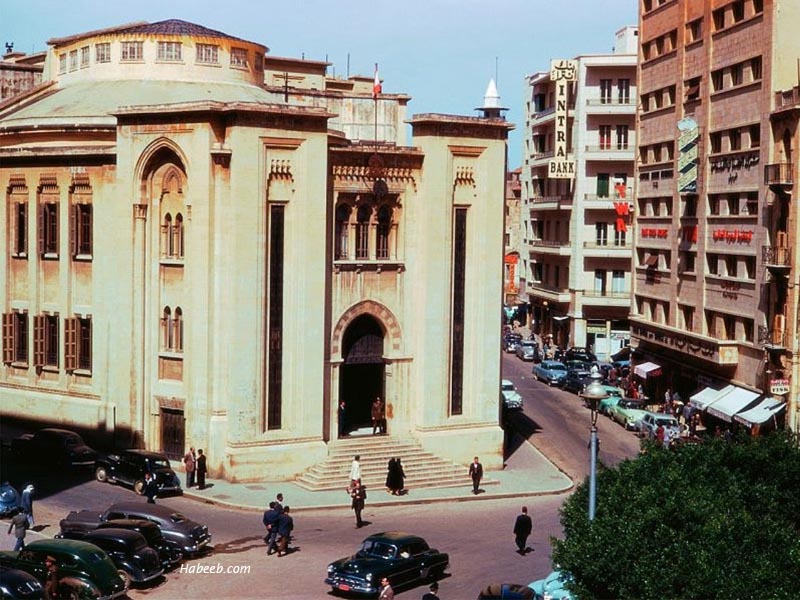
WikiLeaks and 40 Years of National Dialogues

Lebanon's National Dialogue Committee in 1975

Lebanon’s National Dialogue Committee in 1975 (Image source)

This is the 8th post in a series of monthly posts covering (forgotten/ignored) WikiLeaks cables about Lebanon. 

The Lebanese have been living among trash for the past two months. Instead of properly solving the garbage crisis, the Lebanese political class brilliantly concluded that the source of the crisis was – no, not the corruption – the lack of communication between Lebanese politicians.

We don’t have water, electricity, presidential elections, parliamentary elections, or freedom of speech. Actually, we don’t have anything. And no, it’s not because our politicians don’t work and are too lazy to do their job.

It’s because our politicians don’t communicate enough with one another.

It’s not because they have failed time after timeeven with popular pressure – to come up with an eco-friendly solution to the garbage crisis and have instead amazed us with government plans as trashy as the garbage piling up on the streets, thinking that the people will eventually accept the fait accompli and cheer for the government’s bad solutions when the first rains come and there is nothing else but their solution to save us from the worst to come.

It’s because our politicians don’t communicate enough with one another.

You see, the Hezbollah-Mustaqbal dialogue was not enough. The FPM-LF dialogue was not enough. The 2006 dialogue was not enough. The 2007 La Celle-Saint-Cloud dialogue was not enough. The 2008 Doha dialogue was not enough. The 2009 dialogue was not enough. The 2010 dialogue was not enough. The 2012 dialogue was not enough. The 2013 dialogue was not enough. The 2014 dialogue was not enough. The 2015 dialogue was postponed, so clearly it’s also not enough. 10 years of dialogue weren’t enough. The 2055 dialogue won’t be enough, the same way the 1975 dialogue wasn’t enough. They should talk more. Even more. Perhaps discuss the weather. The sandstorm. The snowstorm. All kind of storms. We pay them to talk, don’t we?

1975.  Yes, you read that right. We had national dialogues in 1975, and as our politicians discussed, postponed and kept on discussing, the country was enjoying the looting, the massacres, the destruction and the various foreign occupations, the same way the country is today enjoying the smell of garbage, corruption and political repression.

This month’s Wikileaks cable is inspired by the September 2015 dialogue sessions between the Lebanese Za’ims. It’s a Kissinger cable discussing the newly formed national dialogue committee in 1975 that was supposed to solve the crisis at the very beginning of the Lebanese civil war. As you read the cable, you’ll see how we have been basically stuck in the seventies for the past 40 years. This quote from the cable, “thus far, dialogue committee has succeeded only in applying soothing balm to national wounds requiring radical surgery” sums up 40 years of Lebanese national dialogues.

Note how our politicians always seem to put the word “national” in the dialogue’s name as an attempt to monopolize the crises, exclude everyone else, and give themselves legitimacy and the national dialogue’s decisions more power than the official laws or decrees (the Baabda declaration, among other decisions, is a perfect example) although the “national dialogue” body has no constitutional basis and its members aren’t even elected by the people.

Take a look at the cable:

COMMITTEE OF NATIONAL DIALOGUE: LEBANON BITES THE BULLET WILL IT EASE THE PAIN?
1975 September 26, 05:25 (Friday)
1975BEIRUT11967_b
CONFIDENTIAL
UNCLASSIFIED
Margaret P. Grafeld Declassified/Released US Department of State EO Systematic Review 06 JUL 200
SUMMARY: THE NEWLY FORMED ” COMMITTEE OF NATIONAL DIALOGUE” (COMPOSED OF 10 CHRISTIANS AND 10 MOSLEMS) WAS DEVISED AS THE
CONFIDENTIAL CONFIDENTIAL PAGE 02 BEIRUT 11967 01 OF 02 261052Z
ONLY DISCERNIBLE WAY OUT OF THE CURRENT CRISIS. CONCEIVABLY IT WILL DAMPEN THE FIGHTING, BUT ITS LARGER AIM OF TACKLING BASIC SOCIAL AND POLITICAL ISSUES MAY PROVE TOO FORMIDABLE A TASK. EVEN THE IMMEDIATE GOAL OF STOPPING ROUND 4 COULD BE BEYOND ITS CAPABILITIES, SINCE ITS FIRST SESSION SEPT 25 POSTPONED DELIBERATIONS UNTIL MONDAY, SEP 29 AND THE FRAGILE CEASEFIRE MUST HOLD UNTIL THEN TO PRESERVE THE COMMITTEE’J CREDIBILITY. LEFTISTS ARE STRONGLY REPRESENTED IN THE “DIALOGUE”, BUT THEIR VOICE IS DIVIDED.
THE ECLIPSE OF PRES FRANGIE IS INSTUTIONALIZED, SINCE NONE OF THE MEMBERS IS CLEARLY A FRANGIE MAN. IN GENERAL: SO FAR SO GOOD, BUT THE HARD ROAD LIES AHEAD. END SUMMARY.
1. LEBANON HAS WAGERED MUCH ON A SINGLE CAST OF THE DICE WITH THE FORMATION OF THE 20 MAN “COMMITTEE OF NATIONAL DIALOGUE” (REFTEL). AN EXAMINATION OF PREVIOUS ROUNDS THIS YEAR WILL SHOW THAT TEMPORARY OF A SIDE ISSUE WHICH HAD ASSUMED CENTRAL IMPORTANCE IN THE COURSE OF THE FIGHTING. ROUND ONE WAS BROUGHT TO VMA CLOSE BY GEMAYEL’S AGREEMENT TO TURN OVER FOR QUESTIONING SEVERAL INDIVIDUALS ACCUSED OF COMPLICITY IN SO-CALLED AIN RUMMANEH “MASSACRE” OF APRIL 14. ROUND TWO TAPERES OFF FOLLOWING THE RESIGNATION OF THE MILITARY CABINET WHICH ASSUMED POWER ONLY AFTER RPT AFTER THAT ROUND BEGAN; AND ROUND THREE ENDED WITH NAMING OF KARAME CABINET. FOLLOWING SUCCESSION OF ABORTIVE CEASEFIRE, LEBABESE, WITH ASSISTANCE OF SYRIANS, HAVE SETTLED UPON DIALOGUE COMMITTEE AS DEVICE FOR HOPEFULLY BRINGING RELIEF FROM STRIFE WHICH HAS BROUGH THIS COUNTRY AS NEAR TO NATIONAL COLLAPSE AS ANY DEVELOPMENT IN ITS TROUBLED HISTORY.
2. THE DIFFERENCE, THIS TIME, IS THAT THE SIDE ISSUE EMPLOYED (FORMATION OF THE COMMITTEE) IS DIRECTLY RELATED TO SENSITIVE ISSUES WHICH UNDERLIE THE BASIC CONFLICTS IN THIS SOCIETY. IF THE ENVISIONED DIALOGUE DOES NOT BEAR SUSTANTIVE FRUIT, THE COSMETIC EFFFECT OF ITS INSTITUTIONALIZATION WILL NOT PRESERVE FOR LONG THE FRAGIL LULL IN THE CLASHES THAAT HAVE BEEN TEARING AT LEABNON VITALS. SHOULD THE OPTION OF TALKING TO HEAL THE DEEP AND DIVISIVE FISSURES IN THE LEBANESE BODY POLITIC FAIL, LEBANON MAY FIND ITSELF WITH OUT EVEN THE HOPE OF “NATIOAL RECONCILATION” TO PREVENT ITS BEING SWEPT OVER THE EDGE INTO THE ABYSS OV CIVIL WAR.
CONFIDENTIAL CONFIDENTIAL PAGE 03 BEIRUT 11967 01 OF 02 261052Z
3. NATURE OF THE COMMITTEE: THE” DIALOGUE COMMITTEE” WHICH ASSEMBLED AT 1100 HOURS(LOCAL ) THIS MORNING FOR ITS INAUGURAL SESSION IS, TO OUT KNOWLEDGE AT LEAST, THE MOST COMPREHENSIVE GROUPING BROUGH TOGETHER IN LEBANON SINCE INDEPENDANCE. WE FIND IT NOE WORTHY AS A STRAW IN THE WIND THAT COMMITTEE INCLUDES TEN CHRISTIANS AND TEN MOSLEMS (DIVIDED AMONG SUNNI, SHIITE AND DRUZE). A USEFUL PRECEDENT HAS THEREFORE BEEN SET AT THE OUTSET FOR A POSSIBLE 50-50 DIVISION BETWEEN MOSLEMS AND CHRISTIANS AS A STEP TOWARD MEETING MOSLEMS DEMANDS FOR GREATER POLITICAL POWER. CONFESSIONAL AFFILIATION, OF COURSE, DOES NOT TELL THE ENTIRE STORY. TO GIVE BUT TWO EXAMPLES, ONE OF THE TWO DRUZE, ARSLAN (JUMBLATT IS THE OTHER), CAN BE EXPECTED TO ACT IN CLOSE CONCERT WITH PRESENT INTMIN CHAMOUN. ABBAS KHALAF, ALTHOUGH A CHRISTIAN, WILL BE HAVE IN HIS CAPACITY AS A LEFTIST. CONAEQUENTLYUN IT IS NECESSARY TO LOOK ALSO TO THE POLITICAL COMPOSITION OF THE GROUP.
GODLEY CONFIDENTIAL NNN CONFIDENTIAL
4. THE LEFT: ONE IMMEDIATELY STRIKING FACT IS THAT THE LEBANESE LEFT ACHIEVED CONSIDERABLE (PROBABLY DISPROPOR- TIONATE) REPRESENTATION (JUMBLATT, KHALAF, AWADAH, KANSU, AND POSSIBLE QARANOUH). THIS ADDED WEIGHT WAS QUITE LIKELY THE PRICE JUMBLATT EXTRACTED FOR HIS AGREEMENT TO SIT DOWN WITH GEMAYEL AND TO SOFTEN HIS DEMAND THAT THE LEFTIST RE- FORM PROPOSALS BE ACCEPTED AS THE BASIS OF DISCUSSION. ON THE OTHER HAND, KANSU (SHIITE) REPRESENTS THE PRO-SYRIAN BAATH PARTY OF LEBANON AND CAN BE BROKEN STEP IN PAST WITH
CONFIDENTIAL CONFIDENTIAL PAGE 02 BEIRUT 11967 02 OF 02 260711Z
JUMBLATT AND OTHER LEFTISTS. QARANOUH IS ALSO REPORTEDLY CLOSE TO SUNNI GRAND MUFTI KHALED HASSAN AND MAY TEND TO ORIENT HIMSELF TOWARD OTHER MORE MIDDLE-OF-THE ROAD SUN- NIS (KARAME, SALAAM, AND YAFI). NEVERTHELESS, LEFTIST ROLE IN COUNTRY’S POLITICAL XUTURE FINDS SUBSTANTIAL RECOGNI- TION IN COMMITTEE.
5. SUNNI/SHITTE EQUALITY: TO THE EXTENT THAT COMMITTEE MAKE- UP MAY PROVIDE A BELLWEATHER FOR THE FUTURE, WE ALSO FIND PARITY BETWEEN SUNNI AND SHIITE PARTICIPANTS SIGNIFICANT. LIKE SUNNIS, SHIITES HAVE FOUR REPRESENTATIVES (ASAAD, WAHID, AWADAH, AND KANSU). SHIITE CHOSEN, HOWEVER, REFLECT SERIOUS DIF- FERENCES WITHIN LEBANON’S LARGEST AND POOREST MINORITY. WAHID IS THE SOLE SPOKESMAN FOR THE IMAM MUSA SADR AND THERE ARE ALREADY RUMBLINGS OF THE IMAM’S DISSATISFACTION WITH THE SLIM RECOGNITION ACCORDED HIS ROLE IN LEBANON. ASAAD IS, OF COURSE, A BITTER POLITICAL RIVAL OF THE IMAM AND DID NOT ATTEND THE FIRST SESSION OF THE COMMITTEE, PLEADING THE PRESS OF PARLIAMENTARY BUSINESS. HE HAD EARLIER CALLED A SPECIAL SESSION OF PARLIAMENT TO CONSIDER THE COUNTRY’S PROBLEMS. AWADAH AND KANSU, AS NOTED ABOVE, ARE TO THE LEFT OF THE IMAM IDEOLOGICALLY, BUT, OF THE TWO, WE BELIEVE WAHID WOULD FIND KANSU MORE COOPERATIVE. SABRI HAMADE, FORMER SPEAKEC AND A SHIITE POWER IN THE BAALBEK REGION, IS RE- LIABLY REPORTED TO BE LIVID AT HIS EXLUSCION FROM PRO- CEEDINGS AND ADEL OSSEIRAN (CURRENTLY MINISTER) IS THE ONLY MEMBER OF CABINET NOT INCLUDED IN GROUP OF TWENTY. WE SUSPECT BECAUSE OF ILL HEALTH.
6. ECLIPSE OF FRANGIE: COMMITTEE OF NATIONAL DIALOGUE REPRESENTS, IN OUR VIEW, FURTHER EVIDENCE OF THE DECLIN- ING INFLUENCE AND INCREASING IRRELEVANCE OF THE PRESIDENT. CURRENT JOKE AROUND BEIRUT IS QUERY REGARDING HOW LONG FRANGIE HELD UP FORMATION OF COMMITTEE ARGUING FOR INCLU- SION OF HIS SON, TONY–A CONSPICUOUS ABSENTEE. WE CAN FIND NO RPT NO MEMBER OF COMMITTEE WHO MIGHT BE LABELLED A “FRANGIE MAN.” DEPUTY RENE MOUAWAD PROBABLY WOULD BE SYMPATHETIC TO FRANGIE’S VIEWS SINCE HE IS ALSO A MARONITE FROM ZGHORTA/EHDEN, BUT IT IS PROBABLY TOO STRONG TO SUGGEST THAT HE IS THE PRES’S REPRESENTATIVE. SABA, WHO HAS FREQUENTLY SERVED AS A GO-BETWEEN FOR
CONFIDENTIAL CONFIDENTIAL PAGE 03 BEIRUT 11967 02 OF 02 260711Z
FRANGIE TO JUMBLATT, IS DEFINITELY NOT ON THE FRANGIE TEAM. ON THE OTHER HAND, THE FULL MEMBERSHIP OF THE TRIPARTITITE ALLIANCE (KARAME, SALAAM, AND EDDE), WHICH WAS FOUNDED UPON THE BEDROCK OF OPPOSITION TO FRANGIE, MADE THE RE- CONCILIATION TEAM.
7. COMMITTEE’S FIRST SESSION: COMMITTEE HAS JUST COM- PLETED ITS FIRST FOUR-HOUR STVSION AND SET 1000 HOURS, MON, SEPT 29 FOR THE NEXT MEETING. IN ADDITION TO ASAAD, BOTH TAQLA AND RABBATH WERE ABSEND DUE TO LRAVEL ABORAD. KARAME SERVED AS CHAIRMAN THIS GO-ROUND, BUT WE UNDERSTAND THAT POSITION WILL ROTATE IN SUBSEQUENT SESSIONS. ACCORDING TO PRELIMINARY REPORTS OF MEETING, EXCLUSION OF MENTION OF PALESTINIAN PRESENCE IN COUNTRY WAS ONLY PRECONDITION OF SESSION. WE UNDERSTAND ALSO THAT ALL PARTICIPANTS SHOOK HANDS AND THAT ATMOSPHERE OF SESSION WAS AS CONCILIATORY AS COULD BE EXPECTED. STATEMENT ISSUED AT CLOSE OF TODAY’S MEETING COVERED THREE POINTS: (A) RESPECT FOR CEASEFIRE; (B) ADHERENCE TO LEBANESE FORMULA ON BASIS THAT LEBANON IS FOR ALL CITIZENS AND NOT ANY ONE GROUP, AND (C) AGREEMENT TO CONTINUE CONSULTATIONS TO REACH POLITICAL, ECONOMIC AND TZVTAL REFORM WITHIN DEMOCRATIC FRAMEWORK.
8. THUS FAR, DIALOGUE COMMITTEE HAS SUCEEDED ONLY IN APPLYING SOOTHING BALM TO NATIONAL WOUNDS REQUIRING RADI- CAL SURGERY. FACT THAT IT DID NOT RPT NOT COLLAPSE ON ITS FIRST OUTING SHOULD BE ACCOUNTED A PLUS, BUT PARTIES ARE STILL VERY FAR FROM ATTACKING CONSTRUCTIVELY SUBSTANTIVE IS- SUES WHICH DIVIDE THEM. EVEN MINIMAL PROGRESS ACHIEVED BY THE VERY HOLDING OF TODAY’S SESSION MAY, IN COMBINATION WITH LEBANESE WAR-WEARINESS AND AMMUNITION OHORTAGES, BUY AT LEAST BRIEF RESPITE FROM CAPITAL’S AGONIES. CHRISTIANS OF THE RIGHT AND LEFTISTS, WHO ARE RELIABLY REPORTED TO HAVE BEEN BULLIED BY KHADDAM INTO ACCEPTING TALKS, BOTH HOLD INFLEXI- BLE POLITICAL VISIONS OF THE APPROPRIATE SHAPE OF THIS COUNTRY. IF CEASEFIRE BREAKS DOWN SUBSTANTIALLY PRIOR TO NEXT COMMITTEE MEETING FOUR DAYS FROM NOW, ENTIRE RECONCILIATION STRUCTURE SO LABORIOUSLY PUT TOGETHER WILL PROBABLY COME CRASHING DOWN. BEIRUT IS RELATIVELY QUIET THIS AFTERNOON, BUT ARMED MEN ARE NOT FAR FROM MILITARY POSTIONS THEY OCCUPIED UNTIL THIS MORNING AND COULD QUICKLY BE BACK IN COMBAT. IF
CONFIDENTIAL CONFIDENTIAL PAGE 04 BEIRUT 11967 02 OF 02 260711Z
STANDDOWN HOLDS FOR THE TIME BEING (WE WOULD RATE CHANCES AT NO MORE THAN 50 PERCENT), SUBSEQUENT COMMITTEE SES- SIONS WILL BE REPLETE WITH OPPORTUKITIES FOR A BREAKDOWN OF PROCESS AS CONCRETE ISSUES ARE TACKLED.
9. LEBANON IS RIPE FOR ON E OF ITS FABLED “MIRACLES,” BUT IT IS DIFFICULT FOR US TO PREDICT ONE IN THE MIDST OF THE HATREDS AND ANIMOSITIES WHICH HAVE BLOSSOMED INTO FULL FLOWER OVER THE LAST SIX MONTHS. THE OUTLOOK REMAINS GRIM. IF THE LEBANESE HAVE TAKEN THE BULLET IN THEIR TEETH AT LAST, ONE MUST CONSTANTLY BE AWARE THAT THEY ALSO RE- TAIN A ROUND IN THE CHAMBER.
GODLEY
CONFIDENTIAL
NNN