8 March Alliance

Aoun-Geagea: Is It Truly a Declaration of Intent?

FPM leader Michel Aoun and LF leader Samir Geagea speak during a joint press conference in Rabieh, Tuesday, June 2, 2015. (The Daily Star/Stringer)

FPM leader Michel Aoun and LF leader Samir Geagea speak during a joint press conference in Rabieh, Tuesday, June 2, 2015. (The Daily Star/Stringer)

“A declaration of intent” (اعلان النوايا), they called it. Because you know, as the Lebanese say, “المهم النية”.

Surprise. For the first time since 2005, Michel Aoun and Samir Geagea met. Live. Face to face. Without having to shoot at one another like the good old days of the late eighties.

But if you have been following Lebanese politics for the past 9 months, the meeting between the leaders of the two main Christian parties shouldn’t be surprising. Both parties were having talks since Hezbollah and Mustaqbal started their dialogue earlier this year (Aoun even tasted Geagea’s truffles in January!), the talks were making good progess in April, and the declaration of intent was actually finished a month ago. In fact, if you remember correctly, the fear of an FPM-LF rapprochement led the Kataeb, Michel Sleiman, and other minor Christian politicians to unite under one front in March. So no, it should not be that surprising to see Kanaan and Riachi telling us that the FPM and the LF are intending to continue the dialogue and work within the constitution in order to protect their interests.

What is weird here is the timing of the declaration. When they finished it last month without directly announcing it, it was assumed that both parties were waiting for M8 and M14 to agree on the major issues such as the presidential elections. It’s still too soon to be sure why that specific timing was chosen, but it seems right now that Geagea was trying to sabotage a potential rumored Aoun-Hariri deal on the way: letting Aoun name the commander of the army in exchange of conceding to some of Mustaqbal’s terms such as M8 lifting its veto on some centrist presidential candidates. Only yesterday, I was talking about how important it is for Aoun and the FPM that Roukoz becomes commander of the army.  If you read the declaration, you’ll find out  that it revolves around one main idea: protecting the Christian interests, and at their core, the election of a strong president (look for the sentence in bold in the original text). And in case you still don’t know what a “strong president” means after 12 months of presidential vacancy, let me enlighten you: Strong = Aoun and /or Geagea.

Aoun looked like the bigger party yesterday, since it was Geagea the one who visited him in Rabieh, but don’t be fooled by the formalities, since in the end, the leader of the Lebanese Forces succeeded in bringing back the “strong president” rhetoric to life, thus pushing Aoun away from the idea of a consensual president and a Roukouz deal with the Mustaqbal and the PSP. Yesterday, it wasn’t a new alliance between the LF and the FPM that was starting. It was the consensual candidate – Roukoz deal that was being put off the table, At least for now.

Anyway, here’s the original text of the declaration (directly from the source), if you would like to waste five minutes of your times on a text that could be summed up with the sentence “We agree to find an agreement”

لما كان الحوار هو الوسيلة الفضلى لتبادل الآراء وتفاعلها من اجل صياغة رؤية مشتركة حول القضايا والمواضيع ذات الاهتمام المتبادل على جميع الصعد السياسية والاقتصادية والادارية والاجتماعية،

ولما كان التيار الوطني الحر والقوات اللبنانية قد عقدا أكثر من لقاء وبحثا أسس التفاهم في ما بينهما، فوجدا أن التنافس السياسي أمر مشروع وواجب لارساء قواعد الديمقراطية وبلورتها في نظام للحكم.

ولما كان حزبا التيار الوطني الحر والقوات اللبنانية قد أجريا مراجعة للعلاقة التي سادت بينهما خلال أكثر من ربع قرن وذلك من أجل تنقية الذاكرة من مناخات الخصومة السياسية التي طبعت تلك العلاقة، والتطلع بالتالي نحو مستقبل يسوده التنافس السياسي الشريف و/أو التعاون السياسي.
–  التزام نهج الحوار والتخاطب السياسي البناء والسعي الدائم للتوافق على ثوابت وقواسم مشتركة
– تأكيد الايمان بلبنان كوطن نهائي سيد حر مستقل وبصيغة العيش المشترك وبضرورة التمسك بالمبادئ الواردة في مقدمة الدستور بصفتها مبادئ تأسيسية ثابتة
– اعتماد المبادئ السيادية في مقاربة المواضيع التي هي على ارتباط وثيق بالقضايا الاقليمية والدولية على أن تؤخذ في الاعتبار امكانات الدولة اللبنانية والمعادلات الاقليمية والدولية
– الالتزام بمرتكزات وثيقة الوفاق الوطني التي اقرّت في الطائف والتعهد باحترام أحكام الدستور كافة دون انتقائية وبعيداً عن الاعتبارات السياسية والابتعاد عن كل ما من شأنه التلاعب بأحكام الدستور أو اساءة تفسيره
– التأكيد على أن وثيقة الوفاق الوطني قد طبقت منذ اقرارها وخلال عهد الوصاية وحتى اليوم بشكل معتور مما يوجب تصويب المسار من خلال العودة إلى مرتكزات الميثاق الوطني واحكام الدستور المتعلقة بالمناصفة الفعلية وصحة التمثيل النيابي الفعال والشراكة الصحيحة بين مكونات المجتمع اللبناني كافة بما يحفظ قواعد العيش المشترك وترجمة ذلك في قانون انتخاب يؤمن القواعد المشار اليها اعلاه وفي انتخاب رئيس للجمهورية قوي ومقبول في بيئته وقادر على طمأنة المكونات الأخرى والايفاء بقسمه

وبالتزامات الرئاسة بما يؤمن الشراكة الفعلية الميثاقية والمصلحة الوطنية العليا
– العمل على تعزيز مؤسسات الدولة وتشجيع ثقافة الاحتكام الى القانون والمؤسسات الشرعية لحلّ أي خلاف أو اشكال طارئ وعدم اللجوء إلى السلاح والعنف مهما تكن الهواجس والاحتقانات
– دعم الجيش على الصعيدين المعنوي والمادي بصفته المؤسسة الضامنة للسيادة والأمن القومي وتكريس الجهد اللازم لتمكينه وسائر القوى الأمنية الشرعية من التعامل مع كل الحالات الأمنية على الأراضي اللبنانية كافة بهدف بسط سلطة الدولة وحدها على كامل الأراضي اللبنانية
– ضرورة التزام سياسة خارجية مستقلة بما يضمن مصلحة لبنان ويحترم القانون الدولي وذلك بنسج علاقات تعاون وصداقة مع جميع الدول ولا سيما العربية منها مما يحصن الوضع الداخلي اللبناني سياسياً وأمنياً ويساعد على استقرار الأوضاع وكذلك اعتبار اسرائيل دولة عدوة والتمسك بحق الفلسطينيين بالعودة إلى أرضهم ورفض التوطين واعتماد حل الدولتين ومبادرة بيروت 2002
– الحرص على ضبط الأوضاع على طول الحدود اللبنانية السورية بالاتجاهين وعدم السماح باقامة منطقة عازلة في لبنان وباستعمال لبنان مقرا او منطلقا لتهريب السلاح والمسلحين ويبقى الحق في التضامن الانساني والتعبير السياسي والاعلامي مكفولا تحت سقف الدستور والقانون والمصلحة الوطنية العليا
– احترام قرارات الشرعية الدولية كافة والالتزام بمواثيق الامم المتحدة وجامعة الدول العربية
– العمل على تنفيذ القرارات السابقة التي تم الاتفاق عليها في طاولة الحوار الوطني
– ايجاد حل لمشكلة النزوح السوري والمتعاظمة والتي أصبحت بمثابة قنبلة موقوتة أمنيا واقتصاديا وسياسيا واجتماعيا لا سيما مع تفاقمها مع مشكلة اللاجئين الفلسطينيين وذلك عن طريق تأمين عودة النازحين إلى المناطق الآمنة داخل الأراضي السورية
– ضرورة اقرار قانون جديد للانتخابات يراعي المناصفة الفعلية وصحة التمثيل بما يحفظ قواعد العيش المشترك ويشكل المدخل الأساسي لاعادة التوازن إلى مءسسات الدولة
– الالتزام بوثيقة الوفاق الوطني لجهة اعتماد اللامركزية الإدارية والمالية الموسعة ونقل قسم كبير من صلاحيات الادارة المركزية ولا سيما الانمائية منها إلى سلطات لامركزية منتخبة وفقاً للأصول وتأمين الايرادات الذاتية اللازمة لذلك
– الالتزام بأحكام الدستور المتعلقة بالمالية العامة وبأحكام قانون المحاسبة العمومية التي تحدد موازنة الدولة وشموليتها وأصول ومهل اعدادها وتقديمها إلى المجلس النيابي وكذلك اعداد الحسابات المالية وتدقيقها وتصديقها وفقاً للأصول وكذلك الالتزام بضرورة تحديد سقف للاقتراض لا يمكن تجاوزه الا باجازة جديدة من المجلس النيابي وبضرورة ترشيد الانفاق والحد من الهدر والانفاق غير المجدي ومحاربة الفساد المستشري وإعمال قانون الاثراء غير المشروع وانشاء المحكمة الخاصة بالجرائم المالية
– التأكيد على التمسك بالمبادئ الكيانية المؤسسة للوطن اللبناني والتي هي سبب وجوده وجوهر رسالته في التسامح والتنوع والتعايش الفريد القائم على المشاركة الكاملة في الحكم والعمل المشترك من اجل اقرار القوانين المحققة لذلك وفي طليعتها قانون استعادة الجنسية وقانون تملك الأجانب كما العمل من أجل الحؤول دون القيام بأي اجراءات تخالف المبادئ المنبثقة من الصيغة اللبنانية ومن الميثاق الوطني.

وإذ يعتبر الطرفان أن اعلان النوايا هذا، يهدف إلى وضع المبادء الديمقراطية ومعاييرها كأساس لتنظيم علاقتهما، يؤكدان على ابقاء المبادئ الدستورية والميثاقية فوق سقف التنافس السياسي، كما يؤكدان على ارادتهما ورغبتهما بالعمل المشترك والتواصل في جميع المجالات والمواقع الممكنة لتنفيذ التزاماتهما المنوه عنها اعلاه ويعتزمان العمل على تفعيل انتاجية اتفاقاتهما حيث يتفقان، والتنافس من دون خصام حيث يختلفان، كما يتعهدان بالتواصل الدائم والتباحث المستمر للتفاهم على كافة المواضيع ذات الشأن العام والوطني.

375 days since the 25th of May. 211 days since the 5th of November.

How Hezbollah Took Power In 2011

Soldiers advance towards stone-throwing Sunni Muslim supporters of outgoing Prime Minister Saad Hariri near Tariq al-Jadidah in Beirut January 25, 2011. (REUTERS/Hasan Shaaban)

Soldiers advance towards supporters of outgoing Prime Minister Saad Hariri near Tariq al-Jadidah
in Beirut January 25, 2011. (REUTERS/Hasan Shaaban)

Presidential politics are becoming very repetitive these last two months, which is why I’m going back till 2011 today, in order to try to decipher one of the most complicated and underrated large-scale maneuvers any Lebanese party did since the Syrian withdrawal. Today’s post is on how Hezbollah managed to go through with a one-sided government without starting a mini-sectarian civil war, something M14 failed to do when they tried to achieve the same goal of ruling all by themselves in 2007/2008.

How It All Began

So let’s make a small, very simplified summary of what happened in January 2011: M14 wanted (to fund) the STL, M8 didn’t want (to fund) the STL, things started to escalate quickly, and as Hariri (who was still Prime Minister back then) was preparing to meet Obama on the 12th of January 2011, M8’s ministers in the cabinet resigned, forcing the government to collapse (The irony here is that Mikati would eventually indirectly fund the STL without asking the M8-run cabinet for the funds via a very weird loophole that he managed to find by using the money of the Prime Minister’s budget). But the thing is, Hezbollah and its allies did not have what politicians in Lebanon love to call the “blocking third”. Unlike the previous cabinet of Fouad Siniora (2008) where Hezbollah had 11 ministers out of 30 and M14 – the majority back then – still held more than half of the seats, the new Hariri cabinet of November 2009 was supposed to be a “refreshing experience”: The majority (M14) did not hold the majority of seats (only the half, 15/30), and the minority (M8) were not awarded the blocking third – 11 seats – but only 10 seats out of 30, a number that is high, yet not high enough to bring the government down in case M8 decided one day to withdraw support. The five other seats were given to the President, who was considered to be the only centrist player in the game back then. That’s how the government of November 2009 saw the light after 5 months of negotiations. Today the number “five” is nothing to the eleven months that Salam took to form his government, but back then such a number was shocking. So when the 10 ministers of M8 resigned in 2010, the cabinet was not supposed to collapse, at least not directly. Like 2006, M8 was expected to maneuver and play the sectarian card, by saying that the cabinet had no credible Shia representation, and hence – according to a very vague article in the constitution’s preamble “( J) There shall be no constitutional legitimacy for any authority which contradicts the pact of mutual existence”  the president should consider the cabinet resigned and seek the formation of a more legitimate and representative one. That’s what everyone thought M8’s maneuver was, at least for the next couple hours. The speculation ended when President Michel Sleiman’s Shia representative in the cabinet (The last of the 6 resigning Shia ministers), who was always rumored to be more of a sympathizer of M8 than a centrist, submitted his letter of resignation.

It was no longer a 10 minister-resignation political maneuver in order to force some terms on the ruling alliance. It was an 11 minister-resignation and the beginning of a political coup.

Patience Is a Virtue (Part I)

From that moment on, things accelerated quickly: There were signs of Sunni discontent in Beirut and the M14 controlled regions and in the end, the President, who was probably under intense pressure from both sides,  postponed the parliamentary consultations for a couple more days. As things were calming down on the political front, the front-runner was still Hariri (even Nasrallah said the Hariri would probably be nominated again at the time), as Jumblatt was still more or less part of M14 and his share in the parliament and the cabinet was still considered to be part of M14’s one. Then the unexpected happened: Rumors spread that Hezbollah had dispatched armed members of the party in Beirut, referred to by M14 as “the Black-shirts” (M14 was probably trying to compare them to Mussolini’s Camicia Nere). M8, who still had no clear candidate in mind (there were talks that Karami or Hoss might be nominated by M8, but the rumors were quickly dismissed) dropped a political bomb: They announced that they had formed an alliance with Tripoli’s key politician, Najib Mikati. Mikati had also brought with him 2 other MPs from Tripoli to the M8 side. Jumblatt – who was known to switch allegiances quite often – switched allegiance and supported Mikati’s nomination to the premiership. His 11 MP-strong bloc collapsed, and four of his MPs, who turned out to be closer to the FM than to him, stood with Hariri. Strong with Jumblatt’s 7 extra votes and Mikati’s extra 3 votes, the March 8 alliance was now, and for the first time since 2005, the ruling coalition in parliament. On the 25th of January, it was Najib Mikati, and not Saad Hariri who was designated Prime Minister. Riots started in Beirut and Tripoli. (Remember the “Day of Anger”?) Hezbollah couldn’t go forward with M8’s plan to rule without calming down the Sunni streets before making any additional step. And thus began a 5 months period of vacancy and negotiations that was probably intended for that sole purpose.

Patience Is a Virtue (Part II)

The first step of calming down the M14 regions was by giving the impression that M8 did not want to rule all by itself. For several months after Mikati was designated, M8 and M14 carried on endless negotiations that were intended to make the new cabinet a consensual “unity government”, similar to the Hariri one, except that it wouldn’t be led by Hariri. Hezbollah knew that the FM was going to put conditions, and we all knew that Hezbollah would refuse them and that M14 couldn’t possibly accept to be a minor player in the executive power especially after the way M8 removed Hariri from it. So giving the impression/illusion that a consensual cabinet was on the way was a smart maneuver.

But that first step wasn’t enough: The Arab spring had just begun, so Hezbollah had to make sure that the cabinet would not collapse right after it was formed. Hezbollah knew that the FM couldn’t escalate things/riot against the Christian FPM in the way they would do so against Hezbollah (since any demonstration against the FPM could turn into one against the Christians and would eventually weaken M14 in the Christian regions). This is why Hezbollah’s second step was to make the cabinet confrontation a Christian-Sunni one and a Christian-Christian one instead of a Shia-Sunni one. It was only a matter of time before Aoun asked for half of the cabinet’s seats (we all saw that coming), and Hezbollah’s silence on the matter made Sleiman and Mikati, who both expected to have 1 or 2 Christian ministers, panic. It also made M14’s parties shift their criticism towards Aoun and his Christian base instead of Hezbollah and its Shia base. Thus began 2 or 3 months of internal struggle over those seats between Aoun, Mikati, and Sleiman. The statements in Lebanese politics were no longer about how Hezbollah threw the FM outside, but how Aoun and the others were fighting over the leftovers of the M14 seats. As a matter of fact, the main maneuvering tactics that the cabinet adopted during its rule were based on the idea that if Aoun argued with Mikati and Mikati argued with Aoun, both would look like “heroes” within their sects and it would eventually lead to a whooping M8 victory at the 2013 general elections.

In the last months preceding the formation of the government, the media focused on something they called “العقدة السنية” (The Sunni complication). That was Hezbollah’s last maneuver of the 2011 vacancy. After the Aoun-Mikati-Sleiman mini-battle ended, Hezbollah’s two key allies in Tripoli (The Karami family and Mikati’s men) wanted to be represented in the cabinet. But the cabinet doesn’t have an endless number of Sunni seats, and most if not all of the post-Taef cabinets have had a fixed amount of seats for every sect (Maronites, Sunnis and Shias have each an equal share of 6 seats in a 30 ministers cabinet). This gave the impression that it was no longer a Sunni-Shia struggle for power, but rather a Sunni-Sunni bickering. M8’s major parties, after letting this feud go on for a while, ended the vacancy with a gesture that everyone still remembers. Berri gave up one of his Shia ministers so that M8 seemed like it did a sacrifice in order to satisfy its Sunni allies, while Hezbollah was now ruling with a cabinet that had a Sunni relative majority (7 Sunnis, 6 Maronites, 5 Shias) for the first time since years. Tripoli, the epicenter of the “Day of Anger” riots, was awarded more ministers than any other region. That maneuver made every M14 statement that would include the sentence “Hezbollah is undermining the Sunnis / Tripoli” irrelevant. The only way of describing that maneuver is by quoting Berri: “Eventually I lost a minister but won Lebanon“. They had in fact won Lebanon for two more years with that tactic.

Moreover, M8, with its endless 5-months inner fights looked like a very weak coalition that wouldn’t last long. That illusion of not lasting long led the M14 public to be more forgiving about the presence of a one-sided cabinet. It was way better for the new opposition to bring down a failing cabinet right before the 2013 elections (weirdly enough, that’s what eventually happened, although we never had those elections…) than to violently oppose it before it even got to action. And that’s how the 2011 cabinet saw the light and managed to overcome the different crises that shook the country in 2012 and 2013.

La Morale

In a way, today’s political impasse is a lot similar to the one we had in 2011. Everything is not what it seems it is. In the future we’ll look at this presidential vacancy in a  different perspective than we do now, just like M8’s mini-tactics were in fact a huge political maneuver (whether it was intended or not) that could have been summed up with the word “patience”.

Reminder: We still don’t have a president.

350 days (30,240,000 seconds) since the 25th of May. 186 days (16,070,400 seconds) since the 5th of November. 

Eleven Months of Vacuum

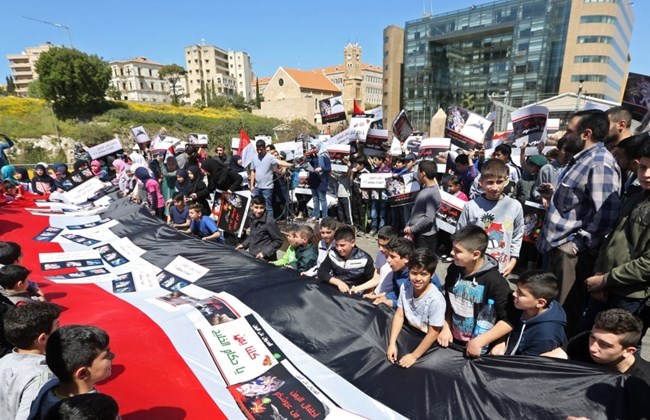
Lebanese children hold placards and a giant Yemeni flag during a demonstration organized by Hezbollah, in front the United Nations headquarters in Beirut, Lebanon, Sunday, April 5, 2015. (AP Photo/Bilal Hussein)

Lebanese children hold placards and a giant Yemeni flag during a demonstration organized by Hezbollah, in front the United Nations headquarters in Beirut, Lebanon, Sunday, April 5, 2015. (AP Photo/Bilal Hussein)

Ten years ago, the Syrian army was withdrawing from Lebanon. In April 2005, “Syria was out”. But the truth is, Syria was never out. Syria was everywhere. Syria is everywhere.  For a brief moment, it seemed as if the politics of Syria and Lebanon would be at last separated from one another. But we were wrong. In the seven years that followed, the political coalitions in Lebanon were built on nothing but their stance regarding Syria, and for the 3 years after that, Lebanese politics became about the Syrian Civil War. The government will be formed when things in Syria settle down, they said. The president will be elected when things in Syria settle down, they said. Even the parliamentary elections would be held when things in Syria settle down, they said. And that last thing, it was said twice. Lebanese politics became a part of the Syrian Civil War. The Syrian Civil War became part of Lebanese politics.

But then came April 2015. The rival coalitions were not arguing about Syria anymore. At least not as much as they had argued during the past half century.

Congratulations, Lebanon. You have finally been promoted. Instead of arguing about Syria, Lebanese parties are now arguing about Yemen. You know, because we have a proper budget, no public debt, a president, a functioning cabinet, an elected parliament, no threats on our southern and northern borders, and most importantly, a successful democratic sovereign free republic. A republic so successful that its parties and elected representatives have spare time to discuss the politics of a country whose capital lies 2200 Km south of Beirut.

Anyway, enough nagging, and let’s look at the political events of the eleventh month of presidential vacancy.

Yemen, Yemen, Yemen. Did I forget to mention Yemen?

First, Hariri supports the “Saudi intervention” in Yemen. Then, Hezbollah condemns the “Saudi aggression” in Yemen. Then, the Future Movement supports the “Saudi intervention” in Yemen. Then, Nasrallah criticizes Saudi Arabia. Then, the Future Movement criticizes Hezbollah. Then, Hezbollah criticizes the Future Movement. Then, the Future Movement criticizes Hezbollah. Then, Nasrallah criticizes Saudi Arabia. Then, Hariri criticizes Nasrallah. Then, Hezbollah criticizes the Future Movement. Then, the Future Movement criticizes Hezbollah. Then, Hezbollah criticizes the Future Movement. Then, the Future Movement criticizes Hezbollah.

That, dear reader, was a short summary of the three productive weeks we had between the 27th of March and the 17th of April.

Also, it seems that the FM-Hezbollah dialogue is “still safe and sound” despite the war of words. No offense here, but isn’t a war of words the exact opposite of a dialogue? Or do we have to be in a state of war to declare the dialogue a dead-end?

Oh, and by the way, in case I wasn’t too clear, Sanaa is 2200 Km far from Beirut. Deux-mille-deux-cents Kilomètres.

Gebran Bassil

This is by far the event of the month (Hint: It’s also about Yemen). A couple of days after the Saudis launched their campaign, Gebran Bassil, the FPM’s no.2 dropped April’s political bomb: From the Sharm Sheikh summit, he told the world that he expressed support for “legitimacy in any Arab country, especially in Yemen”. Four days later, Bassil struck again: “We don’t wish to see Hezbollah fighting with the Houthis or see anyone from the Future Movement fighting alongside the Saudis”. For the second time in the same week, Bassil was indirectly criticizing the FPM’s key ally, Hezbollah. True, the last statement also included Future Movement criticism, but the very fact that Gebran Bassil dared to start a “mini rebellion” against Hezbollah means a lot, even if it’s just a simple maneuver to make the FPM look as if they care about Lebanon and Lebanon only. Gebran Bassil’s stances were actually so strong that Aoun had to intervene in the very beginning of April with reports saying that he described the Saudi war in Yemen as illegal. But that did not stop Bassil from continuing what he started: On the second day of April, he said that “National unity remains an overriding priority for Lebanon’s foreign policy“.

Aoun’s relative silence here says a lot too. I’m going to put in context: “He [Samir Geagea] said after holding talks with Maronite Patriarch Beshara al-Rahi at Bkirki: “In principle, there is nothing stopping Free Patriotic Movement leader MP Michel Aoun from becoming president, but we have to take into consideration his political platform.”” (April 3)

Walid Jumblatt

Gebran Bassil wasn’t the only one criticizing Hezbollah this month. On March 30, Jumblatt launched an anti-Iran tirade. This stance was followed by a direct critique of Nasrallah’s speech on the first of April, describing it as lacking objectivity. By the 19th of April, Jumblatt asked “What’s wrong with Nasrallah?“. Jumblatt criticizes Hezbollah every now and then, but this time it came together with a Bassil criticism. It was not a very pleasant month for the party of God.

Tammam Salam

Not a very pleasant month indeed. As if the waves of criticism coming from the FPM, the FM, the PSP, the Saudi ambassador and the Grand Mufti weren’t enough, the Prime Minister said that Beirut supported any move that preserves Sanaa’s “sovereignty and territorial integrity.”

If you have been following Lebanese politics for the past few months, you’d notice that Hezbollah usually doesn’t get into a war of words with Tammam Salam (Because weakening him would mean strengthening his ally/rival Hariri). Well, guess what? The pressure was too high on Hezbollah this time that the party’s minister in the cabinet Hussein Hajj Hassan said in a statement that “Prime Minister Tammam Salam’s remarks on the Saudi military intervention in Yemen at the Arab League summit two days ago do not represent the views of the Lebanese government”

But to be fair here, Salam’s pro-Saudi stance (even if discreet) is understandable. It was Saudi pressure that eventually brought Salam to the premiership in April 2013. This is why Hezbollah probably didn’t make a big deal out of it and chose to calm things down in the cabinet meeting.

Nabih Berri

Even Berri tried to distance himself and Amal as much as possible from the FM-Hezbollah clash over Yemen. Within 7 days, the speaker said he supported three things: (1) Oman’s efforts to solve the crisis (April 1), (2) himself hosting the Yemeni dialogue 😛  (April 5) and (3) moving forward with the FM-Hezbollah talks he’s mediating (April 8).

With Tammam Salam and Jumblatt pushed slightly/temporarily towards M14, Berri found himself in April as the new Kingmaker in the Lebanese centre. He wants to host the Yemeni dialogue, because solving the presidential crisis in Lebanon is so 2008.

The Three Blows

Hezbollah suffered three more blows this month. The first blow was when M8 politician Michel Samaha confessed on the 20th of April that he transported explosives (with support of Syrian regime officials) into Lebanon with the aim of targeting Lebanese politicians and religious figures. (Although deep down, and as I said three years ago, this could be a good thing for Hezbollah since it would give the impression that they had nothing to do with the assassinations of the M14 politicians, and that it was Syria via its operatives all the time)

The second blow was the mysterious death of Rustum Ghazali, Syria’s man in Lebanon from 2002 till the 2005 withdrawal. While his death doesn’t have direct or even indirect consequences on the Lebanese scene, Lebanese and Syrian politics are still interconnected and it was seen as victory for M14. And a victory for M14 is never a victory for M8.

And because it wasn’t yet the worst month for M8 since the beginning of time, the third blow came from The Maronite Patriarch who accused Aoun and his March 8 allies of being responsible for the presidential vacuum. That’s the most violent criticism coming from the Maronite church since August 2014.

Yemen and the Baabda Declaration

Also, in other news, Michel Sleiman indirectly declared his candidacy as a “consensual candidate” if all parties accept the Baabda declaration and distance themselves from outside conflicts (inspired from the Lebanese dilemma over Yemen). His reelection would be unconstitutional: Presidents can’t have two consecutive terms in Lebanon. But then again, he was elected unconstitutionally since grade one civil servants need a constitutional amendment to be elected ( something the parliament did not do when they elected him in 2008), so who cares.

If a former protector of the constitution gets elected unconstitutionally and wants to get reelected unconstitutionally, I really don’t know what to say.

Actually, I know what to say. I’ll just repeat what I said at the beginning of the post: Lebanon is a successful democratic sovereign free republic.

341 days since the 25th of May. 177 days since the 5th of November. 773 days till the next parliamentary elections. Just kidding. We’re never going to have elections again 😀

Also, 3 days since Salma Hayek came to Lebanon.

(This last sentence was an attempt to make this political blog more “social”)

Ten Months Of Vacuum

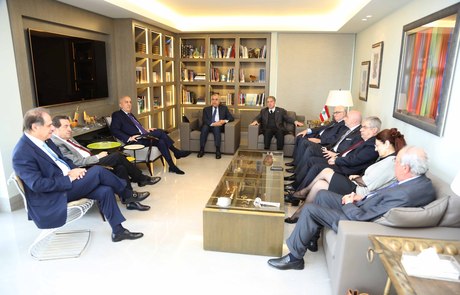
Meet the members of The Consultative Gathering

Meet the members of The Consultative Gathering

Yeah. I know. Ten.

Before I begin, here’s a small recap of the ninth month of presidential vacancy: It started with Hezbollah launching an operation in the Shebaa farms. When Israel did not respond, Hezbollah was supposed to gain momentum on the Lebanese political scene. But Hariri launched an epic maneuver, and Hezbollah did not politically escalate. In the end, it was a tie.

The second half of February and March are more exciting. Way more exciting.

The Two Presidents’ Men

In the last half of February, PM Salam wanted to amend the cabinet’s voting mechanism after several cabinet members began exercising veto power, stalling several of the government’s projects. What happens next? 7 Lebanese ministers meet and decide to form a “consultative gathering”. The ministers are the ones who are loyal to Amine Gemayel and to Michel Sleiman. The rapprochement between the ministers was logical: They all either belong to one of the smallest Lebanese parties in parliament or represent a former president that no longer has any concrete power (not even one MP). The 7 MPs have two more things in common: In a time of presidential vacancy, (1) they all answer to two of the three former presidents that are still alive while (2) not belonging to any of the two main Christian Lebanese parties. Deep down, it’s not about the voting mechanism, as it is about two political groups marking their territory. The two presidents know that they have no power in parliament that would ensure their same important presence in the next Lebanese cabinet. And they also know that they have an enormous amount of prestige (as former presidents) and that the mainstream Muslim parties are annoyed by the LF, the FPM and the two parties’ rivalry preventing them from supporting Aoun, Geagea, or any other alternative than Aoun and Geagea. Again, this is not about the voting mechanism: This is an advertisement. They are showing the Muslim leadership that there is a possible alternative to the FPM/LF choice: A new “prestigious” presidential Christian alliance that is very weak on the ground (and thus that will not ask for too much power – even if it wanted to), and that could still be –  to some extent – representative of Lebanese Christians. The two presidents are asking for political relevance, and in exchange, they will be an asset to weaken the LF, the FPM, or a possible (yet highly unlikely) LF-FPM alliance. For example, if the FPM and the LF reject Kahwaji as consensual candidate, Hezbollah and the FM could count on this new gathering to support the presidential candidacy of Kahwaji. After all, who cares about the other politicians if the biggest party in parliament and the most armed one – along with two former presidents and the army – endorse you?

And the advertisement worked: One of the closest Christian ministers to the FM, Michel Pharaon (Boutros Harb is also a member), joined the new gathering led by Sleiman and Gemayel. Now of course, this rapprochement between the two presidents could eventually have no impact at all, but one should keep in mind right now that the mainstream Muslim parties would have more leverage with their Christian allies (the FPM and the LF).

Hariri also succeeded to undermine the power of PM Tammam Salam (hello there, rivalry) by indirectly encouraging discontent in the cabinet. It’s been a good month of the Future Movement, especially that a new March 14 “national council” likely to reinvigorate the Mustaqbal-led coalition has seen the light.

Approximately one year after the presidential race began, the Maronite Four might be welcoming a new member to their closed group, President Michel Sleiman. The Maronite Four could soon become the Maronite Five.

The Maronite Two

The Aounists and the Lebanese Forces are also about to reach an understanding. The process – whose unannounced intention was probably to slow down the Hezbollah-FM dialogue – has accelerated probably due to the Gemayel-Sleiman rapprochement. The progress in the LF-FPM dialogue could mean two things: (1) That the two main Christian parties are trying to keep the president’s seat to themselves. In other words, the document of understanding could say that only both politicians would be eligible to run for presidency and no one else. Proof? On the 15th of March, Michel Aoun told us once again that he would only agree to a strong president and not to a consensual accordWelcome back to 2014. But it could also mean that (2) no consensual candidate would become president unless the two Christian parties agree on him. This written paper, as useless as it might seem, should put an end to the Muslim parties’ maneuvering and make Aoun and Geagea panic less about the possibility that Hezbollah and Mustaqbal would go through with a consensual candidate of their own. But in the end we (and they) all know that at least one of the Christians leaders will eventually agree to his ally’s terms. But hey, as they say an Arabic, el mhemm el niyye. An FPM-LF document of understanding should hinder for some time any M8-M14 agreement on Kahwaji (or any other consensual candidate for that matter).

Meanwhile, Sleiman Frangieh, who is probably feeling abandoned by everyone (by “everyone” I mean the Gemayel- Sleiman and Aoun-Geagea talks), launched his own political maneuver and preemptively self-proclaimed himself March 8’s number-two presidential candidate after Aoun pulls out.

Quand le chat n’est pas là, les souris dansent

Right now everyone is acting as if there’s a president in office: Berri wants to call for a parliamentary session amid presidential vacuum (It’s arguably unconstitutional, but hey, who cares). Moreover, the Lebanese cabinet is acting as if it’s not a caretaker one anymore: It spent at least two weeks trying to figure out a decision-making mechanism while there’s no president in power, instead of actually pressuring the parliament to elect a president. Our minister of foreign affairs too forgot that he was a caretaker cabinet member, and decided – like Phileas Fogg – to embark on a journey around the world signing treaties in 10 Latin American countries. (Someone should tell him that signing historic treaties with Cuba is not a priority right now)

Because that’s what care-taking apparently means: Doing everything you can do before someone in charge (a president) comes and tells you that you can’t do it.

When Lebanese politicians suddenly become too greedy, it usually means two things: (1) The status quo is going to end really soon (notice the very high number of decrees that Lebanese cabinets pass in the weeks before leaving power), or (2) the status quo is going to stay for a lot of time, and everyone wants to make sure that their slice of the pizza is in the fridge ready to be eaten whenever they get hungry. Meanwhile, on the southern side of Mount Lebanon, Walid Jumblatt is trying to benefit as much as possible from the vacancy and finish his transition of power before a president who is likely to be from the Chouf tries to interfere from the Beiteddine palace.

But one thing is for sure. It’s no longer about a electing a consensual candidate now. It’s about who would look like the winner once the consensual candidate is chosen.

305 days since the 25th of May. 141 days since the 5th of November. 3 Million years till the next parliamentary elections. 

I don’t know if it matters anymore , but here’s the monthly reminder anyway: We still don’t have a president.

Introducing Taymour

Yep, that's Right. The kid next to Kamal Jumblatt in that picture is no other than Walid Jumblatt

Yep, that’s Right. The kid next to Kamal Jumblatt in that picture is no other than Walid Jumblatt

Looking further ahead, “Walid Beyk” believes his elder son Taimur will be prepared to assume the leadership of the Lebanese Druze community whenever Jumblatt decides to “retire and get my green card.” Emitting a low sigh and rubbing his bald head, Jumblatt worried though that his ‘Generation Y’ younger son, Arslan, is less enthralled by the whole Druze feudal ethos (of course, Jumblatt himself was a motorcycle-riding hippy when he was suddenly thrust into the Druze leadership following his father Kamal’s assassination in 1977).

Found on a WikiLeaks cable dating from August 2006.

Taymour. Read this name, and remember it well. Because in the next few months, Lebanon’s parliament is going to gradually see the rise of a new young politician who will one day lead the Lebanese center and eventually be Lebanon’s new Kingmaker. Progressive Socialist Party leader Walid Jumblatt confirmed last Tuesday he will hand over his seat in Parliament to his eldest son, Taymour. In remarks to local daily As-Safir, Jumblatt said Parliament Speaker Berri has promised he would hold by-elections in May after the Druze leader submits a letter of resignation to Parliament.

So Why Now?

If you’ve been following Lebanese politics closely for the past few years, this shouldn’t be too surprising. Like you just read in the cable, Taymour had probably been Jumblatt’s preferred choice to lead the PSP since the last decade. Taymour started participating in a lot of his father’s meetings since the last parliamentary elections (here’s an example of one with Nasrallah 2009). In 2011, Taymour was made the second in command of the PSP. While rumors of Walid Jumblatt giving up his parliamentary seat for his son have been ongoing for quite a time now, Jumblatt chose the perfect moment to end his presence in parliament and formally put his son in charge of the PSP bloc.

1) The Perfect Parliamentary Timing

As I said on this blog a couple of months earlier, Jumblatt’s presence in parliament has seen a steady decline since 2000. It shrunk from 16 in 2000 to 7 in 2011, after 4 of his MPs abandoned him following the Mikati nomination to the premiership. Anyway, it’s very unlikely that Jumblatt would control more than 12 MPs in the next parliamentary elections, let alone keep the 11 MPs he currently has. This why Jumblatt doesn’t want to wait till the next parliamentary elections to get Taymour into Nejmeh Square, because he probably wants him to be elected while there’s still the biggest number of MPs next to him in parliament, which would help his son a lot by giving him some sort of guidance. Also, it would give the impression that Taymour doesn’t have any rivals in the Chouf: While it is very likely that M8 and M14 would field contenders in regular elections, I find it hard to believe that any of the two coalitions would be ready, by their own, to challenge Jumblatt on a Druze seat, in his home district, especially if it’s a by-election: Because if you piss off the PSP while they’re in the middle – and especially while there’s no president, Jumblatt won’t be in the the middle anymore, there will be a president (that you won’t like), and most importantly, Taymour Jumblatt will still win the seat in the Chouf => Not a smart move to challenge the PSP right now. (This opportunity doesn’t come every day for the PSP)

2) The Perfect Governmental Timing

Walid Jumblatt’s minister in the cabinet, Wael Abou Faour, is now Lebanon’s sole raison d’être. Since November 2011, the minister of health has been launching heavily mediatized campaigns to force different Lebanese hospitals, restaurants, factories, pharmaceutical companies, and shops to abide by the guidelines of the health ministry. It might not look like a big deal, but for Lebanon, it was a revolutionary move. Two months ago, I said that it was probably because Jumblatt wanted to (1) maximize his chances at the Rashaya-West Bekaa district in the upcoming elections and (2) at the same time start a transition of power while having the upper hand. Today, I believe we can confirm it. Jumblatt wants to be the man who decides the outcome of the 2017 elections in the southern Bekaa while preparing his transition of power.

3) The Perfect Presidential Timing

There’s something very important about the timing here. Jumblatt didn’t only decide to give up his seat before the parliamentary elections, he decided to give it up before we even had an elected president. And it’s not only because Jumblatt wants to finish the transition before M8 and M14 agree on a deal that is likely to isolate him in the center. We all know by now that – one way or another – the PSP always finds itself in the ruling coalition. What scares Jumblatt here is the identity of the new president. While Sleiman was an ally, the new president might not be one. The last time we had a president from the Chouf (Camille Chamoun), a civil war erupted in the mountains, and Kamal Jumblatt wasn’t reelected in 1957 (And the best part? Kamal Jumblatt was actually an ally of Chamoun when he became president). Jumblatt is aware that a president from the Chouf would gather a certain amount of influence, especially among the Christians of the district. He is also probably more than capable of handling that problem. 2015 is not 1955. He just doesn’t want the transition of power to happen in Mukhtara while a president from the Chouf is interfering from the Beiteddin palace.

And Guess who is from the Chouf? Presidential candidate no. 1, Commander of the Army Jean Kahwaji.

And yes, I am clearly hinting here that the upcoming transition of power in parliament might mean that Kahwaji is the most likely candidate to win right now.

With a new Kingmaker in parliament, hopefully a new King.

300 days since the 25th of May, 136 days since the 5th of November. 3 Million years till the next parliamentary elections.

Reminder: We still don’t have a President.

Nine Months Of Vacuum

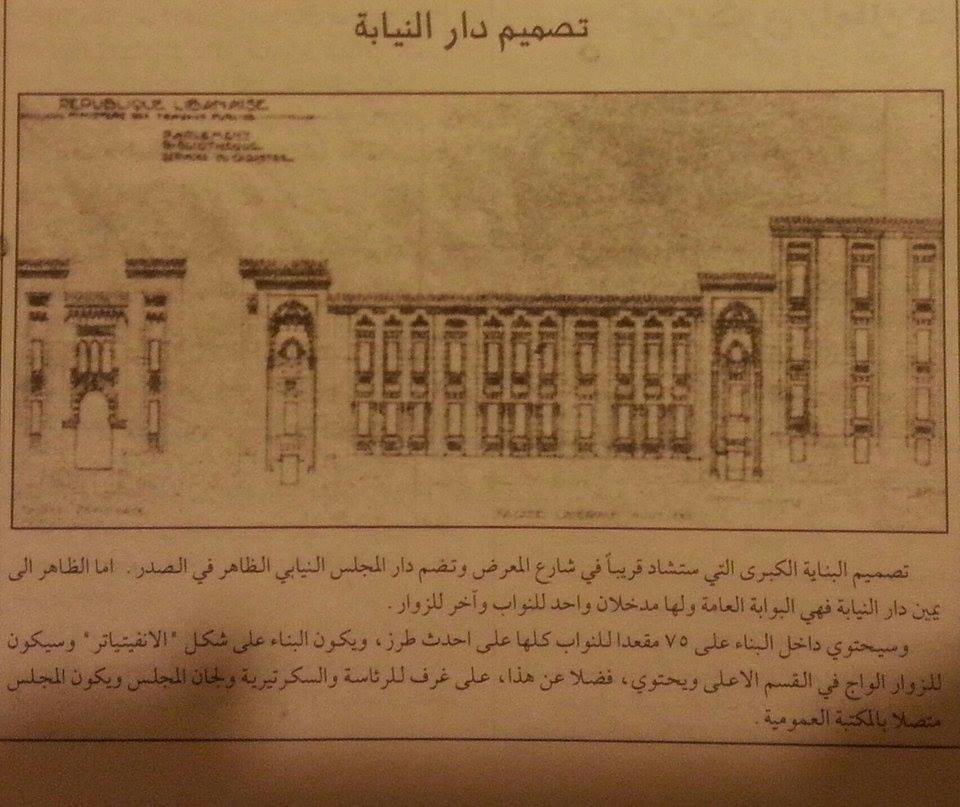
Guess What I Found In a 1926 Newspaper?

Guess What I Found In a 1926 Newspaper?

Technically speaking, the ninth month of vacuum doesn’t end before next week, but the number of events that happened in these last twenty days is too damn high, so I decided to link them to one another  as soon as possible.

Behold, the glorious ninth month of presidential vacancy.

The Context

On the 28th of January, Hezbollah finally found the opportunity they have been searching for. Israel had launched a week earlier an airstrike in the Syrian Golan, killing an Iranian General and several commanders from the party, including the son of Imad Mughniyah, who was also killed by Israel in 2008 and was never avenged by the party. Whether the Israelis intended it or not, the strike was actually a very nice propaganda boost for Hezbollah. As I said in a post at the time, it would eventually help Hezbollah in their struggle to put the Syrian opposition and Israel in the same box. And I was right (Yay): A couple days after things calmed down on the southern border, Nasrallah made sure to point out how the Israelis and Jabhat Al-Nusra are both working together to “sabotage the resistance”. Hezbollah could have used the Israeli strike alone to strengthen this discourse, but not responding at the Israeli attack would have been a blow to the morale of the party. On the 28th of January, Hezbollah retaliated to the Israeli strike in the most calculated way possible: The attack happened from the Syrian Golan (where Israel had attacked the earlier), on a contested Lebanese-Israeli-Syrian territory (so not even Israeli), and the casualties were also relatively limited: 2 Israeli soldiers were killed while the Israeli strike killed an Iranian General and several Hezbollah commanders. For Hezbollah, the number was high enough to prove that they weren’t afraid of the consequences and that they wouldn’t let Israel target their men without retaliating anymore. But the number was also kind of low for Israel to respond: They were heading to elections in 40 days: The Israeli ruling coalition would have risked ending a failed military operation (like in 2006) right before the elections, and besides, the number was relatively low when it was compared to Hezbollah’s casualties a week earlier. By choosing the worst context for the Israelis to start a war (by launching the attack on disputed territory, by not kidnapping any IDF soldier, and by choosing the worst timing ever for Israel) Hezbollah wanted to send a message, not start a war. They gambled, and they won. Israel did not attack, and Hezbollah subsequently gained the upper hand – militarily in Syria, and politically in Beirut. (If you’re asking yourself how they won politically in Lebanon, look at how Jumblatt lauded Hezbollah’s ambush)

If You Can’t Beat Them, Join Them (Part I)

If you follow Lebanese politics for several years, you’ll find that the Lebanese political parties are very predictable. In the aftermath of Hezbollah’s retaliation – and once it was sure that Israel wouldn’t strike back – the logical response from M14 would have been to constantly, frequently, relentlessly criticize Hezbollah’s “attempt at destabilizing the south, risking the destruction of Beirut’s infrastructure yet again, and dragging Lebanon into a proxy war between Iran and Israel while drowning the country deeper into the Syrian conflict”. Of course, if the Israelis had launched an offensive, M14 would have waited for the offensive to end to start criticizing Hezbollah, since it would make them look as if they’re standing with Israel if they’re too harsh on Hezbollah while the battles are raging. Anyway, what I want to say here is that the Future Movement and Hezbollah had the opportunity to start a political war because of Hezbollah’s military move in Israel, but neither of them took it, although Geagea tried to tun them against one another: He was giving a press conference the day the attack happened, and criticized the party’s move. Future Movement’s response was a clear indicator that they wanted peace with Hezbollah: Of course, Siniora criticized the party for his actions (you have to please your electorate after all), but that’s not what matters: Hariri was relatively indifferent about the issue (He didn’t even tweet about the events that week) and Future Movement’s minister in the cabinet said that Hezbollah did not break the ministerial declaration (yeah, it’s in bold because it’s important). That’s actually huge: Not only does it give Hezbollah an approval from the other side of the political spectrum, it also gives the impression that Hezbollah was acting within the legal limits established by the government. The cabinet’s ministerial declaration is very vague about the resistance (remember when the cabinet spent a whole month trying to write it?) and says that “Lebanese citizens have the right to resist the occupation”. This weird sentence was a compromise between M14 and M8 that was supposed to be midway between M8’s “The people, army, resistance equation” and M14’s desire to remove the previous sentence.

Anyway, the Future Movement made a wise decision here: By stating that Hezbollah’s move was actually within the boundaries established by the weird sentence in the ministerial declaration (Yes, I won’t stop calling weird, because it’s an absolute bullshit sentence that means nothing and could mean anything at all. Even “اكل الولد التفاحة ” would have been a better choice than ” الحق للمواطنين اللبنانيين في مقاومة الاحتلال الإسرائيلي ورد اعتداءاته واسترجاع الأراضي المحتلة”), Future Movement plays it smart and shows that the cabinet – that could be seen as an M14 one – is actually in control of Hezbollah’s actions with Israel (Actually it’s everything but that: The proof? The cabinet didn’t even meet the day the attacks happened). Anyway, Future Movement chose not to clash politically with Hezbollah – despite the LF and the Kataeb’s obvious desire to do so – and played it smooth: After all, they were having a dialogue, and there’s a vacant president seat out there that can’t be apparently filled unless both parties give the green light.

If You Can’t Beat Them, Join Them (Part II)

A couple of days after the attack, there was yet another opportunity to start an all-out between M8 and M14. After Geagea’s failed attempt the day of the ambush, came a leaked video about Strida Geagea that was circulated by the M8 media (specifically the Christian M8 media). It shows the LF MP saying “Nchallah ya Rab” when Journalist Denise Rahme informed her about what happened in the South between Hezbollah and Israel. As it turns out, the video was genuine but cut off and MP Geagea was saying “Nchallah ya Rab ma yisseer shi”. Anyway, this was an attempt – this time by the FPM – to start an all-out war between M8 and M14. Just like the LF and the Kataeb, the FPM were desperately trying to break the Hezbollah-FM dialogue. I said it once, I said twice, and I’ll say it every time: The Christians parties fear an FM-Hezbollah agreement more than they fear one another. Because in the end, every time both parties jointly approved something, it passed, regardless of what the Christian parties thought of it. Hezbollah ignored the Aounists twice during the parliamentary extension sessions, and the Future Movement did the same with the LF when they decided in 2014 to go ahead and share the cabinet with Hezbollah while throwing their closest Christian ally alone in the opposition. If Hezbollah and the FM agree on the presidential matter, it would be the ultimate downfall for the Christian parties. It scares them so much that they actually tried to wreak the HA-FM dialogue, first by starting their own dialogue (and then trying to end it in order to end the M8-M14 dialogue as whole), and now by trying to start a political war between M8 and M14 that would eventually end the dialogue and any chance of finding a Hezbollah-FM consensual candidate.

And how did the members of the dialogue react to that attempt? Instead of arguing about Strida Geagea’s video, both parties simply ignored the Christian brouhaha and made their allies panic even more by removing all their political posters from the city of Beirut in order to “defuse tensions“.

If You Can’t Beat Them, Join Them (Part III)

So let’s sum things up:

1) Hezbollah – Future Movement dialogue starts => Dialogue “making progress” => Christian parties panic. (That was last month)

2) Hezbollah retaliates against Israel => LF wants the FM to criticize Hezbollah => Instead the FM indirectly endorses Hezbollah => Christian parties panic more => FPM tries to start an all-out war => the FM and Hezbollah respond by signing a “poster removal peace treaty” => Christian parties panic even more.

How much more exactly? The Christian parties would panic so much, that when FM MP Khaled Daher made his faux pas last week and said the anti-Christian comments, the Christian parties were so much paranoid that even the Kataeb – who practically never publicly criticize their allies – asked the FM to throw Daher out. In a way, they were also indirectly asking the FM to up the tone against Hezbollah – after all the only way for Mustaqbal to repair the damage done by Daher would have been by criticizing Hezbollah’s sectarian foundations.

Surprise: The FM threw Daher out, and did not accuse Hezbollah of anything. And to make things worse? According to reports, Hezbollah was advancing in the Syrian south and launching one of the most violent campaigns since their intervention in Syria started. And the FM didn’t say a word about it => Panique Chrétienne Généralisée (Excuse my french)

That was it for the M8/M14 Christian parties. Hezbollah and the FM were serious about the dialogue, and for a while, it seemed that the consensual president would be “forced” on them. It was the apocalypse.

Except it wasn’t.

If You Can’t Beat Them, Join Them, Then Beat Them (Part IV)

“Hezbollah’s intervention in Syria is insanity and Hezbollah has brought this insanity to Lebanon.”

“Tying the Golan Heights to south Lebanon is insanity as well

After approximately three weeks of bonding with Hezbollah, Hariri threw this bomb on the 14th of February commemoration of the assassination of his father. In 3 weeks, Hariri (1) gave the impression that he had no problem with Hezbollah’s retaliation and made it look as if Hezbollah was following the cabinet’s guidelines that were jointly set by M8 and M14. Then, (2) Hariri managed, whether he meant it or not, to cause confrontations between the members of M8, and between the LF and the FPM. He also managed to (3) undermine Siniora, (4) to throw Daher out and eventually attract a friendly Christian electorate towards M14 while (5) setting boundaries for his MPs, (6) to give the impression that Hezbollah lost him as an ally after they thought they were winning him over, while (7) showing that he is a moderate at the same time because he wants to have a serious dialogue, and (8) highlighting the fact that he is actually making a big sacrifice by negotiating with  Hezbollah, which would mean that he is (9) a patriot that values Lebanon above everything else.

These three weeks were supposed to be about Hezbollah’s achievement. Instead, they became all about Hariri, who didn’t even have an achievement.

Lebanese politicians, take notes. Because that’s one hell of a political maneuver.

Hezbollah were so embarrassed by Hariri that they needed to respond quickly in order to prevent him from taking advantage of what just happened: Not even 24 hours had passed after the Hariri speech when a Hezbollah drone flew over Israel (That’s the second one in three years). The drone wasn’t about Israel or Syria, It was a message destined to the FM: Hezbollah wanted to show that Hariri’s speeches, no matter how violent in their criticism, will have no impact whatsoever on Hezbollah’s military decisions. The proof? When Nasrallah gave his speech monday, he barely mentioned Hariri’s criticism. He only lauded Hariri’s anti-terror stance, using it to empower Hezbollah’s position, without even mentioning Hariri’s harsh criticism, as if the “insanity” part hadn’t happened in Hariri’s speech. That means two things: (1) Hezbollah wanted to undermine Hariri by ignoring him, and (2) they wanted to send a message to the Future Movement (by not escalating) that they were still ready to calm things down in order to ensure the success of the dialogue. After all, the road to Baabda goes through Beit Al Wasat and Hareit Hreik.

ِِAs the relation between the FM and Hezbollah is expected to quickly deteriorate now, don’t be too hopeful about breaking the deadlock soon. It seems that 9 months later, we’re back to square one.

Reminder: We still don’t have a president.

269 days since the 25th of May. 105 days since the 5th of November. Three million years till the next parliamentary elections.

The WikiLebanon Files (Part I): The Day Berri Called Lahoud a “Bastard”

U.S. official Jeffrey Feltman, left, meets with Parliament Speaker Nabih Berri in Beirut, Lebanon, Thursday, Dec. 8, 2011. (The Daily Star Photo/Mohammad Azakir).

U.S. official Jeffrey Feltman, left, meets with Parliament Speaker Nabih Berri in Beirut, Lebanon, Thursday, Dec. 8, 2011. (The Daily Star Photo/Mohammad Azakir).

Over the past two years, I spent a lot of time on WikiLeaks, finding cables that were unheard of and that gave an interesting insight about Lebanon’s presidential politics (see here, here, here, and here for examples). The Lebanese mainstream media rarely publishes the cables, and even when they do, they use them as part of their media wars. This is why I have decided that every month, I will keep searching for relevant cables until I find something worth sharing that the media didn’t focus on.

Since we currently don’t have a president in office, I thought that it would be nice to take a look at some of the (behind the scenes) maneuvers that were happening during Lahoud’s days in office. Enjoy.

SUMMARY AND COMMENT
——————-
1. (S) Describing President Emile Lahoud as a “bastard,” Parliament Speaker Nabih Berri used a 5/9 meeting with the Ambassador to seek USG help in derailing what Berri suspects is a diabolical Syrian-inspired plot Lahoud plans to implement to destroy Lebanon’s parliament. (Yes, gentle reader, the previous sentence is correct as written.) As if forgetting that he is the one holding the power to open Parliament’s doors, Berri outlined a scenario by which Lahoud, drawing on his insistence that the Siniora cabinet does not legally exist, will use a creative interpretation of the constitution to dissolve parliament unilaterally when it fails to meet in its ordinary session that expires May 31. At that point, Lahoud will argue that he is free to appoint a new prime minister and cabinet, without the need for parliamentary approval. And this sets up a scenario by which Lebanon is plunged into new legislative elections. The emerging pro-Syrian majority would then elect Lebanon’s new president, or the Lahoud-appointed cabinet would inherit the powers of the presidency. Describing the “plot” to destroy the constitutional institution he controls, Berri gave a very believable performance of vein-popping rage.
2. (S) As the new cabinet begins work, the March 14 majority would continue to recognize the Siniora cabinet and the existing parliament and proceed with its own presidential elections. Lahoud’s scheme as described by Berri would, at a minimum, set up two entirely parallel structures: two PMs, cabinets, parliaments, and presidents. But it would be more likely that Lebanon would be plunged into chaos, with institutions splitting and the army sitting on the sidelines as the two parallel structures battled for supremacy. To avoid this, Berri advocates a first step that we have long urged he grab: open the parliament, thus preventing Lahoud from dissolving it. He is now on board, but under limited conditions he seeks our help to impose with our March 14 contacts. We are inclined to do so, in order to avoid his worst-case scenario, but we have to consider carefully what tricks Berri himself has up his sleeve. When asked about the impact of potential Chapter VII approval of the tribunal, Berri threw up his hands: “approve it Under Chapter VII, Chapter 67, or whatever — I don’t care!” While Berri seemed to speak with far more candor than usual, we, of course, remain skeptical that the alliance he advocates to thwart a Syrian-inspired plot is a lasting one. End summary and comment.
SPEAKER SAYS LAHOUD TO DESTROY THE HOUSE OF BERRI — I.E., PARLIAMENT
——————————-
3. (S) Shooing the aides and Embassy notetaker from the room immediately after the television cameras had panned the ordinary-looking meeting, Parliament Speaker Nabih Berri opened his 5/9 meeting with the Ambassador with what struck us as a self-evident observation: “Lahoud is a bastard!” Berri pronounced, jumping from his chair. Berri, who insisted that the Ambassador not share this information with anyone, said that he had belatedly put two and two together to discover a diabolical plot by Lahoud to destroy Lebanon’s parliament. At the last moment, Berri relized that he was being used by Lahoud in a scheme that would throw him out of his own position asspeaker and possibly thrust him into permanent irelevance. “Lahoud hates me, and he knows I hate him. He thinks he’s found a way to beat me.”
LAHOUD STARTS BY DECLARING SINIORA CABINET NULL AND VOID
—————————–
4. (S) oing into detail while thumbing through the Lebaese constitution, Berri explained that the scheme tarts with Lahoud’s repeated insistence, submittd frequently in writing and orally, that the Siniora cabinet does not exist legally at all — not ven in caretaker status. This establishes a recrd that there is a constitutional vacuum where te office of the Prime Minister and the cabinet as whole should be. Thus, the powers of those offices can be argued to revert to the President himslf.
NEXT, PREVENT PARLIAMENT FROM MEETING, AN USE CONSTITUTION TO DISSOLVE IT
BEIRUT 00000655 002 OF 004
———————————–
5. (S) The next step for Lahoud is to wait until May 31, when the ordinary session of the parliament expires, without the parliament having met in a single session. At this point, Lahoud invokes Article 65, which allows for the dissolution of the parliament if, “for no compelling reason, (the Chamber of Deputies) fails to meet during one of its regular sessions. . . . While Article 65 empowers the Council of Ministers at the request of the President to dissolve the parliament, if there is no Council of Ministers, then Lahoud will argue that he is solely responsible.
WITHOUT PARLIAMENT, LAHOUD IS FREE TO APPOINT PM, CABINET
——————————
6. (S) Once the parliament is dissolved (and, more importantly for the purpose of this discussion, Berri is without a job or role), then Lahoud will appoint a new prime minister. While Lebanon’s parliament calls for mandatory consultations by which the president is bound to ask the candidate who receives the most support from MPs to try to form a cabinet, if there is no parliament, then there are no MPs to bestow their choices for PM in the president’s hand. Moreover, the new PM can choose whatever ministers he and Lahoud agree upon, as well as whatever government program they want, because there is no parliament to give a vote of confidence. “A coup d’etat!” Berri roared.
AND LAHOUD GIVES PRESIDENCY TO ANOTHER PRO-SYRIAN STOOGE
—————————-
7. (S) At this point, two scenarios emerge. Article 25 of the constitution calls for new parliamentary elections within three months, in the case of the dissolution of the parliament. While elections would by necessity be conducted under the discredited 2000 election law (as there is no cabinet and no parliament to approve a new law), a pro-Syrian majority would certainly emerge this time, given the near certainty that March 14 supporters would boycott both running and voting. That pro-Syrian majority in the new faux parliament would then be in place in time to elect Lebanon’s next president to succeed the stooge extraordinaire when Lahoud’s term expires November 24. The second scenario would be that no elections take place, and the cabinet appointed by Lahoud assumes the role of the presidency until such time as new parliamentary elections can be held.
‘PLOT’ EXPLAINS LAHOUD’S RECENT CURIOUS ACTIONS
——————————–
8. (S) Berri said that this “plot” explains two recent developments that previously he found curious. First, he wondered why Lahoud had not “taken the pressure off me” for a month, by invoking Article 59 of the constitution. That article gives the president the right to ask parliament to adjourn for a month. Berri said that he wanted Lahoud to use that, so that he was not the only person blamed for keeping parliament closed. But now he realizes that Lahoud, had he used Article 59, would not be able to invoke the constitution in dissolving parliament — there would suddenly be a “compelling reason” why parliament didn’t meet. The second strange thing is that, according to information Berri has, Prime Minister Siniora offered to Lahoud in a recent phone call to resign, once the tribunal was established, if Lahoud would recognize his cabinet as a caretaker cabinet according to the constitution. Lahoud reportedly refused. That struck Berri initially as strange, since Siniora’s resignation offer would normally be something Lahoud should seize. But, if Lahoud recognized Siniora’s cabinet as a caretaker cabinet, then the normal consultative process would begin, derailing the coup plot.
OPENING PARLIAMENT — BUT IN A LIMITED WAY
——————————————
9. (S) The Ambassador noted that there was one easy way to avoid the entire scenario: open parliament at once, as so many people have been urging. “I’m coming to that,” Berri said, stating that he needed our help. He said that he wanted to open parliament in such a way so as to avoid implying legitimacy on the Siniora cabinet and to prevent parliamentary action that could “split the country.” He said that the Speaker of the European Parliament was coming to Lebanon soon, and thus Berri was thinking about calling a session for MPs to hear the European visitor. He would have done the same for Speaker Pelosi, had he realized in April what Lahoud intended. This session to hear the visitor would count as an ordinary session, thus depriving Lahoud of the constitutional ability to dissolve parliament. But, to do this, Berri urged the Ambassador to help him convince the March 14 majority to send only MPs, not government ministers and not Siniora, and to agree to listen to the visitor and leave, without trying to force further parliamentary action.
10. (S) Help me convince them, Berri begged, to see that, even if they don’t like such a limited session, it is better than having no sessions. Berri clarified that he did not want the Ambassador to share with March 14 leaders the entire plot he described, just the fear that Lahoud could try to dissolve parliament if it doesn’t meet. “If I read about this in the papers, I’ll have to keep parliament closed completely.” (Comment: Berri was not explicit, but we think he was suggesting that he is under Syrian orders to deny any legitimacy to the Siniora cabinet. Having the ministers sit as usual on the dais behind the Speaker would do that, so he wants our help in avoiding such a scene. He is also under orders, presumably, not to allow controversial discussions such as Hizballah’s arms or the tribunal to reach the Chamber floor. But he does not seem to be under — at least not yet — an absolute Syrian order to keep the chamber completely shuttered. So, under the proposed session, Berri could tell the Syrians that he scrupulously followed their orders and had no idea that they intended the parliament to be closed entirely. We don’t doubt that Berri plays games even with the Syrians. End Comment.)
11. (S) The Ambassador asked Berri whether he really thought Lahoud was so clever as to come up with such a complicated scheme on his own. “Of course not!” Berri shouted. The Syrians gave him the basic outlines, and Lahoud’s legal advisor Selim Jeressaiti came up with the implementation plan. The Ambassador asked whether Michel Aoun would bring his bloc along. Yes, because the stereotype about Aoun being obsessed with the presidency is true. All the pro-Syrians have shown him how the status quo will never result in an Aoun presidency, whereas this situation might. “I am really worried,” Berri said.
BERRI EXPRESSES LITTLE CONCERN WITH UNSC ACTION ON TRIBUNAL
——————————
12. (S) The Ambassador asked Berri how Chapter VII consideration of the Special Tribunal for Lebanon affected his thinking: if the UNSC established the tribunal now, would it be easier for him to call for a more normal parliamentary session? Berri said that the tribunal and the Lahoud scenario he described aren’t related at all. Throwing up his hands, he said of the tribunal that the UNSC should “approve it under Chapter VII, Chapter 67, or whatever — I don’t care!”
COMMENT
——-
13. (S) Talk of two cabinets has been buzzing through Lebanon’s political circles for weeks. But Berri’s scenario — which did not strike us as that far-fetched, now that we have been musing on it all afternoon — sets up two entirely parallel structures. The March 14 majority would continue to recognize Siniora’s cabinet and the existing parliament, as would most of the international community. But what would the Lebanese Armed Forces do, if Hizballah-filled mobs start to try to take over ministries or even the Grand Serail in order to install “their” ministers? And what happens when it comes time to elect a new president? We have only until May 31 to prevent such a scenario from unfolding, if what Berri suspects is what the Syrians and Lahoud actually have in mind.
14. (S) Taking it all personally, Berri struck us as truly infuriated that someone would tinker with “his” institution. He postured as if he had been left out of the Syrian scheming (or, more correctly, let in on only part of the Syrian scheming). If he now realizes that he was being used by the Syrians to destroy the institution he heads, maybe he can be a useful ally in denying Lahoud the pleasure of picking his own PM and cabinet. But it is not plausible that Berri told us everything he knows or thinks, about this or anything else. Maybe he was part of the planning but only belatedly realized that there is no guarantee he will be back as Speaker in what would be a far more Hizballah-dominated second parliament. Maybe he doesn’t want to be torn between leaving his current position upon Lahoud’s dissolution orders, when he knows that the March 14 rump parliament will continue to meet and enjoy international legitimacy. We tend to agree that it is better to have a parliament session even under Berri’s restricted scenario than to have no parliament session at all, but we must think about how Berri might be trying to enlist us in foisting his own ideas onto the March 14 majority. We cannot recall a more significant or interesting meeting with the Speaker. Stay tuned.
FELTMAN
Link to the original cable on WikiLeaks.