Lebanon Is Not A Democracy

Ostrich

Lebanese are like a big fat ostrich. Whenever they feel threatened – or realize that something isn’t right- they go and hide their heads in the ground. They act as if nothing’s wrong, and start imagining that  they live in a paradise. Lech Fi a7la Men Lebnen?

The sad part? While the head in the ground is happy creating the illusions, the  ostrich’s body is turning into yummy Machewe.

Guess what! Beirut isn’t among the world’s best cities and Tripoli isn’t the most peaceful city in the Middle East. I’m also very sorry to be the one that breaks the news but Lebanon – unless it’s the American town you’re searching for – is not a democracy.

Constitution? What Constitution?

I really don’t know what I’m talking about.  I mean really! We have a constitution?! But what does it actually say? It says that the Lebanese parliament shouldn’t be based on religious quotas (Article 95). It says that we should have a senate (article 22). It says that each year at the beginning of the October session, the general budget must be submitted to the chamber of deputies for a vote (article 83). In democracies, constitutions are respected. Lebanon is not a democracy.

Are Women Slaves?

You know what the constitution also says? it says that all citizens are equal before the law. But wait, Lebanese men are allowed to pass on their nationality while Lebanese women can’t. That means that Lebanese women and Lebanese men are not equal before the law. Hence women are not citizens, and are far from being equal to men. In democracies everyone is equal. Lebanon is not a democracy.

Electoral Waw

We have hundreds of electoral law drafts ( Have fun reading the blog’s reviews herehereherehereherehereherehereherehere ) but not one decent electoral law. Our electoral law is outdated, dates from the sixties, and was an indirect cause of the Lebanese civil war. The districts (and the whole electoral system in general) are shaped in a way that allows no one to win and destroys every chance of having a new opposition to the ruling class. And if you think that the drafts are any better, think again. In democracies they don’t have gerrymandered electoral laws. Lebanon is not a democracy.

Elections, anyone?

Here I am talking about an electoral law, as if we even had elections. The parliament, that spent 33% of its term trying to form 3 governments, did not even discuss one state budget, barely convened 4 times per year, hardly made any laws, and failed to pass an alternative electoral law, decided to reward itself with an (Unconstitutional) extension of its mandate of 17 months (Because 3 is too mainstream) by voting under no government in power, hence breaking that norm for the fourth time since 1943. Meaning the Lebanese would be paying an extra 16 Million Dollars from taxes to persons who were elected to stay 48 months, and 48 only. Enough said. In democracies they have elections. Lebanon is not a democracy.

Where are the Judges?

Don’t ask me. I’m not the one that didn’t convene in order to see if the parliament’s mandate extension was constitutional or not. I mean seriously now, half the constitutional council is appointed by the parliament, and the other half by the government (which is under the mercy of the parliament). Is that what the constitution meant  by separation of powers (Preamble, E)? In democracies they have a separation  of powers. Lebanon is not a democracy.

Censorship Everywhere

Wait, what? We Lebanese have freedom of press! Unless you know, you go beyond the limits of the law (Article 13, Constitution). In democracies, they have absolute freedom of speech. Lebanon is not a democracy.

Please, Take Your Time

Really, take all the time in the world. It’s OK, we can stay 7 months without a president, 6 months without a government, 14 months without elections. I mean who needs presidents and governments and elections anyway. We’re too cool to have such things here. You see, in democracies, forming governments is a matter of days. Not weeks, not months, not centuries. Lebanon is not a democracy.

The Lebanese Time Machine

Living in Lebanon is like using a time machine. No matter how old you grow up, the speaker of the parliament stays the same person year, after year, after year. Same applies for half of the members of the parliament. In democracies they have alternation of power and laws enforcing that process. Lebanon is not a democracy.

Nepotism and Neo-Nepotism.

Also known as the son-in-law who becomes minister, the wife that becomes parliamentarian, the son that becomes prime minister, the whole family that invades politics and sticks there for the next 8 decades, and the entire village that gets employed in some institution. In democracies, politicians who use their power (while in office) to provide favors for their entourage in an unfair way usually face charges. Lebanon is not a democracy.

The Last Bey

Welcome to the last bastion of the feudal lords. A land where the Beys, Sheikhs and Emirs still believe in their supremacy over the regular citizens and even treat them like they own them. Feel free to cry/laugh while watching the video. Like I said earlier, in democracies everyone is equal. Lebanon is not a democracy.

Look Who’s Talking About Ahmad Al-Assir

Here’s the logic in Lebanon. You kill thousands of Lebanese in a civil war, but instead of spending your days in a cell somewhere under ground, you spend them in the parliament. When Ahmad Al-Assir did whatever he did, everyone got mad. But why? Some of the leading politicians were/are militia leaders and were rewarded for their actions with political positions, and you ask why he tried to reach a higher political level by starting a militia, leading it and killing people? Just because they wear ties, dress sexier and shave their beards doesn’t mean they’re any better. In democracies there’s justice, not a pardon law. Lebanon is not a democracy.

Look! Another General!

 Lebanon’s president is a General. His predecessor was also a General. The interior minister is a General. The head of one of the biggest parliamentary blocs is a General. Few months ago, a General, the former head of the ISF, was on the verge of being a Prime Minister-Designate. I don’t have anything against generals, but they shouldn’t normally be in power because the consequences are usually disastrous. In democracies, generals might rarely and briefly take power. Lebanon is not a democracy.

Illusion.
Frangieh’s Presidential Election Reform And What It Means

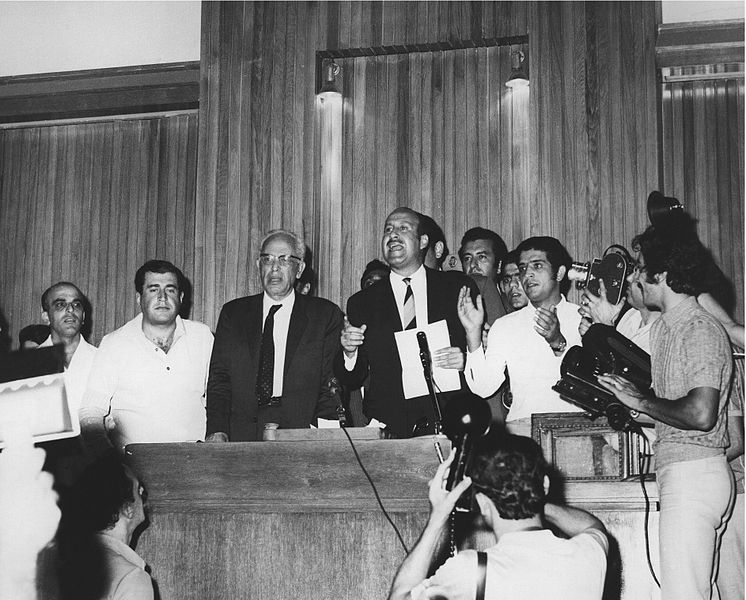
Deputy Speaker Michel Sassin declaring Suleiman Frangieh (The Grandfather) President in 1970

Deputy Speaker Michel Sassine declaring Suleiman Frangieh (The Grandfather) President in 1970

With Tammam Salam’s inability to form a government, the parliament’s failures to convene – which is unconstitutional anyway – and the electoral law impasse forgotten, I find myself obliged to talk about something new to Lebanese politics this month: The presidential elections.

Apparently on Thursday, Marada Movement leader Suleiman Franjieh warned of a presidential vacuum as the conflict over Syria continues and suggested that Lebanon adopts the 50 percent plus one vote formula to secure the office.

Wait What

Let alone the fact that Frangieh’s allies took advantage of that particular constitutional clause (Of having the two thirds quorum in the Presidential elections) in order to block the election of an M14 candidate in 2008, the very fact that Frangieh is asking for a modification of that electoral process is very weird. Why? Let’s see why. Because Frangieh belongs to a coalition in the parliament that holds between the third and half of the MPs in the parliament. That means that under the current constitutional rules, Frangieh – Let’s suppose for a while that he will be M8’s candidate – can block the electoral process by instructing his allies to boycott the session. Just to make it clear – and more complicated for you –  Frangieh said that a 50% plus one vote should be adopted. Thus Theoretically, Frangieh spoke nothing about the quorum.  He only mentioned what the number of votes for the winner should be once there is quorum. So if Frangieh doesn’t want to change the quorum rule in the constitution but only the voting rule, nothing makes sense. Is Frangieh suggesting that we change the quorum or the winning vote number? Let’s see.

M8 has 40% of the votes, M14 45%, and the others (Mikati, Jumblatt …)15%  (The numbers aren’t exact, but you get the point)

Case 1: Our lovely non functioning system (Quorum 66%, First round 66%, Second round 50%+1). Frangieh wants to run, but M14 and the others won’t vote for him. Frangieh instructs his allies to boycott. 40%>33% which means that there will be no quorum, thus no elections. In case the others will vote for him, that means he will have 55% of the votes. M14 boycotts, 45%>33%, meaning that there will also be no quorum.

Case 2: Quorum remains untouched with Frangieh’s amendment (Quorum 66%, First round 50%+1). Frangieh wants to run, but M14 and the others won’t vote for him. Frangieh instructs his allies to boycott. 40%>33% which means that there will be no quorum, thus no elections. However, Frangieh is saying that he is making the amendment to make life simpler and easier for the parliament to elect the president. Which means that the amendment doesn’t make any sense (See, I told you!) because the quorum boycott is still here and if he wishes not to boycott and elect the president with 50%+1 he can simply wait for the second round and keep the constitution like it was (see Cas 1)

Case 3:  Frangieh was actually talking about the quorum!  (Quorum  50%+1%, First round 50%+1).  40%<50% which means that Frangieh can’t freeze the process if he boycotts and has a very high chance of losing because 40%<50%. Unless…

Unless What?

Unless Frangieh is sure he can secure 65 MPs to vote for him. In politics you don’t actually propose something you might lose in, so there’s something fishy about this. If Frangieh meant cas 1 (or cas 2), he was probably just saying things to fill in the blanks of his speech. But if what Frangieh meant was cas 3, then something very dangerous is going on here.

Dangerous How?

If Frangieh can bring 65 votes, but not 86 (the 66% quorum that he wishes to remove in his reform) that can mean only few things. That means he isn’t a consensual candidate because he doesn’t have 66% of the votes (shocking, right?), that he will be running with M14 (See what I mean by dangerous?) against Aoun, or that Jumblatt and Mikati, along with Amal and Hezbollah and someone else will choose him as their sole candidate to the elections and throw Aoun outside which will probably make the latter closer to M14 than M8.

While the theory of having Frangieh and M14 as allies is unimaginable, the very fact that Jumblatt and Hariri have engaged in a media war lately, that Jumblatt is starting to prefer M8’s 9-6-6 formation over M14’s 8-8-8 one and that Aoun is actually getting closer to the Future Movement makes the second theory absurd yet executable.

However the most plausible explanation to this whole reform question is that Frangieh doesn’t want to extend to Suleiman for 6 years. Knowing that a boycott would create another revolutionary vacuum (Expired parliament, no president, no government, Yay!) he is probably paving the way for a small consensual amendment: only 1 (or 2?) extra year for Suleiman while implementing the reform of 50%+1 (M14 and the others should be enough to elect Suleiman), in exchange of something else for M8 (their formula for the government gets adopted? A consensual electoral law?). M8 will be theoretically still boycotting the elections – except this time it’s harmless to the electoral process.

Oh, and speaking of 50%+1, Frangieh’s Grandfather was actually elected by exactly 50%+1 of the votes. Actually, it was 50%+0.5, (he got 50 out of 99 votes. 99/2=49.5 which means he got 50%+0.5) and that is why in the picture, it’s not the speaker Sabre Hamade – his political rival who considered 50%+0.5 instead of the absolute majority (50%+1) to be unconstitutional – proclaiming him president, but Hamade’s deputy.

And look at us, complaining about the 66% quorum.

Tammam Salam’s Options

Tammam Salam (AP/Hassan Ammar)

(Image Credits: AP/Hassan Ammar)

Let’s rewind six months. Tammam Salam was supposed to quickly form a government, end the electoral law dispute via a proposed consensual law from the cabinet and finally supervise the elections. But then came the parliament’s mandate extension. Then came Al-Qussair and the subsequent Lebanese dilemma. Then came Al-Ghouta and the subsequent Lebanese dilemma. Then came the probable American strike and the subsequent Lebanese dilemma. And with them came the refugees, and the subsequent Lebanese dilemma.  But now that Lebanese politics are making a slow comeback to Lebanon, the lack of solutions to the current deadlock leaves the Prime Minister Designate with several options to end the crisis.

If You Can’t Beat Them, Join Them

When Tammam Salam was first designated in April, I made sure to underline how the nomination of Salam by M8 to the premiership was a political maneuver. It was meant to pressure him by making him consensual (while he wasn’t) thus forcing him (more or less) to take their opinion on the governmental formation. It was by far the most  brilliant move by M8 in 2013 that brought us to the current stalemate. If M8 hadn’t nominated him we wouldn’t be standing where we are today and an M14 government would have probably started preparations for the elections.

You Who?

What really makes things hard for the PM-Designate is that the atmosphere of political confusion during the first 9 months of 2013 and the close presidential elections left the coalitions in shatters making it  impossible for him to speak with them as united blocs. After the Orthodox Gathering law almost destroyed the M14 alliance, M8 had serious internal problems in summer. And while Aoun was very recently trying to start talks with M14, Berri was busy adding more confusion to the scene by proposing his initiative to solve the crisis (another boycotted dialogue). The apparent  bipolarisation of Lebanese politics between M8 and M14 is misleading. Salam will have to please a lot more than 2 blocs.

Veto, Veto Everywhere

There is a boring public opinion battle in Lebanon regarding the formation of a new government. Some are attacking Hezbollah and accusing it of obstructing the formation of a new cabinet. Our opponents said that they objected to the participation of Hezbollah in the government. Two weeks ago, they said that they would agree to Hezbollah’s participation, after they had disrupted the country for months. We cannot be blamed for being the ones who are disrupting the country. Our only condition regarding the new government is that it reflects the parliamentary representation of the political parties in Lebanon. The concept of the 8-8-8 government is not realistic. In reality this will be a government formed with ten March 14 ministers, that include PM-designate Tammam Salam, who is a pro-March 14 politician.”

That quote from Nasrallah’s speech (September 23) really says it all. There are vetoes coming from all the sides that named Salam. The first third of M14 wants a neutral government, the second third of M14 doesn’t want Hezbollah participation while the last third wants the 8-8-8 ministers formula. The M8 alliance wants full participation (and thus the blocking third+1, so probably 9, 10 or 11 ministers out of 24) in the government, while Walid Jumblatt – The Kingmaker – doesn’t know what he wants (and probably doesn’t want to know so he can stay in the middle and avoid another 7 May-like incident).

The Blurry Aftermath

What exactly is the Salam government’s function? The presidential elections are in May, meaning that the cabinet – if things go well (don’t get too optimistic) and it gets the confidence vote by November – would last for seven months as a non-caretaker government. So what are the objectives of Salam? Electoral law? Parliamentary elections? Presidential Elections? Postponing them (and that means a constitutional amendment)?  Or just another normal cabinet in times of elections and regional war? The very fact that no one knows what the new government will be for makes things even more complicated for the PM who can’t form a government that he doesn’t know its goals.

The Options

Remember when I told you about Tammam Salam’s options at the beginning? Unless the PM-Designate desires to commit political suicide by going against the M8 will or resigning, he has no options but to wait for a miracle – like these miracles (a, b, c)- to happen. For a newcomer – relatively weak – rising politician to resign after failing to form a consensual cabinet, it is a fatal bullet to his political career. To go against M8 would put him in confrontation with Hezbollah. If the confrontation is solely  political, it would  eliminate him as a consensual PM while featuring him as an intolerable alternative to Hariri, which is in the advantage of the two former prime ministers Hariri (who will look like a moderate M14 member) and Mikati (who will look like the strong neutral candidate). If things get nasty on the ground, that’s even worse for him.

That’s why – after 6 months – we’re still at the beginning, where the type (Independent/Political) of the government must be decided. The number of seats, the portfolio allocations, the name of the ministers, and the ministerial statement are yet to be discussed. And the sad part? These are the steps that actually take 99% of the time.

When a matter that should take six hours takes six months, you start to understand how much Lebanon is a failed state.

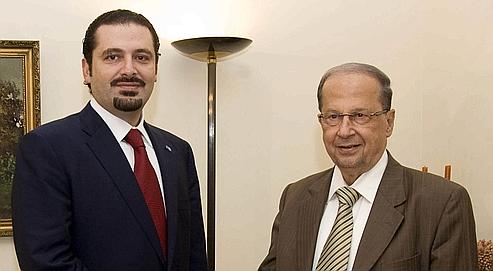
Is Michel Aoun Switching Sides?

Hariri-Aoun Meeting in 2009 (AFP)

Hariri-Aoun Meeting in 2009 (AFP)

At first sight, Lebanon seems politically normal. No parliamentary sessions, no functioning government, a bad economy, ambassadors visiting politicians, and like always, no solution to the deadlock. However, in the last few days, three consecutive incidents in the March 8 camp almost went unnoticed.

Drawing The Red Lines

The Tomahawk effect that kept all the politicians silent for two weeks is obviously fading away. And while everyone was focused on Berri’s initiative to solve the crisis, another interesting development was marginalized. Michel Aoun, who made sure in the past 3 months to keep his criticism against Hezbollah centered on the party’s political stances, indirectly attacked Hezbollah’s military activity in a statement accusing M14 of initially providing cover for Hezbollah’s telecom network. And that statement wasn’t the only one. A meeting between the FPM leader and the U.S. ambassador Hale ended in a Aounist approval of the Baabda declaration that was recently questioned by Hezbollah.

If It Ain’t Broke Don’t Fix It

Hezbollah clearly understood that something was going wrong. Or why else would a delegation of the party go visit Aoun, only to make sure that the ties between the two allies were still the same? If the ties were still the same, why bother fixing them?

The Wind Of Change

For Aoun to question his 7 year-alliance with Hezbollah at a moment’s notice would be an act of political insanity. Switching sides implies that the second side is indeed willing to accept you as a member. And that is probably what Aoun is trying to do with his small yet remarkably strong statements. You might view that describing the new stances by strong is an exaggeration but one must not forget that the FPM is Hezbollah’s main national ally and by far his strongest political ally, meaning that any criticism, no matter how small it is, is in fact more harmful than the strongest M14 – or even Amal – political stance against Hezbollah. Aoun is checking out if any of the M14 leaders will understand his small hints and welcome his statements. Stronger statements at a faster rate – without an M14 welcoming attitude – might throw Aoun all by himself on the outside, which is not a good thing for a Lebanese politician.

Yet Another Political Maneuver

The issue is far more complicated than the FPM pissing off Hezbollah in a Christian area for popular gain (By rejecting the telecom network in Lebanon’s biggest Christian city). Another Hezbollah Christian ally, Sleiman Frangieh, is preparing himself for presidential elections.  Frangieh is younger than Aoun but is also (arguably) the biggest pro-Syrian among Hezbollah’s allies, making him a perfect candidate for the Hezbollah-led alliance in case the war in Syria reaches a certain level of hostilities. Hezbollah might embrace the Frangieh candidacy, and that can justify the FPM’s decaying relation with the party.  Aoun wants to make sure that it will be him – or one of his Maronite protégés – who will be the official M8 candidate for the May elections, and his new stances can be seen as a small political maneuver (or even blackmail).

The Lessons Of  1988 And 2008

When the Americans were trying to push for their own candidate in the 1988 presidential elections, Aoun – who wanted the presidency for himself –  criticized the U.S. motives and announced that  Lebanon is not an American protectorate. What happened next – you guessed it – is that Aoun was eventually removed from power because he went against the regional tide.  In 2008, when Aoun failed again to notice that the regional context implied that a centrist president should take power, General Suleiman was elected president. This time though, Aoun seems to have understood the rules of the game. By being slightly more moderate in the wake of the American-Russian agreement on Syria (and even ironically agreeing with the American Ambassador this time), and by trying to settle his issues with most of the Lebanese parties, Michel Aoun is discretely trying to go with the flow and adapt to the circumstances of the next presidential elections.

Greater Lebanon In Jeopardy

Greater Lebanon Event

If you’re a bit familiar with this blog, you must have noticed that I rarely talk about Syria, and when I do, it’s usually in the context of Lebanese politics.

But Lebanese politics disappeared. For the past two weeks, it has been all about Syria. About the likely American strike on Syria. About the Chemical Weapons in Syria. About the revolution in Syria. About the civil war in Syria. About the Syrian army. About the Free Syrian army. About arming the opposition. About helping out the regime.

Priorities

In a country that has no budget since 2005, no government since March, no elections since 2009, no agreed-upon electoral law, extended mandates for everything ranging from a parliament to a commander of the army, and an outgoing president as a cherry on the top, you would think that the normal priority, or norm, would be taking care of any of the previously mentioned problems. But the very fact that no one is doing anything but wait for things in Syria to get clearer really sums it up. (You might want to check this post)

Pro-Syrias

When the Syrian army left the country in 2005, it was thought that the controversial hegemony over Lebanese politics was forever gone. Who knew that 8 years later, a civil war in Syria will bring it back, yet this time with no controversy? There was always a Pro-Syrian coalition in Lebanon, at least to the extent that it was more pro-Syrian than the others. But as Syria turns into Syrias, pro-Syria in Lebanon becomes pro-Syrias, and Lebanon – at whole, probably for the first time since the 19th century  – becomes no more than pro-Syria, or in other words, an affiliated country. With no side winning the civil war, the allegiances will get more and more dangerous until a civil war might find its way to Lebanon. By then it would be too late to separate Syrian and Lebanese affairs.

The Helleu Equivalency

Charles de Gaulle once said that by arresting all Lebanese Zuamas in Lebanon, Jean Helleu indirectly achieved in 48 hours what the French were meaning to do for 25 years: unify the Muslims and Christians (via their hate towards colonialism). The Syrian civil war is achieving what the Syrian leaders could not do for 70 years: Absorb Lebanese politics into Syrian politics. The longer the Syrian civil war lasts, the more Lebanese parties will get involved in it, and the more the decaying Lebanese system will self-destruct itself and find it harder to host the political turmoil.

A New National Holiday

When a Lebanese President makes a speech for the first time in the occasion of Lebanon’s forgotten 93rd anniversary of the creation of the state of Greater Lebanon, you know things are going very (very) bad. Lebanon already has another national holiday, the independence day from France. But the symbolism of the 22nd of November is different from the First of September. The 22nd of November is the day Christians and Muslims of the country united for the first time against a foreign power and set the basis of what would be the political rules for the next 30 and arguably 70 years.  The Greater Lebanon context however is different. Until the 1940s, the Muslim population did not agree to the concept of an independent Lebanon from Syria (and a greater Arab state). The boundaries of such a state were considered to be controversial and artificial in 1920, and created problems among the Lebanese Christians and Muslims till 1937, when the Muslim boycott started to fade away with the nomination of Khaireddin Al-Ahdab as the first Sunni Prime Minister. To remember such a day would be to remember what would be the beginning of 20 years of occupation, colonialism, boycott and political confusion among the Lebanese. So why exactly did the president make a speech two weeks earlier on the occasion of that event?

Greater Lebanon

Lebanon’s boundaries are Greater Lebanon’s boundaries. Whether the day symbolizes Lebanese unity or not, it is the day Lebanon became the separate, bigger entity that exists today. An entity distinct from Syria, where its politics would be distinct from the Syrian politics. The National Holiday that is independence day is not important in these times as Lebanon is not facing a Muslim-Christian strife. Lebanon is facing something far more dangerous than that, and it is the slow but steady absorption into Syrian affairs due to the M14 alliance with the Syrian opposition and the M8 alliance with the Syrian regime. Remembering this day would be a reminder from the president to all the politicians that Lebanon is not in Syria.

When the formation of a new government depends on an American-Russian deal about Chemical Weapons in Syria, you know something is just not right.

Marj Dabeq And The Tomahawk Effect

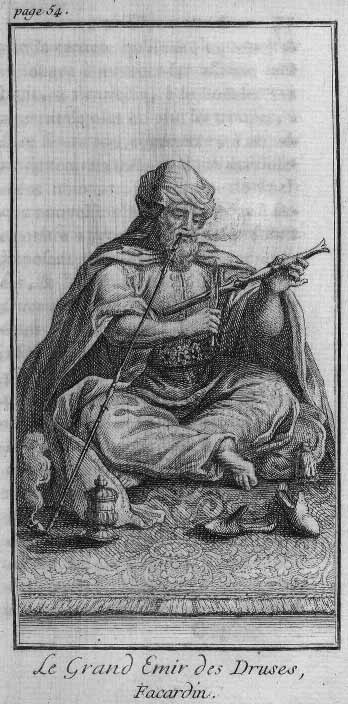
Fakhreddine I

It is said, that in 1516, while the Ottomans and the Mamluks were fighting for the Levant in the battle of Marj Dabeq, a Lebanese prince of the house of Maan, known by the name of Fakhreddine I, wasn’t comfortable to fight on the side of the Mamluks as it was too risky to ally himself with one side when the outcome of the battle was still unknown. As the Syrian princes started defecting from the Mamluk ranks, Fakhreddine went on the top of a hill overlooking the meadow (marj) where the battle was ongoing, and did not intervene with his forces until it was clear that one side was in advantage over the other. Needless to say that it was the winning Ottoman army that Fakhreddine I sided with instead of his initial allies, the Mamluks. The Bohtor princes of Beirut, that fought with the Mamluks till the end, were eventually removed from power in Mount Lebanon by the victorious Ottomans and were replaced by the Maans of the Chouf, who were to rule Lebanon for the next 181 years.

How Is That Related To 2013?

As the Americans prepare their Tomahawks to hit the Syrian regime, surrounded by a growing international debate whether an intervention is needed and legitimate in Syria or not, the Lebanese leaders’ silence on the upcoming war is deafening. In a country whose politics were almost inseparable from the Syrian affairs for the past century, the quiet political scene raises many questions, and shows us a cautious – yet wise – behavior from the Lebanese politicians,  à la Fakhreddine, wishing to preserve their status in Lebanon in the wake of a possible massive regional modification. Ironically, Marj Dabeq is not only in today’s Syria, but also in a rebel-area near Aa’zaz (North of the disputed Aleppo)on the Turkish border.

Too Early To Predict

For every Destroyer the Americans send to the East Mediterranean, comes a Russian ship; and even at the height of a possible American intervention, the Iranians are still supporting the regime. No one can deny that Obama is relatively a weak president, and the fact that the British won’t be here for him this time, and that the U.N. isn’t much in favor of a strike only makes things worse. The Americans are already leaking out in details some of the objectives of the “limited” strike (here’s a nice sarcastic piece on that), possibly so that the Russians – who clearly aren’t intending to abandon one of their last allies in the levant – realize that it is a small-scaled intervention and don’t respond. To sum things up, the Americans aren’t very comfortable on the offensive side, while on the defensive side the Syrian counter-attack is still ambiguous (Attacking the Israeli north?), making it too early for Lebanese politicians to take sides. It is not even sure if the Americans will go through with their threat, and if so, no one knows what the result may be. Even a military victory for the Americans can turn into a diplomatic failure – Egypt 1956 is a perfect example. In the middle of a vague outcome  after the possible war, it seems wiser for the politicians to abandon their traditional regional allegiances and wait for a winner to side with, instead of risking a political setback due to the ally’s defeat.

The Berri/Hezbollah Political Stances

When a Lebanese Zai’m who was for decades Syria’s man in Lebanon is expected to abandon his affiliation with the pro-syrian M8 alliance and side in the middle, you know that everyone is trying to be a centrist in times of turmoil. Hezbollah’s silence is the most remarkable one on the matter. The party fighting along the regime on Syrian soil didn’t yet mention what its response will be on an American intervention and is probably considering all his options.

Everyone Is Considering His Options

Same goes for all the other parties in Lebanon. They can’t preemptively side with the losing party in Syria, so they are all adopting the “wait and see Fakhreddine I strategy”. Most of the parties are warning of a Fitna in wake of the recent explosions (In order to avoid giving opinions on the U.S. Attack), and even the anti-Syrian M14 coalition is rather silent on the issue of an American strike. Anyone would expect Saad Hariri to tweet in support of such a strike, yet we are left with no tweet since the 23d Of August (ever since the debate on the intervention seriously started). Even as the Syrian regime got officially accused of the Tripoli bombings by the Lebanese judicial authorities, the M14 alliance rather stayed silent on the issue, while Al-Akhbar, one of the most pro M8 newspapers – while criticizing the security branch – was quietly condemning the Syrian regime for the Mamlouk-Samaha plot of last year,  in a sign that everyone is converging towards a centrist stance.

You compromise, or lose it all.

Lebanon, Or The Mailbox

In 48 hours of chaos, hundreds of Syrians die due to a chemical attack, a Palestinian group launches rockets on Israel‘s Naharaya, Israel responds by raiding a Palestinian camp on Lebanese territory, while later that day two car bombs target mosques in Tripoli. A week earlier, another bomb (courtesy of a Syrian opposition group) rocks the southern suburb of Beirut, just after a week of a Hezbollah-Israel clash that was followed by days of silence. For a republic where the political status quo is still the same since March, things are moving  a little too fast on the security side.

As you can see from the small intro above, Lebanon is practically non-existent in Lebanon. It’s all about Syrians, Israelis and Palestinians. The only thing in common between every one of them is the Lebanese soil, where they apparently like to send each other messages.

“Global Jihad Terrorists”

Imagine for a while that Samir Geagea bombarded Larnaca. As a response, the Cypriote air force starts shelling Michel Aoun’s residence. Now that I’ve clearly showed how irrelevant that move is, I would like to point out something here: Abdallah Azzam Brigades (AAB) – An Al-Qaida affiliated group that carries the name of Abdallah Azzam, a.k.a. The Father Of Global Jihad – launched two rockets on an Israeli town, and in response, the Israeli Army attacks the Popular Front for the Liberation of Palestine – General Command (PFLP-GC) in Nehmeh south of Beirut. Once you realize that the AAB and the PFLP-GC are ideological threats and political foes – For the AAB is an islamist right-wing Al-Qaida affiliated anti-Syrian(regime) group, while the PFLP-GC is a secular leftist pro-regime Palestinian party – you understand that the Israeli attack is more like bombing Iran for something Saudi Arabia did, on Jordanian Soil (or simply shelling Aoun’s residence for something Geagea did, you get the point). For the IDF, they were targeted by “Global Jihad Terrorists” (Check the IDF spokesman’s tweet here), so they responded on “terrorists”.

Morse Code

The Syrians and Israelis are communicating. When Chemical weapons are used en plein Damas while UN inspectors were in the area, you understand from Bashar Al-Assad’s show of force that the red lines (Chemical Weapons) the west is drawing mean nothing to him, and that the anti-regime countries couldn’t care less about the Syrian opposition and are not ready to intervene, no matter what. The answer didn’t take a lot of time to come: The Israelis could’ve hit something other than the PFLP-GC, something a bit more related to the AAB. But they chose the Palestinian group that has the closest ties to the regime in Damascus for a reason: They want to deliver a message to Al-Assad, that he is not as free to act as he thinks he is. If they wanted to hit back on the Islamist perpetrators of the attacks, or on the  Lebanese (strictly speaking), they would’ve hit Hamas  or Hezbollah, but they wanted the message to cross the Lebanese border.

Syria’s Spillover And Psychological Warfare 

Lebanon is not only the mailbox linking the Syrians and Israelis, but also the one linking the Syrian themselves. The opposition and the regime, along with their Lebanese allies, are sending each other messages in an accelerating rhythm. No one is making a sufficient remarkable breakthrough on the ground in Syria, which made both sides in a need of a psychological warfare in every possible location. Perhaps intimidating the population, targeting its beliefs, and demoralizing it might eventually lead to questioning the power of both sides among their supporters, and helping to shatter the military front from the opposite side.

The Mailbox’s Side Effects

A month earlier, graffitis in the Christian areas were calling for federalism. After the Rouais bombing in the southern suburbs, Hezbollah’s zone became similar to an independent canton as the party increased its security measures. In yesterday’s press conference, Tripoli politicians started warning of establishing self-security (الامن الذاتي) in the city. In fact, with time passing by and the worsening of Syrian crisis, with no government, with a non-elected parliament, with an outgoing president, with a commander of the army whose presence depends on a ministerial decree, with fear and suspicion spreading everywhere, and with the loss of control and the falling apart of the state’s institutions, the main side effect of the Syrian spillover is no longer the refugees problem, or the shelling of Hermel and Arsal, but rather a slow and steady disintegration of the Lebanese entity and the creation of small federal/security zones that might at any moment clash with each other and drag Lebanon to another civil war.