Lebanese Politics

A President, a Prime Minister, a Mufti and Civil Marriage

Mufti Mohammed Rashid Qabbani (The Daily Star/Mahmoud Kheir)

Mufti Mohammed Rashid Qabbani (The Daily Star/Mahmoud Kheir)

ريمون اده – وسيأتي يوم، قريباً، اتمناه. نتخلص فيه نهائياً من الطائفية. واعتقد أنني بين زملائي أول من فكر بمشروع الزواج المدني وفتشت على توقيع من زميل محمدي على هذا المشروع الموجود في درج مكتبي، ولم أجد هذا الزميل المحمدي لتوقيع هذا المشروع معي.

(ايدي بعض النواب ترتفع وتقول أنا أوقع).

ريمون اده – من؟ أنت؟ أنت؟ أنت؟ أريد واحداً سنياً. إذا، أرأيت يا صبري بك أنه لا ضرر من الكلام لأن الكلام يفتح المجال أمام تبادل الآراء، وقد نكون مشينا خطوة كبيرة نحو الغاء الطائفية، طالما أن بعض الزملاء وافقوا على أن يوقعوا معي على مشروع الزواج المدني.

الرئيس كرامي – الزواج المدني ضد القرآن

ريمون اده – إذا كان هذا ضد القرآن فأنا لا أريد أن أعمل شيئاً ضد القرآن.

الرئيس كرامي – هذا ضد القرآن ولن يمشي.

ريمون اده – بعد كلام دولة الرئيس رشيد كرامي، سأبقي مشروعي في الدرج لأني لا أريد أن أعمل مشكلة.

أحمد اسبر – اسمح لي أن اصحح، الافتاء ليس وقفاً على الافندي ابن المفتي السابق، فالشرع ممكن أن يعرفه غيره من (more…)

A Closer Look At The Orthodox Gathering Law- Part III: A Political Maneuver

Lawmakers meet to discuss a new electoral law in Parliament, Beirut, on Tuesday, Jan. 8, 2013. (The Daily Star/Mahmoud Kheir)

Lawmakers meet to discuss a new electoral law in Parliament, Beirut, on Tuesday, Jan. 8, 2013. (The Daily Star/Mahmoud Kheir)

[Part I]
[Part II]

What happened in January is quite interesting. It seems that the Orthodox Gathering law is being used not only for electoral purposes, but also for political ones.

Michel Aoun’s strategy. The OG law is the perfect electoral change for him. It gives him the chance to compete on 64 seats, and to win up to 40 of them. It makes him less dependant on his Shia allies, and permits an emergence of a Sunni opposition. But it’s not the law in itself that’s only reinforcing Michel Aoun. Michel Aoun has two goals before the elections: To separate whatever is left of M14 parties, but also to make sure the Free Patriotic Movement stays more powerful than the other parties on the Christian scene. There is no doubt that the FPM was losing popularity on the Christian side for the past few years. (more…)

A Closer Look At The Orthodox Gathering Law- Part II: Why It’s Frightful

Orthodox Gathering Law -The Reasons

Orthodox Gathering Law – The Reasons

[Part I]

Electoral laws should always be viewed with a pessimistic point of view. In the 1950s, we thought we had a modern electoral law (Women were eligible to vote for the first time), yet we went for a civil strife in 1958, which was partly caused by the fact that the gerrymandered districts threw major Muslim leaders outside the parliament. In the 1960s, the law was also considered to be a major breakthrough. The numbers of MPs was higher than ever, the administrative cazas became electoral constituencies, and creating relatively bigger constituencies with significant multi-sectarian representation was a huge achievement that was supposed to weaken sectarianism by making it harder for a sectarian MP to make it in mixed districts, and easier for a cross-sectarian candidate to make it by getting a significant number of votes from each sectarian group. (more…)

A Closer Look At The Orthodox Gathering Law- Part I: Why It’s Unconstitutional

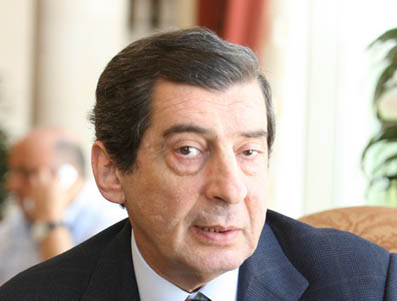
Elie Ferzli

I usually publish another post on the electoral law where I say if it has chances to pass. This time, I won’t publish. It’s obvious, the law won’t pass because there’s an unconditional general Muslim veto on it.

That’s me, 8 months ago. As you can notice, events evolve quite fast in this country. Who would’ve thought that the Orthodox Gathering law would be actually considered as an alternative to the 1960 law? There have been lots of talk on the issue (and even a Promotion and its Parody), so I’m going to bombard you with several posts on the Orthodox Gathering Electoral law. Just as a reminder, the OG law makes Lebanon one single district in which each sect can only vote for its coreligionists MPs under proportional representation.

I hereby leave you with the first part, an analysis on the unconstitutionality of the law.

Article 7 All Lebanese shall be equal before the law. They shall equally enjoy civil and political rights and shall equally be bound by public obligations and duties without any distinction.

One of the problems of the law is that it gives the Christians, 38%, the right to vote for 50% of the MPs.  Under the 1960 law, the Christian and Muslim votes are equal in their influence. (more…)

Malikiya Battle And Lebanese Politics

Operation Hiram Map

In Lebanese politics, the Malikiya battle is something exceptional. Almost every politician used it at least once. Here’s two examples for the President  and for a Minister. Speaking of the battle that was fought between the army and the IDF makes you feel that Lebanon was the only winner of all Arab states in the 1948 Arab-Israeli war. It shows a Republic dedicated to a Palestinian cause, a sovereign country, and a powerful army.

What Actually Happened

The Lebanese have the gift of distorting stories. A courageous stand almost became 60 years  later  a won war. Malikiyia was a disputed Lebanese Palestinian town. As you can notice, I did use the word “was”. (more…)

Waiting for the Electoral Law- Comparing The 1960 Law To Its Opposite

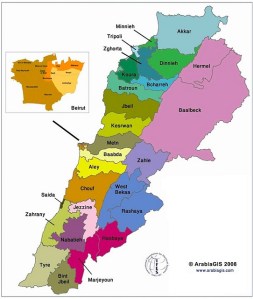
Electoral map of Lebanon according to the modified 1960 law

Electoral map of Lebanon according to the modified 1960 law

It seems we’re heading to the elections with the 1960 modified electoral law of Doha. Most of the politicians blame the law for the problems Lebanon is facing. But few are the ones than understand why the 1960 electoral law is an unrepresentative law that promotes sectarianism, vote-buying and neo-feudalism. I’m going to compare our current law – Small Districts and Majoritarian Representation – with its complete opposite, a virtual law promoting Lebanon as one single district under proportional representation, and perhaps, things might get a bit clearer.

Vote Buying. Take the example of the Metn district. The competition is always very close in that district, and the margin can be as narrow as 194 votes like in 2009. Which means that if you buy 98 votes, you can win the elections in the district by one vote. (more…)

Privacy, Protection, And Politicians

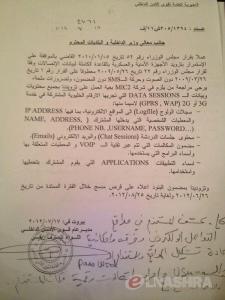
The Information Branch's request

The Information Branch’s request (Update: It shows on the document that it’s from summer, so apparently it’s an early request before the assassination). Courtesy of Elnashra

To hand over the telecom data to the ISF or not to hand over the telecom data to the ISF, that is the question.
Every once in a while, the same issue surfaces again. It’s a normal dilemma any country can have. It’s a choice one makes: The right to privacy or the right to protection. Handing the data can be useful to strengthen Lebanon’s security, but it’s a serious threat to our privacy and freedom.


Sehnaoui’s Call
(more…)