Monthly Presidential Coverage

Eight Months Of Vacuum

Wael Abou Faour

December was by far – politically speaking – the most boring month of 2014. So Let’s take a look at the very first maneuvers of 2015, and see how they are linked to the events of the last months of 2014.

Abou Faour’s Health Campaign

Now as you can all remember, PSP minister of health Wael Abou Faour started a food health campaign in November, revealing to the Lebanese endless lists of restaurants and supermarkets which sell commodities that do not meet food criteria. While there are technical reasons for being skeptical about the campaign (the minister stakes this entire crusade on a very shaky foundation: Trust in government), this is not the subject of this post. Nothing isn’t political in Lebanon, and after all, Abou Faour is a minister representing a political party in the cabinet. Although there might be few exceptions of politicians who actually purely work for benefit of their citizens, I will not give Abou Faour the benefit of the doubt – almost everyone else has already given him that. In this post, Abou Faour’s food health campaign will be analysed as a political maneuver, and as a political maneuver only.

It’s All About Elections 

Two questions come to mind here:

  • Why now? (Jumblatt had ministers in almost every cabinet for the past decade, so why would the reforms start now?)
  • Why Abou Faour, and not Akram Chehayyeb? (the PSP-affiliated minister of agriculture)

Every Lebanese probably asked himself the two questions and subsequently made up a weird conspiracy theory including Shawarma, Taymour, and a nuclear war with Salmonella infected Falafels.

Now the first thing to know about Abou Faour is that he is not only a minister, but a member of the parliament too. And not only is he a member of the parliament, he is an MP representing the districts of Rashaya – West Bekaa. For those of you who don’t know that yet, Rashaya – West Bekaa might be the turning point in the next parliamentary elections.

Traditionally, when the PSP heads to elections, it has always 6 districts in mind: Only one of those districts, Aley (5 seats), has a Druze majority (53%). Jumblatt would always have to compete with Talal Arslan over there, but it should be an easy win even if the PSP decides to run without its allies. The next key district for Jumblatt is the Chouf, the third largest constituency in Lebanon with 8 MPs. In the Chouf, the Druze are around 31%, the Sunnis are approximately 28%, while around 40% of the electorate is Christian. The Chouf would become a fierce electoral battle if Jumblatt decides to run against Hariri in the elections. In the end, the outcome would depend on the Christian votes, but it is more likely for Jumblatt to win once he allies himself with 3 or 4 powerful local Christian politicians (most probably the mayors of the biggest towns). However, Jumblatt has a lot to risk here, especially if he’s not allied with the M8 Christians, and an LF-FM alliance could eventually outnumber him in votes in case he’s all by himself.

The four other districts are minor ones for the PSP, where the Druze have only one MP representing it. In the Beirut III district, the Future Movement is in charge and Jumblatt would for sure lose Ghazi Aridi’s seat if he’s all by himself over there. In Baabda, the only way Jumblatt might dream of getting back the Druze seat is by allying himself with M8 (Christians≈52%, Shias≈24%, Druze≈17%, Sunnis≈6%). I know that it might look at first that the Sunnis and the Druze might together outweigh the Shias, but they don’t: If there was any chance for an LF-FM-PSP alliance to emerge victorious in Baabda, it would have done it in 2009. In Hasbaya-Marjeyoun, the Shias are 57% of the electorate. You all know what that means for the southern Druze seat (currently in the hands of Berri’s Amal Movement).

The only minor district that the PSP can effectively manipulate is the West Bekaa – Rashaya one. With 6 MPs representing it (two of them are members of Jumblatt’s bloc), this is the district that is likely to change the identity of the winning coalition in the next parliamentary elections: Walid Jumblatt’s political power is not only defined by his 7 or 11 MPs that are in the middle: It is also defined by the 14 MPs of the Chouf and West Bekaa-Rashaya that he is able to provide for the coalition that allies with him.

So Why Abou Faour, And Not Akram Chehayeb?

It’s because Aley is in Jumblatt’s hands no matter what happens. The West Bekaa – Rashaya constituency isn’t. Abou Faour represents the district of West Bekaa – Rashaya, one of the most mixed districts of Lebanon. The Sunnis are 48% of the electorate, the Shias and the Druze are each 14.5%, while the rest are Christians (around 22%). Now, although it might seem at first that a Sunni-leading party such as the Future Movement would always control this constituency (because of the large Sunni electorate), it’s not the case at all. In fact, in 2009, M14 – That included Jumblatt back then – only managed to win by a relatively small margin of (more or less) 5000 votes. Which means that M8 only needs 2500 ballots to switch allegiance in the next elections for them to win those 6 seats – provided (of course) that people would still vote for the same parties they voted for in 2009. This is where Jumblatt and the PSP votes come in. The 14.5% Druze votes are more than enough to provide a victory for M8. And the more popular Abou Faour is, the more the Christian electorate over there would be friendly towards him, the more it would be an easy win for M8. In the worst case scenario (Like a Hezbollah – Future Movement alliance), Jumblatt could always make use of a popular Abou Faour in order to strengthen his position among the Christians or the Sunnis of the Chouf and try to control his home district all by himself.

Abou Faour also represents the Bekaa which means that no matter how much Jumblatt “strengthens” him, it would be impossible for the minister of health to challenge Jumblatt’s  influence in the Druze heartland of southern Mount-Lebanon. The next few years are a transition period for the PSP as Taymour, Jumblatt’s son, is expected to become the first in command in the PSP. Strengthening any member of the old guard in this particular timing, such as the traditional MPs of Aley or the Chouf, would be a risky strategy for Jumblatt. Hence the choice of Abou Faour.

And Why Now? (The Hezbollah –  Future Movement Dialogue, You Fools!)

Abu Faour clearly loves the conflict. He describes his work as “battles” and the food scandal as an “invasion,” although he constantly reiterates that he could not have achieved this without the support of his party leader Walid Jumblatt. According to him, it was during their recent trip to Moscow, when he began to receive the results of their investigation that Jumblatt gave him the green light to go ahead.

It was his idea that we have to open this fight. He told me OK, go on. I’ll be with you, I’ll protect you.

(Taken from Abou Faour’s interview with the Daily Star)

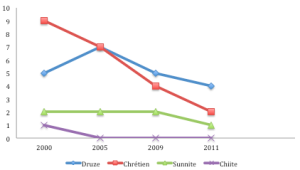
Rumors of a Hezbollah – FM dialogue started in November, approximately at the same time when Abou Faour’s campaign had started. The meeting eventually happened in December, and was apparently successful. More sessions were scheduled, and the Christian parties of both camps also decided they wanted to have a dialogue of their own (I’ll come back to that later). Like I said earlier, the power of the PSP comes from their 11 MPs in the middle but also from the ability of the party to provide any of the two coalitions with a victory in two key districts: The Chouf, and WB – Rashaya. Jumblatt is only strong as long as the M8 – M14 conflict is strong. Once both rival coalitions strike a deal, they can easily dictate their own terms and throw Jumblatt out of the political equation. A Sunni – Christian (LF/FPM) alliance could easily control the Chouf by reaching out to the two-thirds of its electorate that aren’t Druze, and a Sunni-Shia-Christian alliance could also throw Jumblatt’s two Bekaa MPs outside the parliament. The only district that Jumblatt would control is Aley, and that’s only if the electoral law stays the same. Joining the districts of Baabda and Aley (like in the 2000 electoral law) would mean the end of the PSP’s presence in the parliament. Now of course, it is highly unlikely that any of the two coalitions – even if allied together – would take such drastic measures, but Jumblatt knows that his role will be marginalized after any kind of M8-M14 rapprochement. The size of his bloc has also shrunk from 16 MPs in 2000 to 7 in 2011 (although 4 MPs rejoined his bloc in 2014). Here are some images that illustrate the downfall of Jumblatt’s political power over the past few years. (Source)
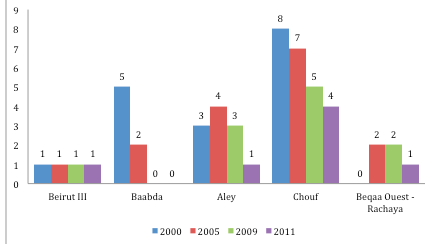
Evolution of Jumblatt's bloc by district - WL Evolution of Jumblatt's bloc by sect - WL

Bottom line: Jumblatt knows that he is getting weaker. It is no longer 2000 for him, and he has to change his tactics. The stronger and more popular Abou Faour is, the more Jumblatt can manipulate both alliances with the battle of West Bekaa Rachaya (in case M8 is running against M14) and the more can Jumblatt hope to electorally defend his home district of Chouf (in case M8 and M14 make peace and eventually decide to curb his influence by throwing him outside of the parliament).

And I know what you’re thinking: It’s still too early for elections. But it won’t be too early once M8 and M14 strike a deal that might include an electoral law, a president, and early elections. No one likes the man in the middle. Especially when there is no middle anymore.

Lebanese Forces – Free Patriotic Movement

While Lebanon was busy these past two weeks tweeting #jesuischarlie or #jenesuispascharlie and discussing Mia Khalifa and Miss Lebanon’s selfie, it missed the event of the decade: Aoun was tasting Geagea’s chocolate truffles. The moment Hezbollah and the Future Movement wanted to start their dialogue, their Christian allies decided to do the same. Now the tricky part here is to know whether the inter-Christian meeting is to support the HA-FM dialogue or to hinder it. The Christian parties aren’t concerned with HA-FM agreements, as long as their Muslim allies don’t abandon them as candidates in the presidential elections. Which is why the Christian leaders are rushing to meet each other after it was said that the first HA-FM dialogue session was successful. Deep down, Aoun and Geagea’s biggest fear is that the Future Movement and Hezbollah agree on a consensual presidential candidate. And their maneuver to counter this possibility was smart: Geagea’s sources hinted that he was ready – if certain conditions are met – to vote for Aoun in the presidential elections. Geagea knows that it is impossible for Aoun to make it through – Aoun would never accept Geagea’s conditions, and even if Aoun accepts Geagea’s terms, we still don’t know if Berri and Jumblatt would provide quorum – but he eventually forces Hezbollah to stick with Aoun now that the FPM’s candidate is supported by the LF. In other words, he forces the Mustaqbal to stick with him, while appearing as a kingmaker. Aoun looks like the most powerful (yet not powerful enough) candidate, and eventually any consensual FM-HA candidate loses momentum – even if it’s for a short period of time.

Connecting The Dots

So in one paragraph, here’s everything that happened in the past two to three months: Hezbollah and the Future Movement decided to have a dialogue. As soon as the rumors started, everyone panicked: Aoun agreed to sit with Geagea, Geagea agreed to support Aoun, and Jumblatt decided – via Wael Abou Faour – to preemptively mark his electoral territory.

Reminder: We still don’t have a president. (It’s been eight months)

242 days since the 25th of May. 78 days since the 5th of November. Three million years till the next parliamentary elections.

WikiLeaks And The 1998 Presidential Elections

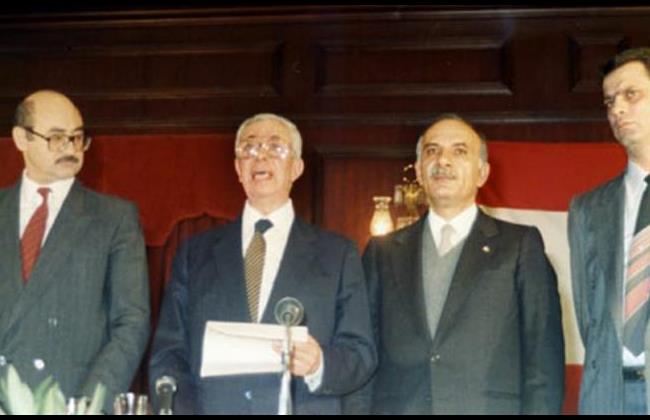
Outgoing President Elias Harwi (R) fixes the band of honor to President Emile Lahoud

Outgoing President Elias Harwi (R) fixes the band of honor to President Emile Lahoud

Lebanon’s presidential battle has been a bit quiet for the past few weeks, so I thought that it would be a good idea to start 2015 with a throwback to the 1998 presidential elections. Here’s an interesting WikiLeaks cable I found on the election of Emile Lahoud.

LEBANESE PARLIAMENT ELECTS ARMY COMMANDER EMILE LAHUD AS PRESIDENT
1998 October 15, 16:05 (Thursday)
98BEIRUT3820_a
CONFIDENTIAL
CONFIDENTIAL

1. (U) CLASSIFIED BY AMBASSADOR DAVID M. SATTERFIELD. REASONS 1.5 (B AND D).

2. (C) SUMMARY: RATIFYING THE NAME WHICH EMERGED FROM LAST WEEK’S SUMMIT BETWEEN LEBANESE PRESIDENT HRAWI AND SYRIAN PRESIDENT ASAD, THE LEBANESE PARLIAMENT TODAY ELECTED LAF COMMANDER EMILE LAHUD AS LEBANON’S ELEVENTH PRESIDENT BY A QUASI-UNANIMOUS VOTE OF 118 (AND 10 ABSTENTIONS). WHILE UNDER PRESENT CIRCUMSTANCES NO PRESIDENT COULD BE CHOSEN WITHOUT DAMASCUS’ BLESSING, LAHUD APPEARS TO BE A GENUINE NATIONAL CONSENSUS CANDIDATE — WITH MOST LEBANESE TAKING HOPE FROM LAHUD’S REPUTATION AS THE CORRUPTION-FREE REBUILDER OF A DECONFESSIONALIZED NATIONAL ARMY AND ABOVE ALL, A LEADER FROM OUTSIDE THE LARGELY DISCREDITED POLITICAL CLASS. WITH MONTHS OF FEVERED SPECULATION OVER THE IDENTITY OF THEIR NEXT PRESIDENT NOW ENDED, AN EQUALLY INTENSE FOCUS WILL NOW TURN ON LAHUD’S POLITICAL PROGRAM AND THE COMPOSITION OF THE NEXT GOVERNMENT. LAHUD AND HIS SOON-TO- BE COLLEAGUES IN THE TRIPARTITE PRESIDENCY, PM HARIRI AND SPEAKER BERRI, WILL UNDOUBTEDLY HAVE THEIR OWN IDEAS ABOUT THE NEW GOVERNMENT SHOULD RUN — AS WILL DAMASCUS. EXPECTATIONS OF POSITIVE CHANGE ARE RUNNING HIGH HERE, AS IS SKEPTICISM OVER WHETHER ANY OF THE PARTIES CONCERNED TRULY WANT TO SEE SUCH CHANGE TAKE PLACE. OUR CONTINUED PUBLIC AND PRIVATE EMPHASIS ON STRENGTHENING LEBANON’S INSTITUTIONS AND GOOD GOVERNANCE WILL BE IMPORTANT, BUT WHETHER LEBANESE (AND OUR OWN) HOPES WILL BE FULFILLED REMAINS VERY MUCH TO BE SEEN.

END SUMMARY.

CONSTITUTIONAL AMENDMENT: WHAT A DIFFERENCE A DAY (IN DAMASCUS) MAKES

3. (C) MONTHS OF INTENSE SPECULATION AMONG LEBANON’S POLITICAL ELITES REGARDING THE IDENTITY OF THE NEXT PRESIDENT OF THE REPUBLIC WERE ENDED WITH THE ANNOUNCEMENT LATE ON OCTOBER 5 — FOLLOWING PRESIDENT HRAWI’S SUMMIT WITH SYRIAN PRESIOENT ASAD — THAT ARTICLE 49 OF THE LEBANESE CONSTITUTION WAS TO BE AMENDED TO PERMIT SENIOR GOVERNMENT OFFICIALS (LAF COMMANDING GENERAL EMILE LAHUD, FOR EXAMPLE) TO BE ELECTED PRESIDENT. WHILE HRAWI CERTAINLY WAS SEEKING ASAD’S APPROVAL FOR AN AMENDMENT TO ARTICLE 49, IN HIS CASE TO PERMIT ANOTHER EXTENSION IN OFFICE, THE GENERAL CAME AWAY THE WINNER.

4. (C) COMMENT: ARTICLE 49 WAS ADDED AT THE TIME OF THE TAIF ACCORD TO PRECLUDE THE POSSIBLE CANDIDACY OF THEN (REBEL) LAF COMMANDER LTG MICHEL AOUN. IRONICALLY, TODAY’S VOTE COINCIDED WITH THE ANNIVERSARY OF AOUN’S FORCED DEPARTURE FROM LEBANON’S PRESIDENTIAL PALACE AT THE HANDS OF THE SYRIAN MILITARY AND THEIR LEBANESE ALLIES (EN ROUTE TO ULTIMATE EXILE IN FRANCE) ON 13 OCTOBER 199O. AOUN TOLD THE PRESS IN PARIS THAT HE IS PREPARED TO RETURN TO LEBANON SHOULD LAHUD MAKE THE REQUEST — AN UNLIKELY SCENARIO. END COMMENT.

5. (C) ACTING IN RECORD TIME AND WITH A VIGOR USUALLY UNKNOWN HERE, PRESIDENT HRAWI AND THE COUNCIL OF MINISTERS PROMPTLY SENT TO THE PARLIAMENT THE REQUISITE AMENDMENT OF ARTICLE 49 WHICH WOULD PERMIT “FOR ONE TIME ONLY” AND ON AN EXCEPTIONAL BASIS THE CANDIDACY OF A SENIOR CIVIL SERVANT. MP BOUTROS HARB, A MEMBER OF THE JUDICIAL AND ADMINISTRATIVE COMMITTEE OF PARLIAMENT AND A DECLARED PRESIDENTIAL CANDIDATE, VOTED AGAINST THE AMENDMENT IN COMMITTEE. LEGAL ANALYSTS, INCLUDING A MEMBER OF LEBANON’S CONSTITUTIONAL COUNCIL, TOLD EMBOFFS THAT THE DEBATE CENTERED ON WHETHER THE ONE-TIME EXCEPTION CLAUSE PROPOSED BY HRAWI WAS SUFFICIENT TO NULLIFY THE REQUIREMENT, EMBODIED IN LEBANESE ELECTORAL LAW, THAT THE CANDIDATE MUST HAVE BEEN OUT OF ACTIVE MILITARY DUTY FOR AT LEAST SIX MONTHS. SINCE THE AMENDMENT WAS NOT SUBJECT TO REVIEW BY CONSTITUTIONAL COUNCIL, THE POINT BECAME MOOT (ASSUMING THAT, UNDER THE CIRCUMSTANCES, CONSTITUTIONAL SUBSTANCE AS OPPOSED TO FORM WAS EVER AT ISSUE) WHEN THE PARLIAMENTARY COMMITTEE APPROVED IT ON 12 OCTOBER.

6. (U) ON 14 OCTOBER THE FULL PARLIAMENT PASSED THE AMENDMENT BY A VOTE OF 113 TO 4 AGAINST (WITH 11 ABSTENTIONS — COMPRISED MOSTLY OF DRUZE LEADER WALID JUMBLATT’S PROGRESSIVE SOCIALIST PARTY AND ITS ALLIES). FORMER PRIME MINISTER, MP OMAR KARAME, CONTINUED HIS TWO-YEAR BOYCOTT OF PARLIAMENTARY SESSIONS AND REFUSED TO ATTEND THE SESSION DESPITE HIS PERSONAL SUPPORT FOR GENERAL LAHUD. (COMMENT: THE HASTY AMENDMENT PROCESS DID HAVE ONE POSITIVE OUTCOME: IT BROUGHT PM HARIRI AND SPEAKER BERRI TO TALK WITH EACH OTHER FOR THE FIRST TIME IN MANY MONTHS. THE UNVEILING OF A STATUE OF LEBANON’S FIRST PRIME MINISTER AND INDEPENDENCE HERO, RIYAD SOLH, ON 14 OCTOBER, ALSO PROVIDED AN OPPORTUNITY FOR THE TWO POLITICAL FOES TO COME TOGETHER, THIS TIME TO BASH THE TURKS (RECALLING OTTOMAN HEGEMONY AND OPPRESSION OF LEBANESE PATRIOTS SUCH AS AL-SOLH). END COMMENT.)

7. (U) MP NASSIB LAHUD, AN UNDECLARED CONTENDER FOR THE PRESIDENCY, ARGUED FOR SIMPLY ABOLISHING THE PROBLEMATIC CLAUSES OF ARTICLE 49 RATHER THAN ADD A “ONE-TIME ONLY” PROVISION WHICH IN HIS VIEW WEAKENED THE CONSTITUTION. “BY AMENDING THE CONSTITUTION FOR ONE TIME ONLY AND EXCEPTIONALLY ON THE EVE OF EVERY PRESIDENTIAL ELECTION, IS A STATE OF LAW AND INSTITUTIONS BEING BUILT?” HE TOLD THE PRESS (A SENTIMENT OTHER POLITICIANS AND ANALYSTS HERE HAVE EXPRESSED TO US PRIVATELY.) HOWEVER, LAHUD, ESTRANGED COUSIN OF EMILE, SUBSEQUENTLY INDICATED HIS INTENTION TO VOTE FOR THE GENERAL.

ELECTION DAY ATMOSPHERICS: A GOOD TIME HAD BY ALL

8. (U) THE DIPLOMATIC CORPS WERE SUMMONED TO ATTEND THE ELECTORAL SESSION OF PARLIAMENT AT 110O ON 15 OCTOBER. WITH ALL BUT TEN (MOSTLY ALLIES OF DRUZE LEADER AND MINISTER OF DISPLACED WALID JUMBLATT) OF THE 128 DEPUTIES IN THEIR SEATS, SPEAKER NABIH BERRI MADE THIS TRAIN RUN ON TIME. A SHOUT OF “WHY CAN’T WE JUST DECLARE THIS THING DONE” WAS MET BY MIXED LAUGHTER AND CRIES OF “GIVES US THE BALLOTS.” AFTER COLLECTION OF THE SEALED UNMARKED ENVELOPES CONTAINING THE MPS’ CHOICE, DEPUTY SPEAKER FERZLI OPENED EACH AND READ ALOUD (118 TIMES) THE NAME “EMILE LAHUD.” THIS PROCESS ELICITED STILL MORE GALES OF LAUGHTER AND BANTERING ON THE FLOOR, WITH BERRI AT ONE POINT ORDERING FERZLI TO “SPEED IT UP.” AT 11:25, EMILE LAHUD WAS DECLARED THE PRESIDENT- ELECT. AS THE DIPLOMATS AND DEPUTIES DECAMPED, FRENCH AMBASSADOR JOUANNEAU SUMMED UP THE PROCEEDINGS FOR THOSE PRESENT BY DRYLY NOTING “QUELLE SURPRISE.”

HOPES FOR LAHUD

9. (C) WHILE MOST LEBANESE RESENT SYRIAN DIRECTION OF THE ELECTORAL PROCESS AND THE HASTY CONSTITUTIONAL AMENDMENT, THERE IS NEAR (AND TO US GENUINE) CONSENSUS SUPPORT FOR GENERAL LAHUD AS LEBANON’S NEXT PRESIDENT — AND AS A CATALYST FOR MUCH-NEEDED CHANGE. THERE ARE EXCEPTIONS AND CAVEATS IN THIS SUPPORT, HOWEVER. JUMBLATT AND HIS DRUZE ALLIES REMAIN DEEPLY SUSPICIOUS OF THE MILITARY AND HIS RELATIONS WITH LAHUD CAN BE EXPECTED TO BE (AT BEST) PROBLEMATIC. WHILE MOST MARONITES SEE LAHUD AS AMONG THE BEST OF THE POSSIBLE CANDIDATES (THEIR HEARTS WERE WITH NASSIB LAHUD OR BUTROS HARB) AND FAR SUPERIOR TO THE LIKES OF JEAN OBEYD OR ELIE HOBEIQA, THERE IS A RESERVOIR OF CONCERN THAT SYRIA WILL NOW DICTATE THE CHOICE OF LAHUD’S SUCCESSOR IN THE LAF AND WILL THUS HAVE BOTH THE PRESIDENT AND ARMY CHIEF BEHOLDEN TO THEIR WILL.

10. (C) ALTHOUGH FORMER PRESIDENT CHARLES HELOU TOLD THE AMBASSADOR ON 14 OCTOBER THAT HE VIEWED A LAHUD PRESIDENCY WITH GREAT OPTIMISM, MANY FROM HIS POLITICAL GENERATION RECALL THE REIGN OF PRESIDENT FOUAD SHEHAB (ALSO LAF COMMANDER BEFORE HIS ELECTION) WHOSE USE OF THE LAF G-2 TO MONITOR AND SHAPE POLITICAL DECISIONS WAS WIDELY RESENTED AND FEARED. DESPITE SUCH RESERVATIONS, FROM HIZBALLAH TO THE MARONITE LEAGUE, LAHUD HAS A WIDE BODY OF SUPPORT ACROSS CONFESSIONAL LINES AND AMONG THE CHRISTIAN COMMUNITY. KEY LEADERS IN THE PRESENT GOVERNMENT, NOTABLY PM HARIRI, HAVE BEEN QUICK TO PLEDGE PUBLICLY THEIR DESIRE TO COOPERATE WITH THE NEW PRESIDENT.

ITS THE ECONOMY, STUPID (AND THE SOCIETY, AND POLITICS)

11. (C) THE UNANSWERED QUESTION HERE IS WHAT, PRECISELY, THE NEW PRESIDENT INTENDS TO DO WITH THIS SUPPORT. LEBANON FACES A VARIETY OF SIGNIFICANT CHALLENGES: THE NEED FOR URGENT ECONOMIC REFORMS, AN ALMOST WHOLLY DISCREDITED AND CORRUPT SPOILS SYSTEM OF GOVERNMENT AND CONTINUING DRIFT IN SEARCH OF A NEW, POST-CIVIL WAR IDENTITY AND SENSE OF NATIONHOOD. NOT ONE OF LEBANON’S MANY POLITICIANS, ECONOMISTS OR JOURNALISTS CLAIM TO KNOW WHAT IS IN LAHUD’S MIND OR WHETHER, IN FACT, HE HAS A PROGRAM FOR GOVERNANCE. THE ROLE AND AUTHORITY OF THE POST-TAIF PRESIDENT IS ITSELF AMBIGUOUS. UNLIKE THE PRIME MINISTER AND SPEAKER OF THE PARLIAMENT, WHO HAVE CLEARLY DEFINED EXECUTIVE AND LEGISLATIVE POWERS AND PREROGATIVES, THE PRESIDENT — BY THE TEXT OF THE CONSTITUTION — PLAYS A LARGELY SYMBOLIC ROLE. PERSONAL CORRUPTION, LACK OF INTEREST AND LIMITED CREDIBILITY AS A NATIONAL OR INTERNATIONAL STATESMAN RENDERED CURRENT PRESIDENT HRAWI UNFIT OR UNABLE TO TAKE ON ANY LARGER, MORE EFFECTIVE RESPONSIBILITIES. MANY HERE ARGUE THAT LAHUD CAN INDEED ASSUME A SIGNIFICANT ROLE AS AN EXEMPLAR OF PERSONAL ETHICS IN GOVERNMENT AND, BUILDING ON HIS SUCCESS WITH THE LAF, IN REBUILDING AND REINFORCING THE INSTITUTIONS OF GOVERNMENT.

12. (C) ASSUMING THAT LAHUD DOES HAVE A CONCEPT OF WHAT HE WISHES TO DO AS PRESIDENT (THERE ARE SOME WHO ASSERT THAT LAHUD WANTS VERY MUCH TO BE PRESIDENT, BUT DOES NOT HAVE A CLEAR VISION OF WHAT HE WILL DO ONCE THERE), HE WILL FACE A FORMIDABLE CHALLENGE IN THE PERSON OF PM HARIRI — WHO IS VIRTUALLY CERTAIN TO CONTINUE AS PRIME MINISTER — TO ANY ATTEMPT TO ACT IN A MANNER WHICH HARIRI WILL VIEW AS THREATENING HIS OWN PREEMINENCE. FOR ALL HARIRI’S TALK OF SUPPORT FOR LAHUD AS “A STRONG PRESIDENT,” THE CLEAR SUBTEXT IS “STRONG PRESIDENT, YES” BUT AS AN ASSET FOR HARIRI’S USE TO COUNTER SPEAKER BERRI. THE PM TOLD AMBASSADOR SHORTLY BEFORE THE ELECTION THAT “I HOPE LAHUD WILL BE AN ALLY. BUT IF HE THINKS HE CAN DICTATE TO ME ON HOW A NEW GOVERNMENT WILL BE FORMED OR TRIES TO BLOCK ME, I WILL CRUSH HIM.”

13. (C) FOR HIS PART, BERRI WANTS A NEW GOVERNMENT COMPOSED OF PARLIAMENTARIANS. FORMER SPEAKER HUSSEIN HUSSEINI — NO FRIEND OF BERRI BUT LOYAL TO THE PARLIAMENT AND ITS ROLE — TOLD THE AMBASSADOR ON 14 OCTOBER THAT HE, TOO, FAVORED A GOVERNMENT OF DEPUTIES REPRESENTING ALL CONFESSIONS “IN THE SPIRIT OF TAIF.” THIS IS IN CONTRAST, HUSSEINI SAID, TO THE KNOWN INTENT OF THE PRIME MINISTER TO CREATE A CABINET OF “TECHNOCRATS.”

SYRIA: WHAT DOES ASAD WANT?

14. (C) EMBASSY DAMASCUS’ EXCELLENT DISCUSSION (REFTEL) OF THE VARYING INTERPRETATIONS POSSIBLE FOR SELECTION OF LAHUD MATCHES OUR OWN (AND OUR INTERLOCUTORS) UNCERTAINTY WHETHER DAMASCUS SEES IN LAHUD A STABILIZING FORCE IN THE BEST SENSE (STRENGTHENED POLITICAL AND ECONOMIC SITUATION) OR THE WORST (LAHUD AS YET ANOTHER PLAYER TO BE MANIPULATED IN ORDER TO PREVENT EMERGENCE OF ANY INDEPENDENT AND THUS THREATENING — TO SYRIA — LEBANESE POLITY). THOSE WHO BELIEVE THE LATTER, E.G. MINISTER HOBEIQA, STATE FLATLY THAT THE SYRIANS WILL CONTROL THE OVERALL PROCESS OF FORMING A NEW GOVERNMENT — WHICH WILL MERELY BE A “RESHUFFLING” OF THE MINISTERIAL DOSSIERS RATHER THAN ANY FUNDAMENTAL CHANGE IN APPROACH TO GOVERNANCE IN LEBANON. HOBEIQA TOLD THE AMBASSADOR ON 9 OCTOBER THAT HE RECOGNIZED THAT “THINGS HAVE CHANGED IN SYRIA,” BUT BELIEVED THAT IS PRECISELY WHY THE SYRIANS WANT A PRESIDENT LIKE LAHUD WHO HAS PROVEN HIMSELF PREDICTABLE, AND RELIABLE AS AN ALLY TO ASAD’S SON BASHAR IN DAYS TO COME. HOBEIQA (SPEAKING HERE FOR A WIDE SPECTRUM OF LEBANON’S POLITICAL CLASS) DID NOT THINK LAHUD HAD THE EXPERIENCE NEED TO BRING ABOUT CHANGE. “WHO MAKES CHANGE HERE?,” HOBEIQA ASKED SARCASTICALLY. “I HOPE THE GENERAL IS A GOOD TACTICIAN. I AM SURE HE IS NOT. PEOPLE SAY HE IS A GOOD GENERAL. WHAT DOES IT MEAN? HE NEVER HAD TO FIGHT, AND HE WILL FACE TESTS AHEAD.”

15. (C) MOST LEBANESE HOPE LAHUD’S LEADERSHIP WILL MARK AN END TO THE SQUABBLING, INEFFECTIVE GOVERNMENT OF THE “TROIKA” (I.E., THE PRESIDENT, PRIME MINISTER, AND SPEAKER). INDEED, REPORTS ARE CIRCULATING HERE THAT THE SYRIANS, PARTICULARLY ASAD HIMSELF, DO NOT WANT TO CONTINUE RECEIVING STREAMS OF LEBANESE VISITORS PLEADING THEIR CASES AND PROBLEMS IN DAMASCUS. LAHUD MAY WELL PUT AN END TO SOME OF THIS ACTIVITY (JUST AS HE FORBADE JUNIOR OFFICERS TO HAVE CONTACT WITH THE SYRIANS OUTSIDE OF LEBANON). BUT HERE AGAIN, THERE IS A DARKER READING OF SYRIAN INTENTIONS FROM SOME OF LEBANON’S MOST ASTUTE ANALYSTS, INCLUDING EDITORIALIST SARKIS NAOUM AND FORMER FOREIGN MINISTER FOUAD BUTROS. THEY ARE CONVINCED THAT BEYOND HIS PROVEN RECORD AS A DEPENDABLE PARTNER TO SYRIA AND AN ASSET FOR THE FUTURE, SYRIA CHOSE LAHUD BECAUSE HE REPRESENTED THE MOST POTENT COUNTERWEIGHT THAT COULD BE POSED AGAINST HARIRI — WHOSE PERCEIVED INDEPENDENCE NEEDED A MORE EFFECTIVE BALANCE THAN HRAWI COULD PROVIDE. THEY ASSERT “LAHUD IS SEEN BY THE SYRIANS AS AN ANTI-HARIRI.”

16. (C) COMMENT: WHAT DOES ALL THIS MEAN FOR US? LAHUD REMAINS A POLITICAL ENIGMA AND SYRIAN INTENTIONS IN PERMITTING HIS ELECTION — ALBEIT TO POPULAR ACCLAIM — ARE EVEN HARDER TO READ. MUCH OF THE SKEPTICISM PREVALENT HERE IS WORTH TAKING ON BOARD, BUT LAHUD WILL STILL HAVE SOME TIME TO NAME A NEW GOVERNMENT AND ELABORATE HIS PROGRAM. WHETHER THIS WILL AMOUNT TO THE FORMATION OF A “THIRD REPUBLIC” CHARACTERIZED BY MORE EFFECTIVE GOVERNMENT AND LESS VENAL POLITICAL LEADERSHIP, OR MORE OF THE SAME SORT OF TURF BATTLES BETWEEN MEMBERS OF THE TROIKA REMAINS TO BE SEEN. WE CLEARLY HAVE AN INTEREST IN THE FORMER. THE DEPARTMENT STATEMENT WELCOMING LAHUD’S ELECTION AND EXPRESSING OUR HOPE THAT GOOD GOVERNANCE AND STRENGTHENING OF INSTITUTIONS WILL MARK HIS TENURE MAKES THE RIGHT POINTS. WE WILL BE PRESSING THOSE SAME THEMES IN OUR OWN DIALOGUE WITH LAHUD AND IN OUR ONGOING DISCUSSIONS WITH HIS FUTURE COLLEAGUES BERRI AND HARIRI. END COMMENT

SATTERFIELD

Link to the original cable on WikiLeaks.

Lebanese Politics – 2014 In Review

Lebanese Prime Minister Tammam Salam casts his vote to elect the new Lebanese president in the parliament building in downtown Beirut on April 23 2014 (AFP-Joseph Eid)

The two most important political events of 2014: A new cabinet, and presidential elections. Lebanese Prime Minister Tammam Salam casts his vote to elect the new Lebanese president in the parliament building in downtown Beirut on April 23 2014 (AFP-Joseph Eid)

2014 was a very busy year in Lebanon. It started with no cabinet in power, ended with no president in power, and saw a postponement of the parliamentary elections. But there’s a lot more than that, so I decided to make a compilation of all of Lebanon’s political events in 2014, while linking them to one another. Voila.

After 8 Months Of Pressure, M8 Yields (Well, Not Really): Introducing The 8-8-8 Formula (January 2014)

(And yes, I’m aware that there are five eights in the sentence above)

2013 ended very badly for M8. In the last two weeks of December, and after several months of “divorce with M8”, the president threatened to form a neutral independent cabinet excluding M8 and M14. In the same time frame, one of Future Movement’s most prominent politicians was assassinated. With every step forward in Syria, Hezbollah was facing increasing pressure in Lebanon. The designated prime minister  could have been seen as an M14 member or as a centrist, but one thing was for sure: He was definitely not a member of the March 8 alliance. By the first week of January, it was too much to handle for the party: The March 8 alliance conceded to M14’s demands and accepted M14’s 8-8-8 government formation even though they had previously vetoed it. By January 2014, M8 hadn’t only lost its Mikati government: It was now deprived – and via the 8-8-8 formula – from the blocking third in the executive power. The president was at the time getting closer to M14, which means that the 8-8-8 deal had one consequence for M8: they were theoretically out of the executive power. However, and since Jumblatt was still closer to them at that point, it would have seemed like a smart maneuver for M8: They would give all the responsibilities to M14 by granting them an indirect majority (Sleiman and Salam would be considered centrists) while at the same time keeping a certain degree of control (one of the centrists was supposed to be mutually pro-Berri and Sleiman and the Jumblati share among the centrist seats was sort of an “M8 garantee”. And in the end, even if M14 had won the government, it would have been still accountable to a pro-M8 parliament – Jumblat was aligned with March 8 at the time: Win-Win for everyone. But something else was also developing at the time: The Free Patriotic Movement had already started a slow but steady transition towards the Future Movement, hoping to strengthen Aoun and to declare him as a consensual presidential candidate 6 months before Sleiman left office.

Two things to remember from January: M8 were (not really) losing the battle for the government, and its seemed for a while that a tripartite Hezbollah-FPM-FM alliance was in the making.

Lebanon’s Longest Governmental Vacancy Ends (February 2014)

After 11 months of stalemate, and weeks of sectarian discourse, the government was finally formed on the 15th of February. The FPM finally managed to turn the ministerial rotation into a weird victory: Gebran Bassil was proudly transferred from the energy ministry to the ministry of foreign affairs, and the defense and interior ministries were officially out of M8’s influence. Rifi became minister of justice, and Berri’s aide got hold of the ministry of finance. The Kataeb were thriving with 3 ministers in the cabinet (even more than the FPM) while the boycotting Lebanese Forces were abandoned by their M14 allies and were left all by themselves in the opposition. And Walid Jumblatt was still holding on to his kingmaker position: Officially, the cabinet was an 8-8-8 one. But in reality, it was more like a 9-8-7 cabinet or even a 13-11 one. After all, Salam and Sleiman’s ministers were closer to M14, and Hannawi was a common Berri/Sleiman representative, making Jumblatt’s rather small share an equally important one for everyone. And speaking of the president, he was given 3 portfolios but only 2 votes: In other words, the political class was trying to reinforce his prestige while at the same time denying him any power after the post-Sleiman era. ٍIt was an early sign that the six-year term that started in 2008 was ending.

The cabinet formation had a clear impact on the presidential elections: the biggest winners of the all-embracing cabinet were the FPM and the Kataeb: Strong with their big shares in the executive power and their “moderate” decision to participate with the rival parties in the same cabinet, Amine Gemayel and Michel Aoun would soon seem as the most likely candidates among the Maronite Four to win the presidential elections.

The War For The Policy Statement (March 2014)

The cabinet had been formed, but it wasn’t yet functional. The M8 and M14 alliances managed to split the cake but still had to agree on a common ground for the cabinet: The policy statement. After weeks of bickering, an agreement was finally reached at the last moment between the two coalitions: M14 abandoned their “commitment to the Baabda declaration” clause and replaced it with a vague “commitment to all the decisions of the dialogue committee”. In exchange, Hezbollah agreed to remove the famous “Army, People, Resistance” clause and put instead of it a very weird sentence about “the right of Lebanese citizens to resist the occupation”. The rest of the policy statement was particularly normal – involving calls for unity among other things – except for the part where a plan for a decentralization law was mentioned. Michel Sleiman was trying to achieve something / anything at all before the end of his term. And out of the five cabinets he formed, he chose the cabinet with the least life expectancy to start the reforms.

Forget About The Cabinet – The Presidential Elections Have Begun* (April 2014)

By April, Lebanon felt the presence of a functioning cabinet for the first time since ages. But the new government’s decrees were overshadowed by a war starting in the parliament: The main four Maronite candidates (Aoun, Gemayel, Geagea, Frangieh) met and decided than no one other than them was entitled to become president. The maneuver was clear: The Christian parties of M14 and M8 don’t trust their allies so they decided to preemptively meet and put a Maronite veto on any other “weak” candidate the Muslim parties might nominate (They were trying to keep Kahwaji and Obeid and everyone else out of the race).  The Christian parties didn’t want anyone but the Maronite Four – while not agreeing on any one of them. Each Muslim party vetoed half of the candidates, and Jumblatt vetoed them all. In an attempt to end any Hariri-Aoun rapprochement before it even happened, Samir Geagea nominated himself very early as a presidential candidate, ending any hope that he had of winning, but at the same time ending the possibility of a Mustaqbal-Aoun deal. It was a smart maneuver.

But M8 were even smarter. At first, they spread rumors that Emile Rahme, a very minor pro-Hezbollah Maronite from Aoun’s bloc would be facing Geagea in the first round. Then, they realised that it would even be more humiliating for Geagea to lose the first round without having a candidate competing against him: There were more white ballots than Geagea ballots. The first round of the presidential elections gave us an idea about M8’s strategy for the next few months: They had destroyed Geagea’s candidacy and were now intending to sponsor and elect Aoun as a consensual candidate, or else they would not let the parliament meet again by denying quorum. At the same time, Jumblatt was reuniting his bloc, “the democratic gathering” (That collapsed in January 2011) and fielding his own “centrist” candidate, Henri Helou.

*And The Presidential Elections Shall Never End (May 2014)

By the end of April, there were three things to keep in mind: Jumblatt was yet again confirming his Kingmaker position, M8 had won a symbolic victory, but M14 had time on their side: The longer M8 postponed the elections, the longer the people would turn against them. M8 had no problem shutting down the parliament as long as it didn’t lead to the election of an anti-M8 president, and M14 had no problem letting them shut down the parliament since they knew that eventually the trick would make Aoun very unpopular ahead of the parliamentary elections in November. May ended with no president in power and four warlords aspiring to fill the empty spot.

Meet Our Old Friend – The Presidential Vacancy Is Back (June 2014)

Aoun’s presidential victory in April did not last long enough: In June, the leader of the FPM made a major strategic mistake by suggesting that he – alongside Hariri and Nasrallah – represented a triangle of salvation that could not be broken up. Naturally, March 14 would start the Summer of 2014 with an original propaganda : “Aoun wanted to give up the 50-50 Christian-Muslim representation in exchange of his elections as president.” Nasrallah quickly countered M14’s offensive by (1) reminding Aoun that the triangle included Berri, (2) throwing this controversy on the French, and (3) confirming that he had vetoed the 33% Christians -33% Sunnis – 33% Shia representation deal when the Iranians asked Hezbollah about it. Once again, Nasrallah saves the day.

Aoun Wants To Change The Constitution And The Patriarch Wants To Explain It Differently (July 2014)

July was weird. Aoun, who had previously spent a whole year getting closer to the Future Movement while trying to fashion himself as a consensual, all-embracing candidate, suddenly decided – and probably because of the M14 June maneuver – that it wasn’t worth it anymore, and threw in a political bomb: He wanted to amend the constitution and let the president be elected by universal suffrage. The irony here is double: Aoun, who had spent the last two years lobbying for an electoral law maximizing Christian representation in the parliament, was now letting a Muslim majority decide the fate of the top Christian post. Moreover, it would also mean that the winning candidate would in no way be a consensual one, showing Aoun as a political opportunist that would do anything to become president, even if it meant being a consensual and a non-consensual candidate at the same time. While M8 tried to show him as a politician that believed in true democracy, M14 described him as an opportunist that would easily change the constitution and his convictions to win the elections. So it was a tie in July between M8 and M14 – and Jumblatt was taking advantage of this tie and maximizing his political gains. Rumors about a deal including a two-year presidency for Aoun started circulating in Beirut. Finally, the tie between M8 and M14 ended in late July, when the Maronite Patriarch launched three maneuvers against the M8 alliance. M14 were eventually right in their long-term maneuver: The longer M8 freezed the presidential elections, the faster it would lead to their downfall. July 2014 saw Rai’s first violent stances against M8. And for a Patriarch that has been for long considered as pro-M8, that’s not something good at all for M8: Rai’s first move was considering the boycott unconstitutional and declaring that a half+1 vote would be enough to elect a president. Rai then decided to undermine Hezbollah’s anti-ISIS propaganda by calling for dialogue with the group. Rai’s third move was saying that the president should come from outside M8 and M14. For the first time since March, M8 was starting to lose the presidential race.

Hariri Is Back, Arsal Is On Fire, And Rifi Ruins M14’s Comeback (August 2014)

With M8 having their first major setback since Mikati resigned, Hariri decided to rise to the occasion and maximize M14’s gains. In the beginning of August, Islamist militants from Syria seized the border town of Arsal. The Lebanese army hence started a campaign to regain control of the town. There were two consequences: a political one, and a military one. Militarily speaking, the commander of the army was proving once again that he was capable of handling tough situations. In a way, Arsal 2014 was for Kahwaji what Nahr El Bared 2007 was for Sleiman in 2008. Politically speaking, the chaos on the border was a huge asset for Hezbollah: The Syrian civil war was no longer only across the border, and Hezbollah had now a legitimate reason to crush the rebels on the other side of the mountains. In the same week, four FM politicians – in confusion – revealed four completely different stances regarding Arsal. For a while, it seemed like a propaganda boost for M8. Until Hariri decided to seize the moment, and returned to Beirut with a billion dollar to arm the army. In 48 hours, the rhetoric would completely shift: Hariri was yet again the moderate, the chaos among the FM disappeared, and Hezbollah’s presence in Syria – now with a Lebanese army that should be more capable of defending the border – was no longer justified (at least from M14’s point of view). What would’ve been a massive win for M8 turned out to be whopping political victory for M14. At least until Rifi decided at the end of the month to make a very stupid decision of banning the burning of ISIS flags because they had religious scripture. M8’s propaganda would thrive because of this story and M14’s short yet powerful comeback would end.

Forget About The Presidential Elections – We’re Heading To Parliamentary Elections (September 2014)

September began with the following dilemma: What is the most important priority, the presidential elections, or the parliamentary elections?

And September ended with the following answer: We should head to parliamentary elections.

So what happened in September? For the first time since ages, the Lebanese Forces realized that they were not in a weak spot. And they decided to manipulate everyone – including their allies.

In early September, M8’s parties were all in favor of parliamentary elections – after all, what do they have to lose? On the other hand, the Future Movement was struggling with the idea of heading to parliamentary elections: Hariri warned that the FM would boycott the elections should they happen, while at the same time the FM minister of interior handled the idea very badly and made sure no effort was spared to prevent elections. Hezbollah’s anti-ISIS propaganda would have won M8 the parliamentary elections and made the presidential battle far easier for Hezbollah and their allies. But there was one slight problem for the FM: They didn’t have enough votes to pass a parliamentary extension in the parliament. The FM and the PSP were the only parties embracing the parliamentary extension at the time, and the FM badly needed the Lebanese Forces’ votes to make sure that Lebanon wasn’t going to parliamentary elections. The LF were for the first time in control. For a while, it seemed that they decided the fate of the parliamentary elections. So they decided to manipulate everyone, including their own allies. Their early decision to vote for elections meant two things: They were willing to punish the Mustaqbal for leaving them on their own outside the cabinet in February, and they were willing to strike a deal without the O.K. of their allies. After 10 years, the Lebanese Forces had finally understood how to play the game of Lebanese politics. With the parliamentary elections getting closer, Lebanon also witnessed a media war between Al-Akhbar and Al-Mustaqbal.

Lebanon Has A New Presidential Favorite: The Rise of Jean Kahwaji (October 2014)

In October, the commander of the army’s (undeclared) candidacy was gaining momentum. After the Arsal clashes in August, Everyone suddenly wanted to arm the army: Iran was going to donate military equipment to the army, Lebanon was going to get Russian helicopters, the army received a new U.S. arms delivery, and France/Saudi Arabia confirmed Sleiman’s 3 Billion $ deal. This meant two things for the commander of the army: He was locally getting very popular, and he was also gaining the trust of the international community. And for an officer that was rumored to be “Hezbollah’s hidden candidate”, the support he got from the United States and Saudi Arabia made him look like Lebanon’s most likely candidate to fill the presidential vacancy. Berri – whose secret rumored candidate is Jean Obeid – had to counter any possibility of electing a relatively stronger president. The result was a couple of days of bickering with the LAF commander about the wage hike details regarding the officers, and a change of stance by Berri regarding the parliamentary extension: With Berri’s decision not to go to elections, The Future Movement didn’t need the LF votes anymore which meant that yet again the LF’s decision to vote for elections was meaningless (and they would eventually go with the flow and vote with the FM since their decision didn’t matter in the end).

They Were Just Kidding. We’re Not Heading To Parliamentary Elections (November 2014)

By the end of October: M8’s official candidate, Michel Aoun was no longer an option. Hezbollah’s “hidden candidate”, the commander of the army, was the favorite, and Berri’s “hidden candidate”, Jean Obeid, was at the bottom of the list. Meanwhile, M14 was still recovering from M8’s attempt to shatter it by turning the LF and the FM against each other regarding the matter of the parliamentary extension.

It is in this context that most of the political parties headed in early November to the extension session. Now that Berri’s bloc was voting Yes, the Lebanese Forces felt that the wise thing to do (since they now needed the FM more than the FM needed them) was to vote alongside their Sunni ally. The Kataeb, who usually always go against the flow, did the same again and voted No. On the other side of the political spectrum, Hezbollah decided to go against the FPM on this matter and pleased the FM by voting for the extension: It was an indicator that Hezbollah were avoiding – at any cost – any possible Sunni discontent in Lebanon. The direct consequence of the extension session would eventually be a rapprochement between Hezbollah and the FM. Rumors of a dialogue between the two parties would soon start circulating and the meetings would eventually start in late December.

But 10 days after the extension session, M14 was preparing its counter attack and intended to sow discontent among M8’s members, the same way M8 tried a month earlier to manipulate the FM – LF relations. Suddenly, and out of nowhere, Frangieh became an acceptable candidate for the Future Movement. The irony here is that Frangieh was far more pro-Syrian/pro-Hezbollah than Aoun. In other words, this was a trap for Hezbollah: Once Hezbollah accepts the Frangieh candidacy (instead of Aoun), the Hezbollah-FPM relation should end, and the M8 alliance would eventually be shattered. The victorious FM would have gained a president, who – while being pro-M8 – was the weakest among the Maronite Four. But Frangieh saw the trap, and so did Aoun: Frangieh was quick to confirm that he would only run if Aoun withdrew. Aoun, on the other hand, had a smart response: He invited Geagea to a face-off in parliament: M8 would allow the parliament to convene only if the two candidates were Geagea and himself: Aoun was trying to preemptively end Frangieh’s hopes, while effectively destroying Helou’s candidacy. Jumblatt’s natural response was to call Aoun undemocratic, and it helped us learn something very important: M8’s biggest fear was that M14 would go to parliament in order to elect Geagea, and eventually elect Helou instead of him. After all, the centrists and M14 together controlled more than 50% of the seats, and Helou did leave Jumblatt when Jumblatt abandoned Hariri in 2011. It wasn’t Geagea that scared Aoun. It was Helou. And it wasn’t the presence of an M14 president by itself that scared M8. Once an M14 president would be elected, M8 would lose the only power it has (The power to deny quorum in the presidential elections). M14 could then form a government on its own, and vote for an electoral law that might be terrible for M8.

So, to sum up November in 8 words: M8 wants a deal, and Aoun fears Helou.

Total Vacuum (December 2014)

In December, nothing happened. Seriously, nothing. Not one political maneuver. Any hope to end the deadlock depends now on the Mustaqbal – Hezbollah dialogue.

You might also like 2013’s review.

See you in 2015!

Seven Months Of Vacuum

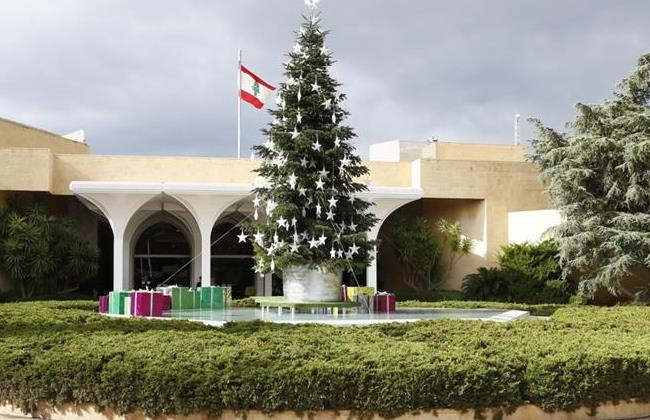
A Christmas tree is set in front of the Baabda Presidential Palace, Friday, Dec. 13, 2013. (The Daily Star/Dalati Nohra, HO)

A Christmas tree is set in front of the Baabda Presidential Palace, Friday, Dec. 13, 2013. (The Daily Star/Dalati Nohra, HO)

6 months. That’s all it took for the previous parliament to elect Michel Sleiman president. Now that we’re finishing the seventh month of presidential vacancy, I think it is safe to say that we are now living in a historical era: This is officially the second longest presidential vacancy the republic has ever seen (and the longest post-Taif one!). Hooray!

The record is 409 days. It’s a lot of time, but hopefully our politicians would be wise enough to guide us through 7 more months of vacancy. After all, breaking that record might be the only achievement this parliament has made since 2009.

2014 is clearly not 2008. Because seven months have already passed, and we still don’t have a president. Actually, it gets even better. Seven months have passed, and the political class forgot* about the presidential elections.

*completely forgot:

Unlike the past six months that were full of political maneuvers and surprises, December was most probably the calmest month among them all (Here’s a compilation of the monthly events for June, July, August, September, October, and November in case you’re interested). In December, nothing – relevant to the deadlock – happened. Other than the fact that Gemayel tried to fashion himself as a consensual candidate by paying a visit to the South (Gemayel’s a bit late for that phase of the game, since the battle is now about choosing a truly consensual candidate rather than one of the Maronite four), the only other political activities of this month were the government’s (epic fail) negotiations to end the Arsal fiasco alongside the attempt at distracting the people from the fiasco, the parliamentary extension and the presidential deadlock with the health ministry’s food campaign whose timing is suspicious: Food is not a political priority (actually, it is, but you get the point). The Islamic State is on the gates of the Bekaa, Israel is threatening from South, the hypocrite parliament extended its term without showing any intent to solve the presidential deadlock, and the government should be acting like a caretaker cabinet but instead, and as they say in Arabic, اخد مجدو.

And the Hezbollah – Future Movement dialogue that was supposed to be held “soon” last month, is also supposed to be held “very soon” one month later. So by this rate, should we expect a press conference in January telling us that the dialogue will be held very, very, very soon? (although it is supposed to kick off today :P)

Dear Santa, we want a president.

213 days since the 25th of May. 196 days left to break the 409 days record.

48 days since the 5th of November. 900 days till the next the parliamentary elections.

Wikileaks And The 1995 Presidential Elections

Elias Hrawi delivers his Inaugural speech, Nov. 24, 1989

Elias Hrawi delivers his Inaugural speech, Nov. 24, 1989

Things are moving very slowly in Lebanese politics these days, so I thought it would be interesting to see how Lebanon handled the presidential elections two decades ago, back when Berri was serving his very first term in office and when Hariri was still prime minister.

So here it is, the 1995 presidential elections, in the eyes of U.S. embassy.

(Spoiler alert: The parliament eventually extended Hrawi’s term)

(S)ELECTING A LEBANESE PRESIDENT IN 1995: A CURTAIN-RAISER
1994 November 9, 09:45 (Wednesday)
94BEIRUT5863_a
CONFIDENTIAL
CONFIDENTIAL
— Not Assigned —
CURTAIN-RAISER
1. CONFIDENTIAL – ENTIRE TEXT.
2. SUMMARY: VIRTUALLY EVERY PROMINENT MARONITE POLITICAN IN LEBANON (AND IN PARIS) HOPES TO SUCCEED PRESIDENT HRAWI, WHOSE TERM IS SET TO EXPIRE IN NOVEMBER 1995. FURIOUS JOCKEYING HAS BEGUN, AND A DIZZYING ARRAY OF POSSIBLE SCENARIOS EXISTS, BEGINNING WITH AN EXTENSION OF HRAWI’S TERM. THE FATE OF THE PEACE PROCESS IS WIDELY VIEWED AS A KEY DETERMINING FACTOR. THE LEBANESE HISTORICAL REFLEX TO SEEK FOREIGN BACKERS WILL MARK THE 1995 PROCESS: SYRIA WILL BE THE MAIN PLAYER, BUT CANDIDATES ARE ALSO SEEKING U.S., FRENCH, SAUDI, AND VATICAN SUPPORT. AS OF NOW, HRAWI, LAF COMMANDER EMILE LAHOUD, AND FORMER AMBASSADOR TO THE U.S. NASSIB LAHOUD ARE THE FRONT-RUNNERS. THE PRINCIPAL USG INTEREST SHOULD BE IN URGING THE SELECTION OF A PRESIDENT WITH ACROSS-THE-BOARD CREDIBILITY, BUT IN PARTICULAR WHO CAN HELP STEER THE MARONITES TOWARD POSITIVE PARTICIPATION IN FORMAL POLITICAL LIFE. SEPTEL REPORT WILL “HANDICAP” THE MOST PROMINENT CONTENDERS. END SUMMARY.
A PRESIDENT IN EVERY MARONITE’S MIRROR
————————————–
3. THE SIX-YEAR TERM OF ILYAS HRAWI IS SLATED TO EXPIRE IN NOVEMBER 1995, AT WHICH TIME PARLIAMENT WILL SELECT A SUCCESSOR. SHI’I NABIH BERRI AND SUNNI RAFIQ HARIRI BOTH HOPE ONE DAY TO BE THE FIRST MUSLIM PRESIDENT OF LEBANON, BUT NOBODY PREDICTS THAT THE NEXT PRESIDENT WILL BE ANYTHING OTHER THAN A MARONITE.
4. THERE IS NO SHORTAGE OF WOULD-BE SUCCESSORS IN THE MARONITE COMMUNITY. AT A RECENT SOCIAL EVENT FOR PARLIAMENTARIANS, A DRUZE MP ILLUSTRATED THE POINT WHEN HE TOASTED “TO THE NEXT PRESIDENT IN OUR MIDST–ALL SIX OF THEM.” THE LIST OF MARONITE “WANNABES” BRIDGES THE GAP BETWEEN THOSE WHO PARTICIPATED IN THE 1992 ELECTIONS AND THOSE WHO BOYCOTTED THE PROCESS, AND RUNS THE SPECTRUM FROM VIRULENT ANTI-SYRIANS TO THE SHAMELESS SURROGATES OF DAMASCUS. IN ADDITION TO THE SURFEIT OF WOULD-BE LEADERS IN THE COUNTRY, SUCH EXILES IN PARIS AS RAYMOND EDDE, AMINE GEMAYEL, AND MICHEL AOUN WANT TO EITHER GAIN THE PRIZE OR PLAY KINGMAKER.
THE SYRIAN ROLE, AS USUAL, KEY
——————————
5. REGIONAL REALITIES AND THE PRESENCE OF A PRO-SYRIAN MAJORITY IN THE LEBANESE PARLIAMENT ASSURE THAT SYRIA WILL HAVE THE DOMINANT VOICE IN THE SELECTION OF A NEW PRESIDENT. TO DATE, THE SARG HAS NOT TIPPED ITS HAND ABOUT ITS PREFERENCES. IN LEBANON, IT IS ASSUMED THAT THE PRESIDENTIAL SUCCESSION WILL BE CLOSELY TIED TO THE PEACE PROCESS, AND THAT THE SARG WILL CALCULATE ITS INTERESTS AS NEGOTIATIONS WITH ISRAEL PLAY THEMSELVES OUT. 6. EVEN THE MARONITES NOW JOCKEYING FOR POSITION BELIEVE THAT THE SYRIAN STRATEGY WILL BE TO LET THE CANDIDATES STRATCH, JOSTLE, AND ELBOW EACH OTHER TO THE POINT OF IMPASSE, AT WHICH POINT “BIG BROTHER” WILL STEP IN TO “HELP” THE LEBANESE SORT OUT THEIR SELF-MADE MESS. IN THE MEANTIME, DAMASCUS WILL HOST A CONSTANT STREAM OF CANDIDATES WHO SALLY ACROSS THE BORDER IN HOPE THAT ASAD WILL GIVE A FAVORABLE WORD, WINK, OR NOD.
THE U.S. ROLE: DIFFERENT SCENARIOS
———————————-
7. IT IS AXIOMATIC AMONG LEBANESE THAT THE USG WILL PLAY A KEY ROLE, EITHER ACTIVE OR PASSIVE, IN THE MAKING OF THE NEXT PRESIDENT. USG DRUTHERS ARE JUDGED TO BE DEPENDENT ON THE PEACE PROCESS. THOSE WHO BELIEVE THAT THE U.S. PLANS TO “SELL OUT” LEBANON FOR THE SAKE OF A SYRIAN-ISRAELI PEACE AGREEMENT FEAR THAT THE SARG AND THE USG WILL COOPERATE TO CREATE A LEBANESE QUISLING WHO WILL FAITHFULLY EXECUTE SYRIAN DIKTAT.
8. A MORE POSITIVE SCHOOL OF THOUGHT BELIEVES THAT THE USG, AT AN APPROPRIATE MOMENT, SHOULD URGE THE SARG TO EXERCISE ITS INFLUENCE TO GUARANTEE THE SELECTION OF A PRESIDENT WHO HAS A DEGREE OF CREDIBILITY ON ALL SIDES. THEY HOPE THAT DAMASCUS WILL BE SUFFICIENTLY BROAD-MINDED TO SEE THE NEED FOR A UNIFYING FIGURE, IN PARTICULAR SOMEONE WHO CAN LEAD THE MARONITES TOWARD POSITIVE PARTICIPATION IN FORMAL POLITICAL LIFE. SUCH SYRIAN ALTRUISM, HOWEVER, WOULD IN THEIR ESTIMATION BE DEPENDENT ON A SUCCESSFUL OUTCOME OF THE PEACE PROCESS.
9. THE MARONITE HARD CORE HOPES THAT A BREAKDOWN OF THE PEACE PROCESS WILL SOMEHOW LEAD THE USG (AND ISRAEL) TO SUPPORT A VOCAL OPPONENT OF SYRIA. THEY HOPE TO MOBILIZE MARONITE COMMUNITIES IN THE U.S. TO PRESSURE THE ADMINISTRATION TO SUPPORT “THE LEBANESE POWER OF DECISION” — WHICH IN THEIR CIRCLES MEANS RESTORING UNRIVALED MARONITE DOMINANCE.
OTHER PLAYERS: FRANCE, SAUDI ARABIA, THE VATICAN
——————————————— —
10. MANY MARONITES ARE HOPING THAT FRANCE WILL INVOLVE ITSELF IN THE PRESIDENTIAL RACE BY URGING SYRIA OR THE USG IN A PARTICULAR DIRECTION, OR, IN SOME FEVERED IMAGININGS, BY RESUMING THE ROLE OF GUARANTOR OF MARONITE POWER. THOSE MARONITES WHO MAKE THE PILGRIMAGE TO FOGGY BOTTOM SEEKING USG BLESSING USUALLY STOP OFF IN PARIS TO PRACTICE THEIR PITCH. THEORIES OF FRENCH PREFERENCES VARY WILDLY — FROM BACKING AOUN AND “MARONISME” TO SELLING OUT CHRISTIAN INTERESTS FOR THE SAKE OF CEMENTING WIDER FRENCH INTERESTS IN THE ARAB WORLD. IN PARTICULAR, MANY MARONITES FEAR THE WARM RELATIONS BETWEEN JACQUES CHIRAC AND SUNNI PRIME MINISTER HARIRI.
11. SAUDI ARABIA IS ALSO SEEN AS HAVING A ROLE TO PLAY, BUILDING ON ITS EXISTING RELATIONSHIP WITH HARIRI. SOME SPECULATE THAT RIYADH WILL POUR MONEY INTO LEBANON — OR EVEN SYRIA — TO SUPPORT HARIRI’S FAVORITE MARONITE, OR THAT, CONVERSELY, HARIRI WILL BE GIVEN INSTRUCTIONS WHOM TO SUPPORT. MOREOVER, ONE PROMINENT CANDIDATE, NASSIB LAHOUD, HAS INDEPENDENT TIES TO RIYADH (SEPTEL). SOME EXPECT THE USG TO URGE THE SAUDIS TO SUPPORT ITS FAVORED CANDIDATE.
12. PUNDITS EXPECT THAT THE VATICAN, THROUGH THE INFLUENCE IT MIGHT EXERCISE ON THE MARONITE PATRIARCH AND THUS HIS CHURCH, WILL INVOLVE ITSELF DEEPLY. THEY SEE THE ELEVATION OF PATRIARCH SFAYR TO CARDINAL AS A SIGN OF VATICAN INTEREST IN GUARDING CHRISTIAN “RIGHTS.” THE HARD CORE HOPES THAT THE POPE WILL PRESSURE THE USG AND FRANCE TO SUPPORT A “NATIONALIST”; MODERATES HOPE THAT THE VATICAN WILL STRONGLY URGE MARONITES TO PARTICIPATE IN POLITICAL LIFE; SOME BELIEVE THAT PAPAL NUNCIO PUENTE’S ONGOING DIALOGUE WITH HIZBALLAH LEADER FADLALLAH WILL HELP PRODUCE A PRESIDENT WITH BROAD CREDIBILITY. PUENTE SAYS THAT, HEALTH PERMITTING, THE POPE WILL VISIT LEBANON IF A PEACE AGREEMENT IS REACHED: IF THE VISIT HAPPENS, LOCAL EARS WILL BE KEEN TO SIGNALS OF A VATICAN PRESIDENTIAL PREFERENCE.
THE MUSLIM CONTRIBUTION
———————–
13. MOST PRESIDENTIAL MANEUVERING, OF COURSE, IS A STRICTLY MARONITE GAME. MUSLIMS–SHIA, SUNNI, AND DRUZE–ARE RELEGATED TO SECONDARY ROLES: EITHER TO BE THE GREEK CHORUS IN PARLIAMENT TO ECHO THE WISDOM RECEIVED FROM DAMASCUS, AND/OR TO STRIKE DEALS WITH MARONITE HOPEFULS TO OBTAIN THE POSITIONS TO WHICH MUSLIMS AT THIS POINT CAN ASPIRE. MUSLIM LEADERS ALREADY HAVE BEGUN CAUTIOUSLY TO ALIGN THEMSELVES, AS OFTEN AGAINST AS FOR A PARTICULAR MARONITE. UNTIL NOW, THE HIZBALLAH SHI’A HAVE NOT DISCUSSED THE RACE OPENLY: INSTEAD, THEY ARE PREOCCUPIED WITH WHAT SYRIA, AND PERHAPS IRAN, HAVE IN STORE FOR THEM AFTER PEACE WITH ISRAEL.
EXTENSION FOR HRAWI?
——————–
14. IN THE LAST FEW MONTHS, THERE HAS BEEN DISCUSSION OF A CONSTITUTIONAL AMENDMENT THAT WOULD ALLOW PRESIDENT HRAWI TO EXTEND HIS TERM BY PERHAPS TWO YEARS. DESPITE PUBLIC DISAVOWAL OF THE IDEA, HRAWI IS WORKING TOWARD THIS GOAL BEHIND THE SCENES. HE APPARENTLY WANTS TO BE SEEN AS THE PRESIDENT WHO TOOK OFFICE IN THE MIDST OF TURMOIL, THEN PRESIDED OVER A PERIOD IN WHICH LEBANON ENDED ITS CIVIL WAR, MADE PEACE WITH ISRAEL, THEN PUT ITSELF ON THE PATH TO ECONOMIC REVIVAL. WE HAVE ALSO DETECTED WHAT MAY BE A NASCENT EFFORT BY HRAWI TO BOOST HIS DOMESTIC CREDIBILITY BY PUTTING A BIT OF DAYLIGHT BETWEEN HIMSELF AND DAMASCUS.
15. THE LEBANESE SAY THAT THE SYRIANS HAVE SENT CONFLICTING SIGNALS ON THE ISSUE OF EXTENSION, AND THAT THE ISSUE MAY DEPEND ON THE FATE OF THE PEACE PROCESS. THE THINKING IS THAT, IF THE PROCESS STALLS, HRAWI WOULD REMAIN IN OFFICE, AND THE QUESTION OF THE PRESIDENCY, LIKE SO MANY OTHER ISSUES, WOULD REMAIN BLOCKED UNTIL THE SHAPE OF REGIONAL POLITICS BECAME CLEAR.
16. THERE ARE CONFLICTING REPORTS ON HOW PM HARIRI, SPEAKER BERRI, AND OTHER GOL FIGURES VIEW AN EXTENSION OF HRAWI. HARIRI AND BERRI DISLIKE HRAWI, BUT FEAR THAT A NEW, STRONGER PRESIDENT COULD JEOPARDIZE THE PREROGATIVES THEY HAVE BEEN ABLE TO CARVE OUT. PREDICTABLY, TO THE EXTENT THAT AN EXTENSION OF HRAWI WOULD ALSO HELP FREEZE THEM IN PLACE, THE IDEA IS ATTRACTIVE. IN THE ULTIMATE ANALYSIS, THEY WILL WAIT FOR SYRIA’S DEFINITIVE SIGNAL ON THE ISSUE.
17. INTERESTINGLY, THERE ARE VIRULENT OPPONENTS OF BOTH HRAWI AND SYRIA WHO SUPPORT AN EXTENSION. THEIR THINKING IS THAT THE ENEMIES OF SYRIA SHOULD CONCENTRATE THEIR EFFORTS ON THE 1996 PARLIAMENTARY ELECTIONS, SEEKING INTERNATIONAL OBSERVERS AND GUARANTEES. THE NEW, PRESUMABLY LESS SYRIAN-INFLUENCED PARLIAMENT WOULD THEN ELECT A PRESIDENT UNDER LESS SYRIAN SWAY.
THE USG INTEREST
—————-
18. THE USG’S VERY ACTIVE, UNSUCCESSFUL SUPPORT IN 1988 FOR MIKHAEL DAHER PROVIDES A CAUTIONARY LESSON FOR THE 1995 PRESIDENTIAL SELECTION PROCESS. ACTIVE USG BACKING FOR A PARTICULAR CANDIDATE WOULD PROBABLY SET IN MOTION A SERIES OF REACTIONS THAT WOULD DAMAGE THE CHANCES OF “AMERICA’S CHOICE.” THAT SAID, IT WOULD BE ALMOST IMPOSSIBLE FOR THE USG TO KEEP SILENT ABOUT THE SELECTION PROCESS: IF EXTENSION OF HRAWI REMAINS A LIVE ISSUE, WE WILL BE ASKED AT LEAST FOR COMMENT. IF A NEW PRESIDENT IS TO BE CHOSEN, WE WILL BE ASKED FOR OUR INPUT EVERY STEP OF THE WAY. PRESUMABLY, AT A MINIMUM, WE WOULD LIKE TO ASSURE THAT THE NEW PRESIDENT IS NOT HOSTILE TO USG INTERESTS.
19. UP TO THIS POINT, EMBASSY HAS ANSWERED INQUIRIES BY AVOIDING NAMES AND SAYING THAT WE HOPE A NEW PRESIDENT WILL FIT A CERTAIN PROFILE: HE/SHE SHOULD BE DEDICATED TO FINDING WAYS TO RECONCILE THE VARIOUS LEBANESE COMMUNITIES WITH EACH OTHER AND WITH THE NEEDS OF THE COMING ERA OF PEACE. HE/SHE SHOULD HAVE CREDIBILITY WITH ALL SIDES, AND IN THIS SENSE SHOULD NOT BE SEEN AS OVERLY TIED TO ANY FOREIGN SPONSOR. HE/SHE SHOULD ALSO VIEW AS A PRINCIPAL TASK ENCOURAGING THE MARONITES TOWARD MORE ACTIVE, POSITIVE PARTICIPATION IN FORMAL LEBANESE POLITICAL LIFE. IF THE TREND TOWARD CHRISTIAN NON-PARTICIPATION CONTINUES OR DEEPENS, THE PROSPECTS FOR INTERNAL RECONCILIATION AND STABILITY–WITHIN AND PERHAPS EVEN BEYOND LEBANON’S BORDERS–ARE POOR.
SCHLICHER

Six Months Of Vacuum

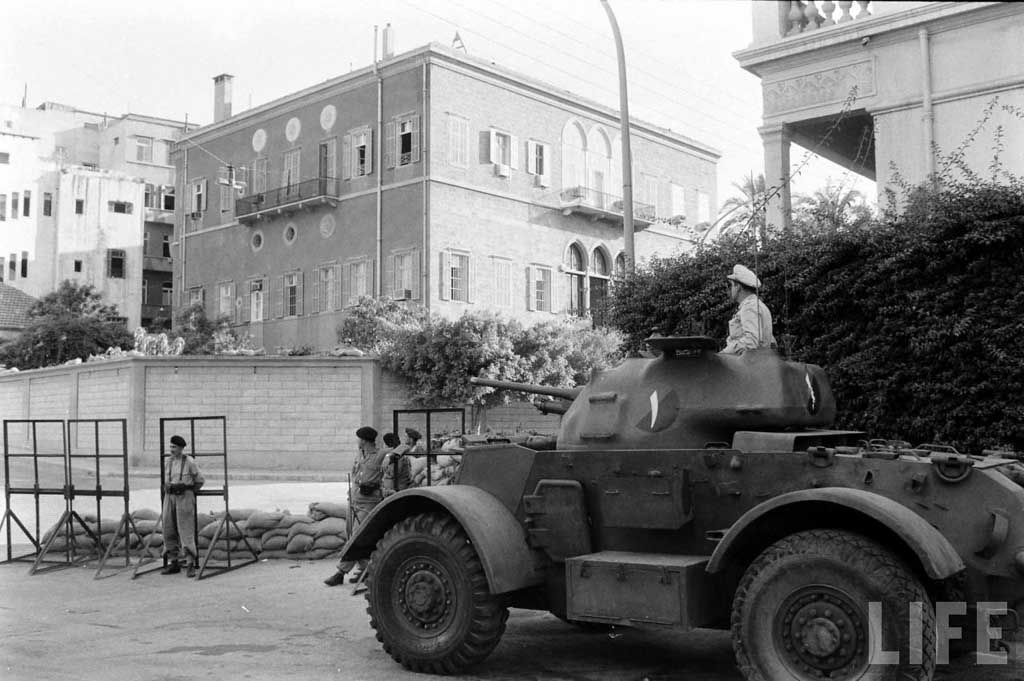
A Lebanese Staghound securing the presidential palace in Kantari, Beirut (1958)

A Lebanese Staghound securing the presidential palace in Kantari, Beirut (1958)

It’s already been six months since Michel Sleiman left office. And this month has been the most active one so far: The parliament approved its 2 years and seven months extension, the Future Movement hinted at the possibility of a presidential breakthrough, Aoun responded with an innovative counter-attack, and most importantly, there are renewed talks about the electoral law.

How the FM tried to break the vicious circle

Two weeks ago, one of the most shocking and unexpected maneuvers of the year broke the five months status-quo we had since Michel Sleiman left office: The Future Movement – via an interview with a Beirut MP – hinted that Sleiman Frangieh could be an accepted presidential candidate. The maneuver was surprising, yet brilliant:

If the FM – according to MP Shab’s hints – are seriously considering Frangieh’s candidacy, it would make Hezbollah look like a hypocrite in case they insist on Aoun or a consensual candidate, and it would create problems between the Marada and the FPM and between M8′s Christians and M8′s Muslims. A Frangieh presidency might seem like a March 8 victory, but on the long run, it will probably lead to the downfall of that alliance.

Such a maneuver from M14 would kill two candidacies with one stone: Aoun’s candidacy and Kahwaji’s candidacy. And in the process, it would kill the M8 alliance.

How Frangieh responded

So to sum things up here , Frangieh in his interview ended the Future Movement’s maneuver while it was still in its early stage and proved that he wouldn’t go behind his allies’ back in order to secure the presidency for himself. But he also indirectly gave the names of M8’s three presidential favorites: Aoun, Obeid (rumored to be Berri’s favori), and Kahwaji (rumored to be Hezbollah’s favori) while at the same time blacklisting two other possible consensual names: Georges Khoury (Who used to be the head of Lebanon’s intelligence service), and the governor of the central bank (Riad Salameh).

How Aoun responded

Aoun however was more subtle in his counter-attack. While he didn’t directly comment on M14’s maneuver, he said (in an interview with MTV) that he was ready to face off with Samir Geagea in parliament provided that there was no other candidate running in the presidential elections. The maneuver here is pretty much obvious: As demonstrated by the first round of the presidential elections, Samir Geagea could never get more than 50% of the votes needed to be elected. Walid Jumblatt, among other non-affiliated M8 politicians would never elect him as president. While Michel Aoun would also never get more than 50% of the votes (since the Jumblatt and Mikati blocs are hardly going to prefer him over Geagea), Michel Aoun – via his face off proposal – would have made sure that other presidential candidates would be surely gone from the race: Two names quickly come to mind here: Sleiman Frangieh and Henri Helou.

By making sure that it would be either Geagea or himself in Baabda, Aoun would have achieved a big win here and would have stopped two major M14 maneuvers from happening: The first one – electing Frangieh – was a long shot and its main goal was shattering the M8 alliance rather than securing the election of Frangieh – and it didn’t work anyway. The second maneuver is M8’s biggest fear: Should there be quorum, if M14 decides to support Jumblatt’s candidate – Henri Helou –  then he would become Lebanon’s next president since M14’s votes alongside Jumblatt’s ones are more than 65.
Aoun – and by getting everyone else to agree to his face off deal – Would have ruled out the possibility of M14 showing up to vote for Geagea but instead voting for Helou and electing him as president.

The FPM was trying to hit two birds with one stone: Keeping Frangieh outside the presidential race – independently of what Frangieh has to say- and at the same time preventing M14 from voting for Helou and electing him as president. This is why M8 won’t let the parliament meet to elect the president: It’s not because they fear that Geagea would be elected (Which is surreal). It’s because they fear that M14 would change their mind at the last minute and elect Helou after a deal with Walid Jumblatt. What confirms this theory is Jumblatt’s rejection of Aoun’s proposal (He called it undemocratic):

How the Lebanese Forces responded

The Lebanese Forces had two interesting reactions on the maneuvers of this month: The first one was their sudden interest in the electoral law and their reinvigorated support to a law they had previously agreed to (in May 2013) with the PSP and the FM. This is probably a reminder to the PSP and the FM that they are still an integral part of M14 and that they can give them concessions other parties would never give (Like on the electoral law). The second one was their approval of Aoun’s face-to-face competition with Geagea. After all, how can it harm the Lebanese Forces if Frangieh and Helou are out from the presidential race?

How vacancy in the presidency is in favor of M8

Now that the stances of every party is becoming clearer by the day, it would be interesting to see the bigger picture here, that is a lot similar to 2007 and 2008: March 8 is blocking the presidential elections because it gives them a tactical advantage: If they let it happen, there’s a possibility that M14 could eventually rally around Helou and elect him as president. Once Helou is elected president, M14 could – with the help of Jumblatt – form a government that is purely M14 and pass an electoral law that has the consent M14 (and M14 only). And the very fact that such a draft law already exists (It’s the one the LF mentioned) scares M8 even more. While M8 are more or less sure by now that Aoun’s chances are next to nil, Hezbollah’s ultimate goal of electing a consensual candidate that isn’t hostile towards its politics is becoming more likely. The delay in the presidential elections also gives M8 another advantage: By blocking the election of any president whatsoever, M8 could extort M14 into agreeing to their own terms: Just like 2008, the war for the presidential elections is the minor one. The main issue here is the deal that would include the name of the Lebanese president, and not the Lebanese president himself. There has been a lot of talk lately about a possible dialogue between Hezbollah and the Future Movement: While the dialogue in itself is likely to be useless, what is really important here is the FM’s precondition that the dialogue should start by solving the presidential deadlock before anything else: M14 wants to prevent M8 – via the preconditions of the dialogue – from asking for a deal (including the name of the president among other things). On the other hand, M8 needs guarantees that it wouldn’t be ousted from the next Lebanese government, and that an electoral law wouldn’t be voted without its consent. Deep down, the Aoun candidacy isn’t the will. It’s the way. After all, the only power M8 has (politically) is their “presidential blocking third”. So if they want to survive till the next parliamentary elections and if they want to make sure that their blocking third in the government is still there, now would be the smart time to take advantage of their number in parliament.

185 since the 25th of May. 21 days since the 5th of November. One million years till the next parliamentary elections.

On Independence And Constitutions

Beirut's Martyrs' Square during celebrations marking the release by the French of Lebanon's government from Rashayya prison on November 22, 1943

Beirut’s Martyrs’ Square during celebrations marking the release by the French of Lebanon’s government from Rashayya prison on November 22, 1943

Independent Lebanon is 71 years old today. But then again, if you think of it, we’re barely 7 years old: During the first two years we were still technically under the occupation of the French army. Then, up until 1958, no one really understood what was happening. The next seventeen years were basically buying time so that we don’t have a civil war, which we had anyway from 1975 till 1990. And then there were another fifteen years of Syrian tutelage, followed by 10 years that were more or less similar to the first fifteen ones in terms of democracy and productivity.

And this post isn’t about the fact that 71 years later we still don’t know how to elect a president. This post isn’t about the fact that 71 years later we still don’t know how to make a decent fair electoral law.

This post isn’t about the fact that 71 years later we still postpone parliamentary elections. This post isn’t about the fact that 71 years later we still have no control over the security situation.

This post isn’t about the fact that 71 years later we still wait for other states to solve our problems. This post isn’t about the fact that 71 years later we still don’t have a sustainable economy.

This post is about a Lebanese parliament that after 71 years of independence still doesn’t know how to follow the simple rules of the Constitution.

You’d think that after 14 parliamentary elections (since 1943) , we would have a parliament that actually knows how to handle a Constitution. Here’s a small compilation of the major constitutional violations that happened (or are still happening) in the past 10 years.

I – “Lebanon is a parliamentary democratic republic” (Yeah, right)

PREAMBLE
(INTRODUCED BY THE CONSTITUTIONAL LAW OF SEPTEMBER 21, 1990)
A) Lebanon is a sovereign, free, and independent country. It is a final homeland for all its citizens. It is unified in its territory, people, and institutions within the boundaries defined in this Constitution and recognized internationally.
B) Lebanon is Arab in its identity and in its affiliation. It is a founding and active member of the League of Arab States and abides by its pacts and covenants. Lebanon is also a founding and active member of the United Nations Organization and abides by its covenants and by the Universal Declaration of Human Rights. The Government shall embody these principles in all fields and areas without exception.
C) Lebanon is a parliamentary democratic republic based on respect for public liberties, especially the freedom of opinion and belief, and respect for social justice and equality of rights and duties among all citizens without discrimination.

II – “The people are the source of authority and sovereignty; they shall exercise these powers through the constitutional institutions.” (That’s why we don’t have elections anymore)

D) The people are the source of authority and sovereignty; they shall exercise these powers through the constitutional institutions.

III – “The political system is established on the principle of separation of powers, their balance and cooperation.” (That’s probably why it takes us eleven months to form a government)

E) The political system is established on the principle of separation of powers, their balance and cooperation.

F) The economic system is free and ensures private initiative and the right of private property.

IV – The even what?!?

G) The even development among regions on the educational, social, and economic levels shall be a basic pillar of the unity of the state and the stability of the system.

H) The abolition of political confessionalism shall be a basic national goal and shall be achieved according to a staged plan.
I) Lebanese territory is one for all Lebanese. Every Lebanese shall have the right to live in any part thereof and to enjoy the rule of law wherever he resides. There shall be no segregation of the people on the basis of any type of belonging, and no fragmentation, partition, or settlement of non-Lebanese in Lebanon.
J) There shall be no constitutional legitimacy for any authority which contradicts the ‘pact of mutual existence’.

V – I bet you didn’t even know that we’re supposed to (constitutionally) have a senate (Majlis Chuyukh). But right. Who cares.

Article 22
With the election of the first Chamber of Deputies on a national, non-confessional basis, a Senate shall be established in which all the religious communities shall be represented. Its authority shall be limited to major national issues.

VI – There is no quorum. There. Is. No. Quorum. You do not need 66% of the parliament to be present to elect the president. I repeat, you do not need 66% of the parliament to be present to elect the president.

Article 49
(As amended by the Constitutional Law of October 17, 1927, And by the constitutional law of may 8, 1929, And by the constitutional law of January 21, 1947 And by the constitutional law of September 21, 1990)
[…]
The President of the Republic shall be elected by secret ballot and by a twothirds majority of the Chamber of Deputies. After a first ballot, an absolute majority shall be sufficient. The President’s term is six years. He may not be re-elected until six years after the expiration of his last mandate. No one may be elected to the Presidency of the Republic unless he fulfills the conditions of eligibility for the Chamber of Deputies.

Did you read the word quorum? Because I didn’t. And if the Constitution wanted to say that there was a quorum, it would have said it clearly and mentioned directly the word “quorum”. Like in this article:

Article 65 (As amended by the Constitutional Law of September 21, 1990)

[…]
5. The Council of Ministers shall meet periodically in a special seat, and the President of the republic shall chair its meetings when he attends. The legal quorum for a Council meeting shall be a two-thirds majority of its members. It shall make its decisions by consensus. […]

Even the patriarch said that there was no 2/3 quorum.

VII – How did we elect Michel Sleiman again? Because, unlike what the legend says, the Constitution was not amended in 2008.

Article 49

[…]

It is also not possible to elect judges, Grade One civil servants, or their equivalents in all public institutions to the Presidency during their term or office or within two years following the date of their resignation and their effective cessation of service, or following retirement.

 Really, it wasn’t.

VIII – I don’t mean to be rude, but did “the Chamber meet automatically”? Because last time I checked, we still didn’t have a president.

Article 73
(As amended by the Constitutional Law of October 17, 1927, And the constitutional law of may 22,1948, And the constitutional law of april 24,1976)

One month at least and two months at most before the expiration of the term of office of the President of the Republic, the Chamber shall be convened by its President to elect the new President of the Republic. However, should it not be convened for this purpose, the Chamber shall meet automatically on the tenth day preceding the expiration of the President’s term of office.

IX – The Chamber shall meet immediately and by virtue of the law to elect a successor. Immediately. Immediately? Immediately. Immediately!

Article 74 (As amended by the Constitutional Law of October 17, 1927)

Should the Presidency become vacant through the death or resignation of the President or for any other cause, the Chamber shall meet immediately and by virtue of the law to elect a successor. If either Chamber happens to be dissolved at the time the vacancy occurs, the electoral bodies shall be convened without delay and, as soon as the elections have taken place, the Chamber meets by virtue of the law.

X – “And NOT a legislative body” (In other words, the parliament shouldn’t have been allowed to vote on the extension law)

Article 75 (As amended by the Constitutional Law of October 17, 1927)

The Chamber meeting to elect the President of the Republic shall be considered an electoral body and not a legislative assembly. It must proceed immediately, without discussion of any other act, to elect the Head of the State.

XI – General Budget? What was that again?

Article 83

Each year at the beginning of the October session, the Government shall submit to the Chamber of Deputies the general budget estimates of state expenditures and revenues for the following year. The budget shall voted upon article by article.

XII – No Comment.

Article 95

(As amended by the Constitutional Law of November 9, 1943 And by the constitutional law of September 21,1990)
The Chamber of Deputies that is elected on the basis of equality between Muslims and Christians shall take the appropriate measures to bring about the abolition of political confessionalism according to plan. A National Committee shall be formed, headed by the President of the Republic, it includes, in addition to the President of the Chamber of Deputies and the Prime Minister, leading political, intellectual, and social figures.
The tasks of this Committee shall be to study and propose the means to ensure the abolition of confessionalism, propose them to the Chamber of Deputies and to the Ministers council of ministers, and to follow up the execution of the transitional plan. During the transitional phase:
a. The sectarian groups shall be represented in a just and equitable manner in the formation of the Cabinet.
b. The principle of confessional representation in public service jobs, in the judiciary, in the military and security institutions, and in public and mixed agencies shall be cancelled in accordance with the requirements of national reconciliation; they shall be replaced by the principle of expertise and competence. However, Grade One posts and their equivalents shall be excepted from this rule, and the posts shall be distributed equally between Christians and Muslims without reserving any particular job for any sectarian group but rather applying the principles of expertise and competence.

And there are probably millions of other direct or indirect constitutional violations. They’re not as obvious as the ones here, but still, we see them almost every month.

But hey, look on the bright side: We’re so awesome and independent that we elect the president without having to rely on a Constitution.

 182 days since the 25th of May. 18 days since the 5th of November.