WikiLeaks

The War Files (Part I) – The Chaos Before The War: 1973-1974

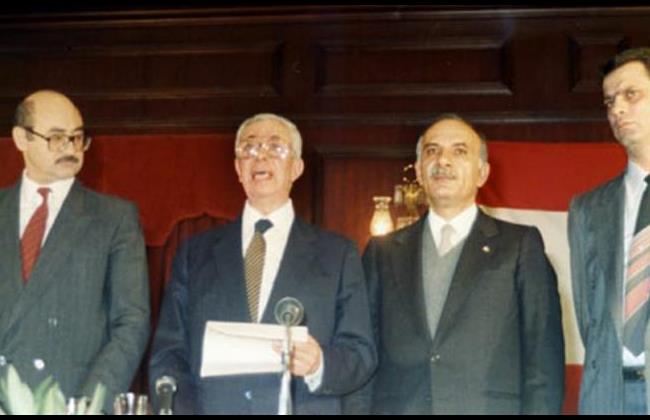
Lebanese Cabinet 1970

The Lebanese Cabinet in 1970

This month marks the 40th anniversary of the Lebanese Civil War that started on the 13th of April 1975. This is why I’ve decided to publish WikiLeaks cables from the war era, every day till the 13th of April. I think it would be interesting to look at things from a different point of view, and since it’s not the Lebanese who are telling the stories, I believe it offers a unique insight on the civil war. Although there are a lot more cables on WikiLeaks, I won’t republish them all  in order to focus on the most relevant ones. I hope you enjoy reading them.

Today, we start with the years of political instability that preceded the civil war. The war didn’t come out of nowhere, and tension had been growing for years. In 1973 and 1974 there were difficulties in forming new cabinets, and the successive cabinets couldn’t agree on a way to solve the crises in the country. You’ll find 4 cables here, one about early minor clashes in 1973, and 3 about difficulties in forming three different cabinets in 1973 and 1974. The 4 cables are organized from the oldest one to the newest one.

SUMMARY: STRUGGLE TP PUT TOGETHER ACCEPTABLE CABINET HAS PREOCCUPIED PRESIDENT FRANGIE AND TOP GOVT AND POLITICAL FIGURES FOR PAST TEN DAYS. TRADITIONAL RIVALRIES AND MANEUVERINGS OF LEBANESE POLITICIANS HAVE REEMERGED AND THERE IS CONTINUING BLATANT SYRIAN INTERFERENCE IN LEBANESE AFFAIRS. PRESTIGE OF LEFTIST LEADER KAMAL JUMBLATT HAS SUBSTANTIALLY INCREASED DUE
SECRET SECRET PAGE 02 BEIRUT 07786 021304Z
TO SYRIAN, FEDAYEEN AND SUNNI SUPPORT. THIS FACT ADN GROWING CONCERN OVER LONG LAST EFFECTS OF INACTIVITY BY GOL WHICH DATES BACK TO ISRAEL RAID ON APRIL 10 APPEAR HAVE OPENED WAY FOR PARTICIPATION BY JUMBLATT’S GROUP IN ANY NEW CABINET,ALTHOUGH JUMBLATT UNLIKELY BE MINISTERIOR DUE TO STRONG OPPOSITION FORM RIGHT. IT UNCERTAIN WHEN CABINET WILL BE FORMED AND POSSIBLE THAT SOLH COULD BE FORCED ABANDON HIS EFFORTS AND MAKE WAY FOR ANOTHER DANDIDATE. END SUMMARY.
1. IMMEDIATELY AFTER BEING NAMED ON JUNE 21ST TAKIEDDIN SOLH WAS WARMLY WELCOMED BY ALL POLITICAL TENDENCIES IN LEBANON AS WELL AS BY FEDAYEEN, SYRIANS, ETC. HE BRAVELY ANNOUNCED THAT FORMATION CABINET EXPECTED WITHIN FORTY-EIGHT HOURS AND BEGAN CONSULTATIONS. RIGHT AWAY RE RAN INTO MAJOR PROBLEM WHICH HAS CON- TINUED BLOCK HIS BEST EFFORTS FORM CABINET: DEMAND BY LEBANESE LEFTIST LEADER KAMAL JUMBLATT THAT HE BE NAMED MINISTER OF INTERIOR AND THAT SOMEONE CONGENIAL TO HIM BE NAMED MINISTER OF DEFENSE. JUMBLATT’S DEMAND WAS SUPPORTED BY SYRIAN SPOKESMAN (E.G. SA’IQA LEADER ZOHEIR MOHSEN) BY FEDAYEEN AND BY AMY SUNNI MOSLEM LEADERS(EXCEPTING SAEB SALAM WHO INITIALLY REMAINED SILEDNT AND THEN CAME OUT AGAINST IDEA). JUMBLATT STATED THAT ONLY HIS PRESENCE AT INTERIOR WOULD ALLOW NORMALIZATION OF RELATIONS BETWEEN GOL AND FEDAYEEN AND ALLOW SYRIAN-LEBANESE BORDER TO BE REOPENED
2. REACTION TO JUMBLATT DEMANDS WAS QUICK IN COMING FROM MAJOR CHRISTIAN LEADER PIERRE GEYMAYEL (PHALANGE) AND CAMILLE CHAMOUN WHO LET IT BE KNOWN THEY CATEGORICALLY OPPOSED. GEMAYEL REFUSED INVITATION TO JOIN CABINET AS COUNTERWEIGHT TO JUMBLATT. WE UNDERSTAND PRESIDENT FRANGIE JUST AS CATEFORICALLY OPPOSED TO JUMBLATT AS INTERIOR ALTHOUGH HE TAKING PUBLIC ATTITUDE OF NON-INTERFERENCE WITH DUE POLITICAL PROCESS, SAYING HE COULD ACCEPTE WHOMEVER NAMED BY SOLH PROVIDED ASSEMBLY VOTED CONFIDENCE IN HIM. LEFTIST GROUPS AND SUNNI MOSLEMS (EXCEPTING SALAM) HAVE ON SEVERAL OCCASIONS RESTATED THEIR INSISTENCE ON JUMBLATT WHILE SOME 65 DEPUTIES (MOSTLY CHRISTIAN AND INCLUDING ARMENIANS) HELD INFORMAL MEETING AT NATIONA ASSEMBLY ON JULY 27 TO LET IT BE KNOWN JUMBLATT COULD NOT GET VOTE OF CONFIDENCE. THEY ESPECIALLY UPSET AT JUMBLATT- SYRIA LINK. ON JULY 28 SOLH CAME CLOSE TO FORMING CABINET
SECRET SECRET PAGE 03 BEIRUT 07786 021304Z
WITHOUT JUMBLATT, HOWEVER, RAPED INTERVENTION BY SYRIA(IN PERSON ZOHEIR MOHSEN) AND SUNNI LEADER RACHID KARAME (FORMER PRIME MINISTER FROM TRIPOLI) AND SUNNI GRAND MUFTI HASSAN KHALED SUCCEEDED IN PERSUADING SOHL TO RENOUNCE IDEA OF CABINET WITHOUT JUMBLATT. REACTING TO THIS, CHAMOUN PROPOSED THAT SAEB SALAM FORM CABINET AND SOLH BE DROPPED. SAEB SALAM DENOUNCED JUMBLATT AS WELL AS INTERFERENCE BY GRAND MUFTI IN POLITICS.
3. THE TEMPORARY UNITY OF ALL SUNNI LEADERS IN OPPOSITION TO AMIN EL HAFEZ HAS DISAPPEARED IN FAVOR OF RETURN TO TRADITIONAL RIVALRIES BETWEEN SAEB SALAM (AND CAMILLE CHAMOUN) ON ONE HAND AND RACHID KARAME PLUS ANTI-SALAM BEIRUT SUNNIS (AND KAMAL JUMBLATT) ON OTHER. NEVERTHELESS, JUMBLATT HAS SKILLFULLY USED INTERNAL POLITICAL CRISES WHICH HAS EXISTED SINCE APRIL 10, AS WELL AS HIS GOOD RELATIONS WITH SYRIA AND THE FEDAYEEN, TO STRENGTHEN HIS PERSONAL POSITION AND THAT OF LOOSE GROUPSING OF LEBANESE LEFTIST WHICH HE HEADS. HE HAS LINED U STRONG SUNNI SUPPORT AND HIS MAJOR RIGHT-WING OPPONENTS SUCH AS CHAMOUN AND GEMAYEL SEEM PREPARED TO SEE HIS GROUP(IF NOT JUMBLATT IN PEROSN) HOLD ONE OR EVEN TWO SEAT IN ANY NEW CABINET WHICH MAY BE FORMED. PRESIDENT FRANGIE ALSO APPEARS READY ACCEPT SOME SUCH COMPROMISE WITH JUMBLATT IF ONLY TO GET GOVERNMENT FUNCTIONING AGAIN AFTER VACUUM OF ALMOST THREE MONTHS. ALTHOUGH JUMBLATT AND HIS SUPPORTERS ARE SHORT ON TOTAL VOTES IN LEBANESE ASSEMBLY(PROBABLY LESS THAN ONE THRID) THE PRESENT REAL POLITICAL EQUATION IS SO BALANCED THAT THEY HAVE BEEN ABLE TO BLOCK CABINET ALIGNMENTS THEY; DO NOT LIKE AS EFFECTIVELY AS THOSE WHO OPPOSE JUMBLATT AND HAVE BEEN IN SUPPORT OF FRANGIE (AND PREVIOUS SAEB SALAM CABINETS), ALTHOUGH LATTER HAVE TWICE AS MANY VOTES.
4. IT REMAINS TO BE SEEN WHO WILL SUCCEED IN FORMING NEW CABINET, WHEN IT WILL BE FORMED AND WHO MEMBERS WILL BE. THIS COULD TAKE PLACE UNDER TAKIEDDINE SOLH TODAY OR TOMORROW, OR IT COULD DRAG ON FOR WEEKS WITH SOMEONE ELSE BEING NAMED TO TRYWHERE SOLH FAILED. WHEN CABINET HAS BEEN NAMED AND APPROVED WE WILL PROVIDE OUR ASSESSMENT OF WHAT EFFECT IT LIABLE HAVE ON LEBANESE POLICIES IN SUCH KEY AREAS AS RELATIONS BETWEEN GOL AND FADAYEEN AND BETWEEN LEBANON AND OTHER ARAB COUNTRIES. US AND USSR. HOWEVER, TREND TOWARD SOME COMPROMISE WITH LEFT AND FEDAYEEN
SECRET SECRET PAGE 04 BEIRUT 07786 021304Z
NOTED ABOVE AND REPORTED OUR 7023 IS ALREADY APPARENT. HOUGHTON NOTE BY OC/T: NOT PASSED CAIRO. SECRET NNNNMAFVVZCZ
INTERNAL POLITICAL SITUATION
1973 May 15, 13:35 (Tuesday)
1973BEIRUT05568_b
CONFIDENTIAL
UNCLASSIFIED
Declassified/Released US Department of State EO Systematic Review 30 JUN 2005

SUMMARY: OVER PAST FEW DAYS EMPHASIS OF GOL- FEDAYEEN CRISIS HAS SHIFTED FROM ARMED CONFRONTATION TO POLITICAL STRUGGLE FOR SUPPORT OF SUNNI MOSLEMS. ‘ ARAFAT AND JUMBLATT HAVE BEEN LEADING EXPONENTS OF FEDAYEEN POSITION AND HAVE ATTRACTED CONSIDERABLE FOLLOWING AMONG SUNNI POLITICIANS WITH WHOM THEY HAVE BEEN HAVING ALMOST CONTINUOUS MEETINGS. FRANGIE, ON OTHER HAND, ALSO MEETING WITH SUNNI LEADERS TO EXPOUND HIS WELL- KNOWN

CONFIDENTIAL CONFIDENTIAL PAGE 02 BEIRUT 05568 151427 Z
POINT OF VIEW. AMONG ISSUES AT STAKE ARE FORMATION OF NEW GOVT, CONTINUATION OF STATE OF EMERGENCY, CONTENT OF AGREEMENT BETWEEN GOL AND FEDAYEEN, AND ” RIGHTS” OF MOSLEMS. FRANGIE HAS BEEN HOLDING VERY FIRM, AND SUNNI BASE REMAINS RELATIVELY QUEIT BEUT SUNNI POLITICIANS ARE BEHAVING IN TRADITIONAL FASHION BY PUBLIC ADVOCACY OF PALESTINIAN, PAN- ARAB CAUSE. END SUMMARY.
1. OVER PAST THREE DAYS PRESIDENT FRANGIE HAS CONTINUED HOLD ONE MEETING AFTER ANOTHER WITH WIDE SELECTION OF POLITICAL, RELIGIOUS AND BUSINESS LEADERS. AMONG THEM HAVE BEEN LARGE NUMBER SUNNI MOSLEMS. HE HAS BEEN REPORTEDLY HOLDING VERY FIRMLY TO HIS PREVIOUSLY STATED VIEWS ON WHAT RELATIONSHIP SHOULD BE BETWEEN FEDAYEEN AND GOL, CALLING PARTICULAR ATTENTION TO SITUATION IN OTHER ARAB STATES AND TO HIS STRONG OPPOSITION TO IDEA OF HAVING ARMED MEN CIRCULATING FREELY, TO FEDAYEEN BEING ABOVE LEBANESE LAW ( ” STATE WITHIN A STATE”), AND THREAT TO LEBANESE GOVT AND PEOPLE CAUSED BY HEAVY WEAPONS IN CAMPS IN AND AROUND MAJOR CITIES. IN TALKING WITH BUSINESSMEN HE IS RELIABLY REPORTED TO HAVE SAID ” WE MUST THINK LEBANON BEFORE WE THINK ARAB AND PALESTINIAN”. WHEN ASKED TO ABOLISH CURFEW WHICH HURTING BUSINESS HE IS REPORTED TO HAVE SAID THAT SUCH LOSSES ARE ” RELATIVELY SECONDARY, AND NOT THE IMPORTANT FACTOR.”
2. IN TALKING WITH FORMER PRIME MINISTER SAEB SALAM ON MAY 13, PRESIDENT RELIABLY REPORTED TO HAVE TAKEN VERY TOUGH LINE. SAEB CAME FROM MEETING OF SOME TWENTY SUNNI POLITICIANS AND BUSINESSMEN ( EXCLUDING THOSE CLOSEST TO KARAME AND JUMBLATT) AND CLAIMED HE REPRESENTING SUNNI OPINION IN PRESSING FOR RAPID RESTORATION OF CIVILIAN GOVT AND AGREEMENT WITH FEDAYEEN ON BASIS OLD CAIRO ACCORDS. FRANGIE REPORTEDLY SIAD THAT SETTLING QUESTION OF RELATIONS WITH FEDAYEEN SHOULD COME BEFORE NEW GOVT SINCE OTHERWISE NEW GOVT WOULD FALL INTO SAME TROUBLE AS HAD AMIN EL HAFEZ. HE ALSO REPORTEDLY TOLD SAEB SALAM THAT IF HE THAT ENAMOURED OF FEDAYEEN HE COULD MOVE INTO CAMPS WITH THEM BUT THAT FRANGIE WOULD NEVER CONCEDE LEBANESE SOVEREIGNTY EVEN IF CONFRONTATION STEMMING THEREFROM LED TO ACTUAL GEOGRAPHICAL DIVISION OF COUNTRY IN WHICH SUNIS AND PALESTINIANS WOULD HAVE SEPARATE ENCLAVE. IN PRESIDENT’ S MEETING MAY 14 WITH KAMAL JUMBLATT AND RACHID KARAME, WE
CONFIDENTIAL CONFIDENTIAL PAGE 03 BEIRUT 05568 151427 Z
UNDERSTAND THAT FORMER TOOK HIS USUAL FIRM STAND WHILE LATTER TWO REPEATED ESSENCE OF KARAME’ S PRESENTATION PREVIOUS WEEK ( SEE SITREP 15).
3. ‘ ARAFAT HAS MET SEVERAL TIME WITH SAEB SALAM, KARAME AND JUMBLATT OVER PAST THREE DAYS, AND ALSO WITH BROAD SPECTRUM OF RELIGIOUS LEADERS, ETC. WHILE BOTH FRANGIE AND ‘ ARAFAT ( WITH STRONG SUPPORT FROM KARAME AND JUMBLATT) CONCENTRATING ON SUNNI MOSLEMS, THEY NOT NEGLECTING CHRISTIANS. ‘ ARAFAT GETTING STRONG PROPAGANDA SUPPORT FROM RADIOS IN DAMASCUS, CAIRO, BAGHDAD, ETC. ( GOOD SAMPLE OF MILDLY- WORDED SUPPORT CAN BE READ IN FBIS M142042 Z QUOTING CAIRO VOICE OF PALESTINE).
4. COMMENT: ONE EFFECT OF THESE MEETINGS HAS CLEARLY BEEN TO HEIGHTEN CONFESSIONAL CONSCIOUSNESS ON PART OF SUNNIS. THIS IS ESPECIALLY TRUE OF SUNNI POLITICIANS, BUT WE HAVE SEVERAL REPORTS THAT THERE IS INCREASING FALL- OUT AMONG SUNNI RANK- AND- FILAI( WHICH BEING VISITED ON ALMOSLPHOUSE- TO- HOUSE BASIS IN SOME SECTORS BY FEDAYEEN REPS). THERE IS APPREHENSION THAT UNLEESS CRISIS IS RESOLVED SOON ANY OUT- BREAK OF HOSTILITIES COULD PRODUCE CONFESSIONAL SPLIT WHICH HAS THUS FAR BEEN AVOIDED. ONE OF MAJOR REASONS NATIONAL ASSEMBLY DID NOT MEET ON MAY 14 WAS DESIRE BY CHRISTIAN DEPUTIES NOT TO HAVE MEETING IN WHICH THERE WAS NO RPT NO SUNNI SUPPORT FOR EXTENDING STATE OF EMERGENCY. THIS INCREASES PRESSURE FOR COMPROMISE BY FRANGIE AND FOR FORMATION NEW GOVT ( OR RESURRECTION OF SOME- WHAT BEDRAGGLED AMIN EL HAFEZ) PRIOR TO CONCLUSION UNDERSTANDING WITH FEDAYEEN. LATTER ARE APPARENTLY ADDING TO THIS PRESSURE BY IMPLYING THEY CANNOT AGREE TO ANYTHING IN ABSENCE OF SUNNI PM. ON OTHER HAND, FRANGIE’ S FIRM STAND MAY BRING HOME TO MANY SUNNIS AMONG UPPER AND MIDDLE CLASSES THAT THEY HAVE A LOT TO LOSE MATERIALLY IN PUSHING THEIR PAN- ARAB, PRO- PALESTINIAN SENTIMENTS TOO FAR. FRANGIE HAS THUS FAR PURSUED WITH SKILL AND COURAGE HIS OWN VARIETY OF BRINKSMANSHIP.
HOUGHTON NOTE BY OC/ T: NOT PASSED CAIRO. CONFIDENTIAL NMAFVVZCZ *** Current Handling Restrictions *** n/a *** Current Classification *** CONFIDENTIAL
SALAM ASKED TO FORM NEW GOVERNMENT
1974 October 3, 16:37 (Thursday)
1974BEIRUT12035_b
CONFIDENTIAL
UNCLASSIFIED
Declassified/Released US Department of State EO Systematic Review 30 JUN 2005
1. AS ANTICIPATED, SAEB SALAM HAS ACCEPTED SUMMONS FROM PRES. FRANGIE TO FORM NEW CABINET (FBIS BE 031113). SALAM IMMEDIATELY ARRANGED FOR PARLIAMENTARY CONSULTATIONS OVER NEXT TWO DAYS FOR THAT PURPOSE. WE RELIABLY INFORMED HE PLANS ANNOUNCE DISTRI- BUTION OF PORTFOLIOS BY SATURDAY, OCTOBER 5.
2. KAMAL JUMBLATT, WHO APPARENTLY MAINTAINED HIS OBJECTIONS TO SALAM UNTIL BITTER END, SEEMS DESTINED TO STAND IN OPPOSITION TO NEW GOVT. IN LEBANESE CONTEXT, HOWEVER, IT WOULD CERTAINLY NOT BE IMPOSSIBLE THAT JUMBLATT MIGHT PRIVATELY HAVE BEEN RECON- CILED BY INDUCEMENTS OFFERED BY FRANGIE, BUT RUMORS SUGGESTING THIS ARE SCARCE. IN ANY EVENT, INFORMED SOURCE CLOSE TO SALAM TOLD ME AFTERNOON OCT 3 THAT THINGS ARE “GOING WELL” AND THAT SALAM SUPPORTERS NOT PARTICULARLY WORRIED ABOUT JUMBLATT. AN
– CONFIDENTIAL CONFIDENTIAL PAGE 02 BEIRUT 12035 031805Z
OTHER REPORT (UNCONFIRMED) IS THAT JUMBLATT MET WITH RASHID KARAME MORNING OCT 3 TO TRY AND WOO LATTER AWAY FROM HIS ALLIANCE WITH SALAM. KARAME REPORTEDLY REBUFFED APPROACH AS “TOO LATE” AND SAID HIS ALLIANCE WITH SALAM AND EDDE STANDS (FOR TIME BEING AT LEAST). CIRCLES CLOSE TO SALAM ALSO BELIEVE THAT THEY FACE NO REAL DIFFICULTY FROM SHIITE IMAM MUSA AS SADR AND IT MAY BE THAT SALAM AND IMAM HAVE COME TO SOME KIND OF UNDERSTANDING IN THEIR MEETINGS OVER PAST FEW DAYS.
3. SALAM IS SAID TO BE FOCUSSING ON CABINET THAT WILL INCLUDE BOTH PARLIAMENTARY AND NON-PARLIAMENTARY FIGURES. DEPT WILL RE- CALL THAT WHEN SALAM FORMED HIS EARLIER GOVT. FOLLOWING FRANGIE’S ELECTION IN 1970, HE CHOSE MAINLY YOUNGER “TECHNOCRATS”. ALTHOUGH THAT EXPERIMENT DID NOT PROVE PARTICULARLY LASTING OR HAPPY FOR VARIETY OF REASONS, SALAM MAY BE PREPARED TO TRY IT AGAIN ON SOMEWHAT REDUCED BASIS THIS TIIME. AMONG NAMES ALREADY SAID TO BE ON SALAM’S LIST OF “POTENTIALS” THOSE OF ABDULLAH RASI (FRANGIE’S SON-IN-LAW WHO COULD REPLACE TONY FRANGIE AS “FAMILY MINISTER”) AND FORMER FONMIN KHALIL ABUHAMAD (WHO PRIVATELY HAS TOLD ME HE NOT RPT NOT INTEREST IN REURNING AS FONMIN).
4. COMMENT: WHILE MANY QUESTIONS REMAIN TO BE ANSWERED OVER NEXT SEVERAL DAYS, SALAM AND HIS CONFIDANTS APPEAR PLEASED TO HAVE GAINED PRESIDENTIAL NOD AND CONFIDENT THEY CAN RAPIDLY AS- SEMBLE ACCEPTABLE CABINET. SALAM HAS APPEALED TO HIS SUPPORTERS TO REFRAIN FROM “FIRING IN AIR” IN THEIR JUBILATION OVER HIS NOMINATION, THREATENING TO PUNISH VIOLATORS. WITH BACKING OF FRANGIE AND PARLIAMENTARY SUPPORT OF BLOCS LED BY, INTER ALIA, CHAMOUN,EDDE, GEMAYEL AND HIS FORMER SUNNI RIVAL KARAME, SAEB BEY APPARENTLY BELIEVES HE CAN QUICKLY TAKE REINS OF GOVT. IN HAND.
GODLEY
CONFIDENTIAL
NNN
LEBANESE CABINET CRISIS
1974 October 8, 07:45 (Tuesday)
1974BEIRUT12187_b
LIMITED OFFICIAL USE
UNCLASSIFIED
Declassified/Released US Department of State EO Systematic Review 30 JUN 2005
A. BEIRUT 12035; B. DAMASCUS 2204 (NOTAL)
1. WEEKEND HAS NOW PASSED WITHOUT PRIMIN-DESIGNATE SAEB SALAM MAKING ANTICIPATED ANNOUNCEMENT RE COMPOSITION OF NEW CABINET. FOLLOWING OCT. 5 MEETING WITH PRES. FRANGIE TO DISCUSS OUTCOME OF SALAM’S CONSULTATIONS WITH PARLIAMENTARY FACTIONS, SALAM MAINTAINED PUBLIC AIR OF CONFIDENCE, TELLING NEWSMEN HE COULD CONCEIVE OF NO OBSTACLES TO FORMATION OF NEW GOVT. BUT ALSO WARNING AGAINST HASTE.
2. DESPITE SALAM’S PUBLIC ASSURANCES, HOWEVER, THERE ARE INDICA- TIONS HE IS ENCOUNTERING TROUBLESOME PROBLEMS ON SEVERAL FRONTS IN HIS EFFORTS TO PUT TOGETHER WORKABLE CABINET. NOT ONLY HAVE KAMAL JUMBLATT AND HIS SUPPORTERS CONTINUED BOYCOTT SALAM’S
LIMITED OFFICIAL USE LIMITED OFFICIAL USE PAGE 02 BEIRUT 12187 080659Z
EFFORTS, BUT PARLIAMENTARY SPEAKER KAMAL ASSAD IS APPARENTLY BEING BALKY, PROBABLY BECAUSE HE SUSPECTS SALAM OF HAVING WORKED OUT SECRET “ARRANGEMENT” WITH SHIITE LEADER IMAN MUSA AS SADR–ASSAD’S CHIEF RIVAL IN SOUTH LEBANON. ACCORDING TO SOME LOCAL OBSERVERS, SALAM IS ALSO ENCOUNTERING OPPOSITION FROM HIS “TRADITIONALIST” POLITICAL COLLEAGUES TO HIS REPORTED DESIRE TO INCLUDE SEVERAL YOUNGER “TECHNOCRATS” IN NEW CABINET.
3. IN ADDITION, AS REPORTED REF. B, STRONG OPPOSITION TO SALAM APPEARS TO HAVE DEVELOPED IN DAMASCUS, AND THIS UNDOUBTEDLY IS CAUSING SERIOUS CONCERN ON PART OF SALAM AND PRES. FRANGIE. SALAM MADE POINT OF ATTEMPTING PLACATE DAMASCUS DURING OCT. 6 “VICTORY” RALLY (SPONSORED BY PRO-SYRIAN WING OF LEBANESE BAATH PARTY) BY HEAPING LAVISH PRAISE ON HAFEZ ASSAD AND SADAT FOR THEIR “GLORIOUS” ROLES IN OCTOBER WAR (FBIS BE 061830). (SAEB BEY FOUND HIMSELF A TRIFLE UPSTAGED AT RALLY BY IMAM SADR WHO DES- CRIBED SALAM’S NEW GOVT. AS LEBANON’S “LAST CHANCE” FOR REFORM BEFORE REVOLUTION BECOMES INEVITABLE.) WE ALSO UNDERSTAND THAT SAUDIS MAY BE WEIGHIN IN WITH SARG ON SALAM’S BEHALF.
4. COMMENT: IN CONVERSATION WITH AMBASSADOR, OCTOBER 7, PRESIDENTIAL CHEF DU CABINET DIB INDICATED SALAM WAS ENCOUNTERING NITTY GRITTY LOCAL POLITICAL PROBLEMS IN ASSIGNING PORTFOLIOS. DIB ADDED THAT PRESIDENT AND HE EMPHASIZING CRITERIA OF HONESTY RATHER THAN EXPERIENCE. HE THOUGHT THE PRIME MINISTER DESIGNATE WAS MAKING PROGRESS BUT HAD NO PROJECTION AS TO WHEN THE CABINET WOULD BE FORMED. HE THOUGHT JUMBLATT HAD OVERPLAYED HIS HAND AND CONFIRMED PRESIDENT’S PREOCCUPATION WITH SYRIAN REACTION TO SALAM.
GODLEY
LIMITED OFFICIAL USE
NNN

The WikiLebanon Files (Part II): March 2005 – Berri, Larsen, And Syrian Withdrawal

Syrian President Bashar Assad, left, meets U.N. envoy Terje Roed-Larsen in the northern Syrian city of Aleppo, Saturday, March 12, 2005.  AP

Syrian President Bashar Assad, left, meets U.N. envoy Terje Roed-Larsen in the northern Syrian city of Aleppo, Saturday, March 12, 2005. AP

This month marks the 10th anniversary of the March 8 and 14 demonstrations. These two events eventually led to the creation of Lebanon’s two mainstream coalitions, and set the rules of the political game for the next 10 years. This is why this month I will focus on two cables.

The first one is about Speaker Berri telling the U.S. ambassador, on March 9, 5 days before the 14 March rally and only one day after the March 8 rally, that “Syria will redeploy its forces to the Biqa’ Valley, starting possibly as soon as March 9″, and that Hezbollah would eventually fill the vacuum.

The second cable is a conversation between French officials and the U.N. envoy Terje Rod-Larsen (Remember him?). I am publishing it because Larsen mentions that “Syria may seek to sow inter-communal violence by targetting Lebanon’s pro-Syria camp, including a possible Nasrallah assassination.

Voila:

MGLE01: PARLIAMENTARY SPEAKER BERRI SEES SYRIANS ON THEIR WAY OUT FAST, BUT FEARS DELAY IN ELECTIONS
2005 March 9, 16:43 (Wednesday)
05BEIRUT767_a
CONFIDENTIAL
CONFIDENTIAL
— Not Assigned —
——-
Summary
——-
1. (C) Nabih Berri, Speaker of the Chamber of Deputies and leader of the Shia Amal Movement, assured the Ambassador that Syrian forces would redeploy to the Biqa’ Valley in short order and complete their withdrawal to Syria within months. Looking on the bright side, Berri claimed that Syria’s departure will give its Lebanese allies more freedom of maneuver. On the other hand, he gloomily conceded that his Amal Movement’s rival for leadership of Lebanon’s Shia community, Hizballah, may well steal the show (as Hizballah did later that same day, March 8, in a huge downtown rally). Berri is emphatically for a strong “national unity government,” and frustrated by the opposition’s lack of interest in joining. Any further delay in forming a government makes a delay of parliamentary elections almost certain, Berri said. End summary.
———————————————
Syrian withdrawal — they mean it, Berri says
———————————————
2. (C) Berri was laconic at first when called on by the Ambassador and poloff on March 8 at Berri’s Beirut residence. The Ambassador asked about the March 7 meeting in Damascus between Syrian President Asad and Lebanese President Lahoud, whom Berri accompanied. “Good, no problem,” Berri replied, turning away to stare at a point in space, lips pursed, hands clasped over his knee. Was he confident the Syrians would commit to full withdrawal? “No problem,” Berri repeated, pronouncing the two words slowly and exactly.
3. (C) “I’m sure of one thing,” Berri told the Ambassador. That is that Syria will redeploy its forces to the Biqa’ Valley, starting possibly as soon as March 9. Following that, UN Special Envoy Terje-Roed Larsen would return to the region and arrive at a “more than positive solution” for full Syrian withdrawal.
4. (C) Berri expressed frustration with criticism made by Lebanese oppositionists, among others, of the results of the March 7 Damascus meeting, particularly the fact that it did not announce a timetable for full withdrawal. The plan agreed on by Asad and Lahoud would apply the Ta’if Agreement “exactly,” and “in the way of (UNSCR) 1559” (which Berri admitted he opposed, but “in a democratic way”). All Roed-Larsen had to do was arrange a “marriage” between the Ta’if Agreement and UNSCR 1559, and then he could extract a timetable from the Syrians.
5. (C) Berri expressed certainty not only that Syrian forces would redeploy to the Biqa’ quickly, but also that they would start to withdraw across the Syrian border before April. Full withdrawal would be completed not within a year, but within months. Queried by the Ambassador, Berri said that all Syrian intelligence personnel would be withdrawn as well.
6. (C) Berri insisted that this was not a matter of all talk and no action. President Asad had made clear his intent about complying with UNSCR 1559. The SARG would obey any demands made on it by Roed-Larsen’s forthcoming report. The reason the SARG was so intent on full withdrawal was that it did not want to be responsible for implementation of the other provisions of UNSCR 1559, such as disarmament and disbandment of militias.
7. (C) Berri said that, faced with the disarmament of Hizballah, Asad could say it was “not my business.” Also, the SARG wanted to be able to claim credit for implementing UNSCR 1559. That way, it could make a stronger case for implementation of other Security Council resolutions dealing with the Middle East.
—————————————–
With Syria leaving, it’s Nasrallah’s show
—————————————–
8. (C) Asked by the Ambassador about the massive rally in central Beirut being organized at that moment by Hizballah, Berri gloomily said of his rival for leadership of the Shia community, Hizballah Secretary-General Hassan Nasrallah, that “it is his case now.” With the Syrians withdrawing from Lebanon, Nasrallah had “come to the front.” No one could claim that the rally was a “Syrian project,” claimed Berri.
9. (C) Berri said he was trying hard to keep people “off the streets” and minimize the possibility of violence in the current tense atmosphere. He noted reports of violent incidents following Asad’s March 5 speech, provoked by individuals in vehicles flying flags of Berri’s Amal Movement and driving through pro-opposition neighborhoods. None of the perpetrators were Amal members, he said — in one case, they had been Palestinians. “Many people want to make trouble,” he said. Lebanon was not united, it had too many sects, it was — in a negative metaphor increasingly favored by loyalists — “not Ukraine.”
10. (C) The Ambassador suggested that it was a positive sign that Lebanese, whether opposition or loyalist, were all marching under the same flag, the Lebanese national flag. Their confessional identify was not determining their stance on the question of the Syrian presence. Berri, still gloomy, answered that it was “apparently” good for the Lebanese to be under one flag. The problem was that “everyone sees their own color in the flag.” The Lebanese remained “a divided people.”
11. (C) Perhaps indicative of his bad mood, Berri proceeded to instruct the Ambassador on points that, while arguably true, were irrelevant. If Hariri had not been assassinated, Berri asserted, the Sunni community would not have joined the opposition. If the Syrians are proven innocent of Hariri’s assassination, the Sunnis will “change in one day.” Druze leader Walid Jumblatt subscribes to the Ta’if Agreement but not UNSCR 1559; he is therefore in favor of the Syrians remaining in the Biqa’ Valley (comment: while the first point is true, the second is clearly not).
———————-
Politics without Syria
———————-
12. (C) With the Syrians gone, Berri claimed, Syria’s Lebanese allies would be more free to do what they want. For example, Berri expected more elements on the loyalist side (Hizballah, President Lahoud) to move closer to his original position on the electoral law. That is, they would support large electoral districts drawn along the lines of the “mohafazah” administrative unit, rather than the smaller “qada.” Berri himself had supported the “qada” plan only because of Syrian pressure to go along with a supposed deal between Damascus and the Maronite Patriarch.
13. (C) Another example: Berri and his Amal Movement could now take full credit from their constituents in return for largesse. Previously, they had often faced constituents suspicious that the real donor of state-funded projects and services was “the ally,” i.e., Damascus, not Berri and Amal. “We (the Amal Movement) paid the price sometimes!”
—————————
Forming a new government…
—————————
14. (C) Berri told the Ambassador that a strong government, a “national unity government,” was needed in the aftermath of the Karami government’s February 28 resignation. Only a strong government could handle the several “big issues” that any successor to Karami’s government would face: the investigation of Hariri’s assassination, Syrian withdrawal, and the new electoral law. He joked that, in response to opposition demands, he had tried to look up the term “neutral government” in “my dictionary of Lebanese politics.” It didn’t exist.
15. (C) Berri expected ‘Umar Karami to come back as Prime Minister in the next government. The list of viable candidates to fill the post was short: Karami, Salim al-Hoss, Fouad Siniora, and Adnan Kassar. Berri opposed naming an anti-Hariri figure, so that ruled out Hoss. On the other hand, Hariri supporters did not want Siniora or Kassar elevated to the position. That left Karami. Berri believed Karami would be a good choice; if brought back, Karami would “try to make it work.”
16. (C) Berri said he wanted the opposition to join the new cabinet. They were making a serious mistake if they held back. There was a precedent for effective national unity governments in Lebanon, such as the one that brought civil-war-era leaders on both sides of the East Beirut-West Beirut divide into the same cabinet in 1984 (comment: a grim precedent).
17. (C) Berri claimed to be puzzled by the opposition’s demand that seven security service heads be dismissed before the opposition would consider joining a new government. The Ambassador said that the opposition was arguing that there was no sense in joining a cabinet when the real power remained in the hands of unaccountable security chiefs. Based on our conversations with the opposition, however, it seems that the opposition might be willing to bargain to an extent, perhaps agreeing to let the other chiefs remain in place for the time being in return for the immediate dismissal of Internal Security Force Director General Ali al-Hajj. “Why the innocent one and not the guilty one?” Berri asked, without clarification (but presumably in reference to fellow Shia Jamil al-Sayyed, whom Berri detests — and the feeling is mutual).
18. (C) Berri fretted about the confessional complications that would come into play with the dismissal of any or all of the security service chiefs. Anyway, the cabinet would have to name a replacement for any dismissed security service chief — why did the opposition not want to be in the cabinet and influence the decision?
———————————
… and holding elections on time
———————————
19. (C) Berri told the Ambassador that the consultations for designating a new Prime Minister and forming a cabinet could easily take a week. A genuine “national unity government” could take even longer to form. Then there was the matter of the election law, and parliamentary elections cannot begin less than one month after the law enters into effect. 20. (C) Berri said that, until now, plans to hold elections on schedule in May have remained in the realm of feasibility. Any further delay would put these plans in jeopardy, however. The Ambassador told Berri that a genuinely strong government cannot be formed until after elections, so they need to remain on schedule.
——-
Comment
——-
21. (C) The massive demonstration in central Beirut on the afternoon of March 8 appeared to vindicate Berri’s fears about being left behind, coughing in Hizballah’s dust on a post-Syrian Lebanese political landscape. Some of the concerns he tried to raise and link with Syrian withdrawal — Hizballah ascendancy, civil disorder, pro-Syrian elements having an even freer hand — sounded a little disingenuous, given that the Syrians still have yet to leave.
FELTMAN
FRENCH OFFICIALS ON LARSEN VISIT, LEBANON NEXT STEPS
2005 March 16, 18:41 (Wednesday)
05PARIS1765_a
SECRET
SECRET
— Not Assigned —
— N/A or Blank —
B. BEIRUT 805 (EXDIS)
Classified By: Political Minister-Counselor Josiah Rosenblatt, reasons 1.5 (b) and (d).
1. (S) Summary: MFA and Elysee officials are stressing the need for continued insistence on a full Syrian withdrawal from Lebanon before elections, in the wake of UN Special Envoy Larsen’s meetings in Beirut and Aleppo. The GoF views a four to six-month Syrian withdrawal as too long. According to Chirac’s Middle East advisor, Larsen expressed worry to the GoF that Syria may seek to sow inter-communal violence by targetting Lebanon’s pro-Syria camp, including a possible Nasrallah assassination. Larsen also expressed a preference for delaying release of the Fitzgerald report, and criticized the Lebanese opposition for not being more pragmatic on the need for a new government. French officials agree with Larsen that continued delays in forming a new Lebanese government could delay elections and full Syrian withdrawal, and view the “dump Lahoud” demands of the opposition as counter-productive. French officials continue to commend U.S.-GoF cooperation on Lebanon, but suggest that we may eventually part ways on the Hizballah issue or regime change in Syria. MFA officials also report that the GoF has no enthusiasm for an international force in Lebanon, that the EU may soon send election observer trainers to Lebanon, and that FM Barnier may attend the March 22-23 Arab League summit, where he will avoid contact with Lebanese or Syrian officials. End summary.
LARSEN VISIT
————
2. (S) UN Special Envoy for UNSCR 1559 implementation Terje Roed-Larsen visited Paris March 14 and had a working lunch with Presidential Diplomatic Advisor (NSA-equivalent) Maurice Gourdault-Montagne, MFA A/S-equivalent for Near East Jean-Francois Thibault, and MFA IO A/S-equivalent Jean-Maurice Ripert. We received readouts on Larsen’s visit from Presidential Middle East Advisor Dominique Boche March 16 and from MFA DAS-equivalent for the Levant Christian Jouret March 15. Jouret stressed that the GoF opted to receive Larsen with maximum discretion and not at the presidential or ministerial level to avoid feeding perceptions that Larsen is controlled by the GoF and USG. Jouret said the GoF was encouraged by Larsen’s meeting with Bashar and cautiously optimistic that Bashar would follow through on his commitments, but concluded that the lack of a timetable for full withdrawal was insufficient. Jouret described Larsen as optimistic (more so that the GoF) and determined, and convinced that Bashar understood the gravity of the current situation and the accusations against him on Hariri’s assassination. Both Jouret and Boche concurred that the four to six month full withdrawal suggested by Bashar to Larsen (ref b) was “too long.”
3. (S) According to Elysee Advisor Boche, Larsen stressed four additional points to the GoF: 1) the need for the international community to continue to insist upon a full (troops and security services) Syrian withdrawal before elections, to avoid giving the impression of being satisfied by Syrian steps so far; 2) worry that Syria may seek to sow inter-communal violence by assassinating a major figure in the loyalist camp, possibly Hizballah leader Nasrallah; 3) the need to delay release of the Fitzgerald report, to avoid the impression that it is linked to Larsen’s visit; and 4) the need for the Lebanese opposition to be more realistic on the urgency of forming a new Lebanese government, without which full Syrian withdrawal and timely parliamentary elections would not be possible. Boche stressed that the GoF shared the view that a forming a new GOL was imperative, and opined that a neutral, technical government might be a more feasible option than a national unity government, given GOL unwillingness to meet opposition demands to fire GOL security officials. Boche added that the calls by some oppositionists for a Lahoud resignation were counterproductive, as Lahoud’s dismissal would result in a further impasse that would serve Syrian interests.
4. (C) Jouret told us separately that FM Barnier, during a March 11 meeting with a visiting Lebanese opposition delegation led by Marwan Hamade, urged the group, to no avail, to show more flexibility in forming a national unity government with PM Karami. Jouret described the delegation as unrealistic on its prospects for winning elections; the group expressed confidence that it could win at least 50 percent of the vote if elections were free and fair. Jouret also commented that the group did not appear to have a political plan beyond getting Syria out of Lebanon and clearing the GOL of pro-Syrian elements after their presumed electoral victory. Jouret conceded that the massive March 14 demonstration changed the dynamic in the opposition’s favor since Barnier’s March 11 meeting, and that the degree to which both camps could mobilize numbers in the street would affect the political jockeying now underway.
PARTING OF WAYS OVER HIZBALLAH?
———
5. (C) Both Jouret and Boche commended GoF-U.S. cooperation on Lebanon and U.S. willingness to “listen to” French views; at the same time, they both speculated that our common approaches may diverge eventually over Hizballah, once full Syrian withdrawal is achieved. Jouret described Hizballah dismantling as the real problem in UNSCR 1559 implementation, now that Bashar had already caved, in principle, to Larsen on full withdrawal. Jouret asked rhetorically how we could achieve the dismantling of Hizballah, expressing doubt on the Lebanese army’s capacity to do so. He added that the Lebanese opposition, during their meeting with Barnier, stressed the view that Hizballah was a longterm internal question, not an international issue. In the opposition view, dismantling of Hizballah could only come after Hizballah’s full integration as a political player, and not the other way around, as previewed in UNSCR 1559. The GoF, meanwhile, was trying to approach the Hizballah issue on a pragmatic basis, rather than an ideological one, which meant we should not expect a shift on EU Hizballah designation. Boche reiterated the latter point with us, and reiterated that the GoF wanted to avoid alienating Lebanon’s majority Shi’a community, for which Hizballah remained the most credible political force. Boche added that the GoF hoped that a Syrian withdrawal would make Hizballah realize there was no alternative to political integration, however he was not confident this was the case. Syrian withdrawal would make Hizballah more dependent on Iran, whose intentions were unclear, though it had claimed to the GoF that it was playing a moderating influence on Hizballah in the current crisis. Boche opined that the Iranians had the tendency to see themselves as respected internationally only when they are perceived as dangerous.
6. (S) Jouret and Boche also expressed concern on prospects for the fall of Bashar’s regime, an outcome which the GoF was not deliberately seeking. Jouret stressed the need for the U.S. and France to think about the implications of a full Syrian withdrawal and whether it might result in Bashar’s overthrow and replacement by a more hardline leader, a prospect which Boche viewed as entirely possible. Boche described Bashar al-Asad as weak, lacking the experience and intelligence of his father, and losing control over the circle which surrounds him. He cited Larsen’s description of the Syrian leader’s nervousness during the recent Aleppo meeting, and added that the fact that recent pro-SARG demonstrations in Damascus had rallied such low numbers — in the 30,000 range — showed that Bashar was being sabotaged by others within his security services, possibly his powerful brother-in-law, SMI Chief Asif Shawkat. Jouret opined that he still viewed Bashar, despite all his weaknesses, as redeemable, but said the question remained whether the Syrian leader would rid himself of the circle around him, including the negative influence of FM Shara.
NEXT STEPS: ARAB LEAGUE, UN, OBSERVERS
——–
7. (C) On next steps, Jouret stressed that the GoF would continue to advise Larsen to issue a tough report in April, and would continue to seek maximum pressure from Arab governments on Syria for full withdrawal. On the latter point, Jouret noted that next week’s Arab League summit did not have Lebanon on the agenda, though the issue might be discussed in a smaller “group of seven” (NFI) within the gathering. Jouret reported that FM Barnier was likely to attend the Arab League summit, at the invitation of Algeria, but that the French FM would studiously avoid any contact with Lebanese or Syrian officials. On further UN action, Jouret said the MFA originally had been favorable to the idea of a PRST to follow the Larsen visit to Syria and Lebanon, but was overruled by the Elysee. Jouret stressed that the GoF was entirely negative on the idea of an international force or expanded UNIFIL filling the void left by a Syrian withdrawal, and cited the French experience of losing troops in Lebanon in the 1980’s as weighing heavily on GoF thinking. On observers for the May elections, Jouret reported that the EU planned to send a small-sized team, to include two French nationals, to Lebanon to train Lebanese election observers in advance of the ballot and would not seek GoL permission to do so; the GoF was also intent on participating in an international observer mission, once the GoL relents on the issue. Boche, meanwhile, stressed to us that the real determinant to whether elections would be free and fair was whether or not Syrian troops and security services fully withdrew prior to the ballot.
Leach

The WikiLebanon Files (Part I): The Day Berri Called Lahoud a “Bastard”

U.S. official Jeffrey Feltman, left, meets with Parliament Speaker Nabih Berri in Beirut, Lebanon, Thursday, Dec. 8, 2011. (The Daily Star Photo/Mohammad Azakir).

U.S. official Jeffrey Feltman, left, meets with Parliament Speaker Nabih Berri in Beirut, Lebanon, Thursday, Dec. 8, 2011. (The Daily Star Photo/Mohammad Azakir).

Over the past two years, I spent a lot of time on WikiLeaks, finding cables that were unheard of and that gave an interesting insight about Lebanon’s presidential politics (see here, here, here, and here for examples). The Lebanese mainstream media rarely publishes the cables, and even when they do, they use them as part of their media wars. This is why I have decided that every month, I will keep searching for relevant cables until I find something worth sharing that the media didn’t focus on.

Since we currently don’t have a president in office, I thought that it would be nice to take a look at some of the (behind the scenes) maneuvers that were happening during Lahoud’s days in office. Enjoy.

SUMMARY AND COMMENT
——————-
1. (S) Describing President Emile Lahoud as a “bastard,” Parliament Speaker Nabih Berri used a 5/9 meeting with the Ambassador to seek USG help in derailing what Berri suspects is a diabolical Syrian-inspired plot Lahoud plans to implement to destroy Lebanon’s parliament. (Yes, gentle reader, the previous sentence is correct as written.) As if forgetting that he is the one holding the power to open Parliament’s doors, Berri outlined a scenario by which Lahoud, drawing on his insistence that the Siniora cabinet does not legally exist, will use a creative interpretation of the constitution to dissolve parliament unilaterally when it fails to meet in its ordinary session that expires May 31. At that point, Lahoud will argue that he is free to appoint a new prime minister and cabinet, without the need for parliamentary approval. And this sets up a scenario by which Lebanon is plunged into new legislative elections. The emerging pro-Syrian majority would then elect Lebanon’s new president, or the Lahoud-appointed cabinet would inherit the powers of the presidency. Describing the “plot” to destroy the constitutional institution he controls, Berri gave a very believable performance of vein-popping rage.
2. (S) As the new cabinet begins work, the March 14 majority would continue to recognize the Siniora cabinet and the existing parliament and proceed with its own presidential elections. Lahoud’s scheme as described by Berri would, at a minimum, set up two entirely parallel structures: two PMs, cabinets, parliaments, and presidents. But it would be more likely that Lebanon would be plunged into chaos, with institutions splitting and the army sitting on the sidelines as the two parallel structures battled for supremacy. To avoid this, Berri advocates a first step that we have long urged he grab: open the parliament, thus preventing Lahoud from dissolving it. He is now on board, but under limited conditions he seeks our help to impose with our March 14 contacts. We are inclined to do so, in order to avoid his worst-case scenario, but we have to consider carefully what tricks Berri himself has up his sleeve. When asked about the impact of potential Chapter VII approval of the tribunal, Berri threw up his hands: “approve it Under Chapter VII, Chapter 67, or whatever — I don’t care!” While Berri seemed to speak with far more candor than usual, we, of course, remain skeptical that the alliance he advocates to thwart a Syrian-inspired plot is a lasting one. End summary and comment.
SPEAKER SAYS LAHOUD TO DESTROY THE HOUSE OF BERRI — I.E., PARLIAMENT
——————————-
3. (S) Shooing the aides and Embassy notetaker from the room immediately after the television cameras had panned the ordinary-looking meeting, Parliament Speaker Nabih Berri opened his 5/9 meeting with the Ambassador with what struck us as a self-evident observation: “Lahoud is a bastard!” Berri pronounced, jumping from his chair. Berri, who insisted that the Ambassador not share this information with anyone, said that he had belatedly put two and two together to discover a diabolical plot by Lahoud to destroy Lebanon’s parliament. At the last moment, Berri relized that he was being used by Lahoud in a scheme that would throw him out of his own position asspeaker and possibly thrust him into permanent irelevance. “Lahoud hates me, and he knows I hate him. He thinks he’s found a way to beat me.”
LAHOUD STARTS BY DECLARING SINIORA CABINET NULL AND VOID
—————————–
4. (S) oing into detail while thumbing through the Lebaese constitution, Berri explained that the scheme tarts with Lahoud’s repeated insistence, submittd frequently in writing and orally, that the Siniora cabinet does not exist legally at all — not ven in caretaker status. This establishes a recrd that there is a constitutional vacuum where te office of the Prime Minister and the cabinet as whole should be. Thus, the powers of those offices can be argued to revert to the President himslf.
NEXT, PREVENT PARLIAMENT FROM MEETING, AN USE CONSTITUTION TO DISSOLVE IT
BEIRUT 00000655 002 OF 004
———————————–
5. (S) The next step for Lahoud is to wait until May 31, when the ordinary session of the parliament expires, without the parliament having met in a single session. At this point, Lahoud invokes Article 65, which allows for the dissolution of the parliament if, “for no compelling reason, (the Chamber of Deputies) fails to meet during one of its regular sessions. . . . While Article 65 empowers the Council of Ministers at the request of the President to dissolve the parliament, if there is no Council of Ministers, then Lahoud will argue that he is solely responsible.
WITHOUT PARLIAMENT, LAHOUD IS FREE TO APPOINT PM, CABINET
——————————
6. (S) Once the parliament is dissolved (and, more importantly for the purpose of this discussion, Berri is without a job or role), then Lahoud will appoint a new prime minister. While Lebanon’s parliament calls for mandatory consultations by which the president is bound to ask the candidate who receives the most support from MPs to try to form a cabinet, if there is no parliament, then there are no MPs to bestow their choices for PM in the president’s hand. Moreover, the new PM can choose whatever ministers he and Lahoud agree upon, as well as whatever government program they want, because there is no parliament to give a vote of confidence. “A coup d’etat!” Berri roared.
AND LAHOUD GIVES PRESIDENCY TO ANOTHER PRO-SYRIAN STOOGE
—————————-
7. (S) At this point, two scenarios emerge. Article 25 of the constitution calls for new parliamentary elections within three months, in the case of the dissolution of the parliament. While elections would by necessity be conducted under the discredited 2000 election law (as there is no cabinet and no parliament to approve a new law), a pro-Syrian majority would certainly emerge this time, given the near certainty that March 14 supporters would boycott both running and voting. That pro-Syrian majority in the new faux parliament would then be in place in time to elect Lebanon’s next president to succeed the stooge extraordinaire when Lahoud’s term expires November 24. The second scenario would be that no elections take place, and the cabinet appointed by Lahoud assumes the role of the presidency until such time as new parliamentary elections can be held.
‘PLOT’ EXPLAINS LAHOUD’S RECENT CURIOUS ACTIONS
——————————–
8. (S) Berri said that this “plot” explains two recent developments that previously he found curious. First, he wondered why Lahoud had not “taken the pressure off me” for a month, by invoking Article 59 of the constitution. That article gives the president the right to ask parliament to adjourn for a month. Berri said that he wanted Lahoud to use that, so that he was not the only person blamed for keeping parliament closed. But now he realizes that Lahoud, had he used Article 59, would not be able to invoke the constitution in dissolving parliament — there would suddenly be a “compelling reason” why parliament didn’t meet. The second strange thing is that, according to information Berri has, Prime Minister Siniora offered to Lahoud in a recent phone call to resign, once the tribunal was established, if Lahoud would recognize his cabinet as a caretaker cabinet according to the constitution. Lahoud reportedly refused. That struck Berri initially as strange, since Siniora’s resignation offer would normally be something Lahoud should seize. But, if Lahoud recognized Siniora’s cabinet as a caretaker cabinet, then the normal consultative process would begin, derailing the coup plot.
OPENING PARLIAMENT — BUT IN A LIMITED WAY
——————————————
9. (S) The Ambassador noted that there was one easy way to avoid the entire scenario: open parliament at once, as so many people have been urging. “I’m coming to that,” Berri said, stating that he needed our help. He said that he wanted to open parliament in such a way so as to avoid implying legitimacy on the Siniora cabinet and to prevent parliamentary action that could “split the country.” He said that the Speaker of the European Parliament was coming to Lebanon soon, and thus Berri was thinking about calling a session for MPs to hear the European visitor. He would have done the same for Speaker Pelosi, had he realized in April what Lahoud intended. This session to hear the visitor would count as an ordinary session, thus depriving Lahoud of the constitutional ability to dissolve parliament. But, to do this, Berri urged the Ambassador to help him convince the March 14 majority to send only MPs, not government ministers and not Siniora, and to agree to listen to the visitor and leave, without trying to force further parliamentary action.
10. (S) Help me convince them, Berri begged, to see that, even if they don’t like such a limited session, it is better than having no sessions. Berri clarified that he did not want the Ambassador to share with March 14 leaders the entire plot he described, just the fear that Lahoud could try to dissolve parliament if it doesn’t meet. “If I read about this in the papers, I’ll have to keep parliament closed completely.” (Comment: Berri was not explicit, but we think he was suggesting that he is under Syrian orders to deny any legitimacy to the Siniora cabinet. Having the ministers sit as usual on the dais behind the Speaker would do that, so he wants our help in avoiding such a scene. He is also under orders, presumably, not to allow controversial discussions such as Hizballah’s arms or the tribunal to reach the Chamber floor. But he does not seem to be under — at least not yet — an absolute Syrian order to keep the chamber completely shuttered. So, under the proposed session, Berri could tell the Syrians that he scrupulously followed their orders and had no idea that they intended the parliament to be closed entirely. We don’t doubt that Berri plays games even with the Syrians. End Comment.)
11. (S) The Ambassador asked Berri whether he really thought Lahoud was so clever as to come up with such a complicated scheme on his own. “Of course not!” Berri shouted. The Syrians gave him the basic outlines, and Lahoud’s legal advisor Selim Jeressaiti came up with the implementation plan. The Ambassador asked whether Michel Aoun would bring his bloc along. Yes, because the stereotype about Aoun being obsessed with the presidency is true. All the pro-Syrians have shown him how the status quo will never result in an Aoun presidency, whereas this situation might. “I am really worried,” Berri said.
BERRI EXPRESSES LITTLE CONCERN WITH UNSC ACTION ON TRIBUNAL
——————————
12. (S) The Ambassador asked Berri how Chapter VII consideration of the Special Tribunal for Lebanon affected his thinking: if the UNSC established the tribunal now, would it be easier for him to call for a more normal parliamentary session? Berri said that the tribunal and the Lahoud scenario he described aren’t related at all. Throwing up his hands, he said of the tribunal that the UNSC should “approve it under Chapter VII, Chapter 67, or whatever — I don’t care!”
COMMENT
——-
13. (S) Talk of two cabinets has been buzzing through Lebanon’s political circles for weeks. But Berri’s scenario — which did not strike us as that far-fetched, now that we have been musing on it all afternoon — sets up two entirely parallel structures. The March 14 majority would continue to recognize Siniora’s cabinet and the existing parliament, as would most of the international community. But what would the Lebanese Armed Forces do, if Hizballah-filled mobs start to try to take over ministries or even the Grand Serail in order to install “their” ministers? And what happens when it comes time to elect a new president? We have only until May 31 to prevent such a scenario from unfolding, if what Berri suspects is what the Syrians and Lahoud actually have in mind.
14. (S) Taking it all personally, Berri struck us as truly infuriated that someone would tinker with “his” institution. He postured as if he had been left out of the Syrian scheming (or, more correctly, let in on only part of the Syrian scheming). If he now realizes that he was being used by the Syrians to destroy the institution he heads, maybe he can be a useful ally in denying Lahoud the pleasure of picking his own PM and cabinet. But it is not plausible that Berri told us everything he knows or thinks, about this or anything else. Maybe he was part of the planning but only belatedly realized that there is no guarantee he will be back as Speaker in what would be a far more Hizballah-dominated second parliament. Maybe he doesn’t want to be torn between leaving his current position upon Lahoud’s dissolution orders, when he knows that the March 14 rump parliament will continue to meet and enjoy international legitimacy. We tend to agree that it is better to have a parliament session even under Berri’s restricted scenario than to have no parliament session at all, but we must think about how Berri might be trying to enlist us in foisting his own ideas onto the March 14 majority. We cannot recall a more significant or interesting meeting with the Speaker. Stay tuned.
FELTMAN
Link to the original cable on WikiLeaks.

WikiLeaks And The 1998 Presidential Elections

Outgoing President Elias Harwi (R) fixes the band of honor to President Emile Lahoud

Outgoing President Elias Harwi (R) fixes the band of honor to President Emile Lahoud

Lebanon’s presidential battle has been a bit quiet for the past few weeks, so I thought that it would be a good idea to start 2015 with a throwback to the 1998 presidential elections. Here’s an interesting WikiLeaks cable I found on the election of Emile Lahoud.

LEBANESE PARLIAMENT ELECTS ARMY COMMANDER EMILE LAHUD AS PRESIDENT
1998 October 15, 16:05 (Thursday)
98BEIRUT3820_a
CONFIDENTIAL
CONFIDENTIAL

1. (U) CLASSIFIED BY AMBASSADOR DAVID M. SATTERFIELD. REASONS 1.5 (B AND D).

2. (C) SUMMARY: RATIFYING THE NAME WHICH EMERGED FROM LAST WEEK’S SUMMIT BETWEEN LEBANESE PRESIDENT HRAWI AND SYRIAN PRESIDENT ASAD, THE LEBANESE PARLIAMENT TODAY ELECTED LAF COMMANDER EMILE LAHUD AS LEBANON’S ELEVENTH PRESIDENT BY A QUASI-UNANIMOUS VOTE OF 118 (AND 10 ABSTENTIONS). WHILE UNDER PRESENT CIRCUMSTANCES NO PRESIDENT COULD BE CHOSEN WITHOUT DAMASCUS’ BLESSING, LAHUD APPEARS TO BE A GENUINE NATIONAL CONSENSUS CANDIDATE — WITH MOST LEBANESE TAKING HOPE FROM LAHUD’S REPUTATION AS THE CORRUPTION-FREE REBUILDER OF A DECONFESSIONALIZED NATIONAL ARMY AND ABOVE ALL, A LEADER FROM OUTSIDE THE LARGELY DISCREDITED POLITICAL CLASS. WITH MONTHS OF FEVERED SPECULATION OVER THE IDENTITY OF THEIR NEXT PRESIDENT NOW ENDED, AN EQUALLY INTENSE FOCUS WILL NOW TURN ON LAHUD’S POLITICAL PROGRAM AND THE COMPOSITION OF THE NEXT GOVERNMENT. LAHUD AND HIS SOON-TO- BE COLLEAGUES IN THE TRIPARTITE PRESIDENCY, PM HARIRI AND SPEAKER BERRI, WILL UNDOUBTEDLY HAVE THEIR OWN IDEAS ABOUT THE NEW GOVERNMENT SHOULD RUN — AS WILL DAMASCUS. EXPECTATIONS OF POSITIVE CHANGE ARE RUNNING HIGH HERE, AS IS SKEPTICISM OVER WHETHER ANY OF THE PARTIES CONCERNED TRULY WANT TO SEE SUCH CHANGE TAKE PLACE. OUR CONTINUED PUBLIC AND PRIVATE EMPHASIS ON STRENGTHENING LEBANON’S INSTITUTIONS AND GOOD GOVERNANCE WILL BE IMPORTANT, BUT WHETHER LEBANESE (AND OUR OWN) HOPES WILL BE FULFILLED REMAINS VERY MUCH TO BE SEEN.

END SUMMARY.

CONSTITUTIONAL AMENDMENT: WHAT A DIFFERENCE A DAY (IN DAMASCUS) MAKES

3. (C) MONTHS OF INTENSE SPECULATION AMONG LEBANON’S POLITICAL ELITES REGARDING THE IDENTITY OF THE NEXT PRESIDENT OF THE REPUBLIC WERE ENDED WITH THE ANNOUNCEMENT LATE ON OCTOBER 5 — FOLLOWING PRESIDENT HRAWI’S SUMMIT WITH SYRIAN PRESIOENT ASAD — THAT ARTICLE 49 OF THE LEBANESE CONSTITUTION WAS TO BE AMENDED TO PERMIT SENIOR GOVERNMENT OFFICIALS (LAF COMMANDING GENERAL EMILE LAHUD, FOR EXAMPLE) TO BE ELECTED PRESIDENT. WHILE HRAWI CERTAINLY WAS SEEKING ASAD’S APPROVAL FOR AN AMENDMENT TO ARTICLE 49, IN HIS CASE TO PERMIT ANOTHER EXTENSION IN OFFICE, THE GENERAL CAME AWAY THE WINNER.

4. (C) COMMENT: ARTICLE 49 WAS ADDED AT THE TIME OF THE TAIF ACCORD TO PRECLUDE THE POSSIBLE CANDIDACY OF THEN (REBEL) LAF COMMANDER LTG MICHEL AOUN. IRONICALLY, TODAY’S VOTE COINCIDED WITH THE ANNIVERSARY OF AOUN’S FORCED DEPARTURE FROM LEBANON’S PRESIDENTIAL PALACE AT THE HANDS OF THE SYRIAN MILITARY AND THEIR LEBANESE ALLIES (EN ROUTE TO ULTIMATE EXILE IN FRANCE) ON 13 OCTOBER 199O. AOUN TOLD THE PRESS IN PARIS THAT HE IS PREPARED TO RETURN TO LEBANON SHOULD LAHUD MAKE THE REQUEST — AN UNLIKELY SCENARIO. END COMMENT.

5. (C) ACTING IN RECORD TIME AND WITH A VIGOR USUALLY UNKNOWN HERE, PRESIDENT HRAWI AND THE COUNCIL OF MINISTERS PROMPTLY SENT TO THE PARLIAMENT THE REQUISITE AMENDMENT OF ARTICLE 49 WHICH WOULD PERMIT “FOR ONE TIME ONLY” AND ON AN EXCEPTIONAL BASIS THE CANDIDACY OF A SENIOR CIVIL SERVANT. MP BOUTROS HARB, A MEMBER OF THE JUDICIAL AND ADMINISTRATIVE COMMITTEE OF PARLIAMENT AND A DECLARED PRESIDENTIAL CANDIDATE, VOTED AGAINST THE AMENDMENT IN COMMITTEE. LEGAL ANALYSTS, INCLUDING A MEMBER OF LEBANON’S CONSTITUTIONAL COUNCIL, TOLD EMBOFFS THAT THE DEBATE CENTERED ON WHETHER THE ONE-TIME EXCEPTION CLAUSE PROPOSED BY HRAWI WAS SUFFICIENT TO NULLIFY THE REQUIREMENT, EMBODIED IN LEBANESE ELECTORAL LAW, THAT THE CANDIDATE MUST HAVE BEEN OUT OF ACTIVE MILITARY DUTY FOR AT LEAST SIX MONTHS. SINCE THE AMENDMENT WAS NOT SUBJECT TO REVIEW BY CONSTITUTIONAL COUNCIL, THE POINT BECAME MOOT (ASSUMING THAT, UNDER THE CIRCUMSTANCES, CONSTITUTIONAL SUBSTANCE AS OPPOSED TO FORM WAS EVER AT ISSUE) WHEN THE PARLIAMENTARY COMMITTEE APPROVED IT ON 12 OCTOBER.

6. (U) ON 14 OCTOBER THE FULL PARLIAMENT PASSED THE AMENDMENT BY A VOTE OF 113 TO 4 AGAINST (WITH 11 ABSTENTIONS — COMPRISED MOSTLY OF DRUZE LEADER WALID JUMBLATT’S PROGRESSIVE SOCIALIST PARTY AND ITS ALLIES). FORMER PRIME MINISTER, MP OMAR KARAME, CONTINUED HIS TWO-YEAR BOYCOTT OF PARLIAMENTARY SESSIONS AND REFUSED TO ATTEND THE SESSION DESPITE HIS PERSONAL SUPPORT FOR GENERAL LAHUD. (COMMENT: THE HASTY AMENDMENT PROCESS DID HAVE ONE POSITIVE OUTCOME: IT BROUGHT PM HARIRI AND SPEAKER BERRI TO TALK WITH EACH OTHER FOR THE FIRST TIME IN MANY MONTHS. THE UNVEILING OF A STATUE OF LEBANON’S FIRST PRIME MINISTER AND INDEPENDENCE HERO, RIYAD SOLH, ON 14 OCTOBER, ALSO PROVIDED AN OPPORTUNITY FOR THE TWO POLITICAL FOES TO COME TOGETHER, THIS TIME TO BASH THE TURKS (RECALLING OTTOMAN HEGEMONY AND OPPRESSION OF LEBANESE PATRIOTS SUCH AS AL-SOLH). END COMMENT.)

7. (U) MP NASSIB LAHUD, AN UNDECLARED CONTENDER FOR THE PRESIDENCY, ARGUED FOR SIMPLY ABOLISHING THE PROBLEMATIC CLAUSES OF ARTICLE 49 RATHER THAN ADD A “ONE-TIME ONLY” PROVISION WHICH IN HIS VIEW WEAKENED THE CONSTITUTION. “BY AMENDING THE CONSTITUTION FOR ONE TIME ONLY AND EXCEPTIONALLY ON THE EVE OF EVERY PRESIDENTIAL ELECTION, IS A STATE OF LAW AND INSTITUTIONS BEING BUILT?” HE TOLD THE PRESS (A SENTIMENT OTHER POLITICIANS AND ANALYSTS HERE HAVE EXPRESSED TO US PRIVATELY.) HOWEVER, LAHUD, ESTRANGED COUSIN OF EMILE, SUBSEQUENTLY INDICATED HIS INTENTION TO VOTE FOR THE GENERAL.

ELECTION DAY ATMOSPHERICS: A GOOD TIME HAD BY ALL

8. (U) THE DIPLOMATIC CORPS WERE SUMMONED TO ATTEND THE ELECTORAL SESSION OF PARLIAMENT AT 110O ON 15 OCTOBER. WITH ALL BUT TEN (MOSTLY ALLIES OF DRUZE LEADER AND MINISTER OF DISPLACED WALID JUMBLATT) OF THE 128 DEPUTIES IN THEIR SEATS, SPEAKER NABIH BERRI MADE THIS TRAIN RUN ON TIME. A SHOUT OF “WHY CAN’T WE JUST DECLARE THIS THING DONE” WAS MET BY MIXED LAUGHTER AND CRIES OF “GIVES US THE BALLOTS.” AFTER COLLECTION OF THE SEALED UNMARKED ENVELOPES CONTAINING THE MPS’ CHOICE, DEPUTY SPEAKER FERZLI OPENED EACH AND READ ALOUD (118 TIMES) THE NAME “EMILE LAHUD.” THIS PROCESS ELICITED STILL MORE GALES OF LAUGHTER AND BANTERING ON THE FLOOR, WITH BERRI AT ONE POINT ORDERING FERZLI TO “SPEED IT UP.” AT 11:25, EMILE LAHUD WAS DECLARED THE PRESIDENT- ELECT. AS THE DIPLOMATS AND DEPUTIES DECAMPED, FRENCH AMBASSADOR JOUANNEAU SUMMED UP THE PROCEEDINGS FOR THOSE PRESENT BY DRYLY NOTING “QUELLE SURPRISE.”

HOPES FOR LAHUD

9. (C) WHILE MOST LEBANESE RESENT SYRIAN DIRECTION OF THE ELECTORAL PROCESS AND THE HASTY CONSTITUTIONAL AMENDMENT, THERE IS NEAR (AND TO US GENUINE) CONSENSUS SUPPORT FOR GENERAL LAHUD AS LEBANON’S NEXT PRESIDENT — AND AS A CATALYST FOR MUCH-NEEDED CHANGE. THERE ARE EXCEPTIONS AND CAVEATS IN THIS SUPPORT, HOWEVER. JUMBLATT AND HIS DRUZE ALLIES REMAIN DEEPLY SUSPICIOUS OF THE MILITARY AND HIS RELATIONS WITH LAHUD CAN BE EXPECTED TO BE (AT BEST) PROBLEMATIC. WHILE MOST MARONITES SEE LAHUD AS AMONG THE BEST OF THE POSSIBLE CANDIDATES (THEIR HEARTS WERE WITH NASSIB LAHUD OR BUTROS HARB) AND FAR SUPERIOR TO THE LIKES OF JEAN OBEYD OR ELIE HOBEIQA, THERE IS A RESERVOIR OF CONCERN THAT SYRIA WILL NOW DICTATE THE CHOICE OF LAHUD’S SUCCESSOR IN THE LAF AND WILL THUS HAVE BOTH THE PRESIDENT AND ARMY CHIEF BEHOLDEN TO THEIR WILL.

10. (C) ALTHOUGH FORMER PRESIDENT CHARLES HELOU TOLD THE AMBASSADOR ON 14 OCTOBER THAT HE VIEWED A LAHUD PRESIDENCY WITH GREAT OPTIMISM, MANY FROM HIS POLITICAL GENERATION RECALL THE REIGN OF PRESIDENT FOUAD SHEHAB (ALSO LAF COMMANDER BEFORE HIS ELECTION) WHOSE USE OF THE LAF G-2 TO MONITOR AND SHAPE POLITICAL DECISIONS WAS WIDELY RESENTED AND FEARED. DESPITE SUCH RESERVATIONS, FROM HIZBALLAH TO THE MARONITE LEAGUE, LAHUD HAS A WIDE BODY OF SUPPORT ACROSS CONFESSIONAL LINES AND AMONG THE CHRISTIAN COMMUNITY. KEY LEADERS IN THE PRESENT GOVERNMENT, NOTABLY PM HARIRI, HAVE BEEN QUICK TO PLEDGE PUBLICLY THEIR DESIRE TO COOPERATE WITH THE NEW PRESIDENT.

ITS THE ECONOMY, STUPID (AND THE SOCIETY, AND POLITICS)

11. (C) THE UNANSWERED QUESTION HERE IS WHAT, PRECISELY, THE NEW PRESIDENT INTENDS TO DO WITH THIS SUPPORT. LEBANON FACES A VARIETY OF SIGNIFICANT CHALLENGES: THE NEED FOR URGENT ECONOMIC REFORMS, AN ALMOST WHOLLY DISCREDITED AND CORRUPT SPOILS SYSTEM OF GOVERNMENT AND CONTINUING DRIFT IN SEARCH OF A NEW, POST-CIVIL WAR IDENTITY AND SENSE OF NATIONHOOD. NOT ONE OF LEBANON’S MANY POLITICIANS, ECONOMISTS OR JOURNALISTS CLAIM TO KNOW WHAT IS IN LAHUD’S MIND OR WHETHER, IN FACT, HE HAS A PROGRAM FOR GOVERNANCE. THE ROLE AND AUTHORITY OF THE POST-TAIF PRESIDENT IS ITSELF AMBIGUOUS. UNLIKE THE PRIME MINISTER AND SPEAKER OF THE PARLIAMENT, WHO HAVE CLEARLY DEFINED EXECUTIVE AND LEGISLATIVE POWERS AND PREROGATIVES, THE PRESIDENT — BY THE TEXT OF THE CONSTITUTION — PLAYS A LARGELY SYMBOLIC ROLE. PERSONAL CORRUPTION, LACK OF INTEREST AND LIMITED CREDIBILITY AS A NATIONAL OR INTERNATIONAL STATESMAN RENDERED CURRENT PRESIDENT HRAWI UNFIT OR UNABLE TO TAKE ON ANY LARGER, MORE EFFECTIVE RESPONSIBILITIES. MANY HERE ARGUE THAT LAHUD CAN INDEED ASSUME A SIGNIFICANT ROLE AS AN EXEMPLAR OF PERSONAL ETHICS IN GOVERNMENT AND, BUILDING ON HIS SUCCESS WITH THE LAF, IN REBUILDING AND REINFORCING THE INSTITUTIONS OF GOVERNMENT.

12. (C) ASSUMING THAT LAHUD DOES HAVE A CONCEPT OF WHAT HE WISHES TO DO AS PRESIDENT (THERE ARE SOME WHO ASSERT THAT LAHUD WANTS VERY MUCH TO BE PRESIDENT, BUT DOES NOT HAVE A CLEAR VISION OF WHAT HE WILL DO ONCE THERE), HE WILL FACE A FORMIDABLE CHALLENGE IN THE PERSON OF PM HARIRI — WHO IS VIRTUALLY CERTAIN TO CONTINUE AS PRIME MINISTER — TO ANY ATTEMPT TO ACT IN A MANNER WHICH HARIRI WILL VIEW AS THREATENING HIS OWN PREEMINENCE. FOR ALL HARIRI’S TALK OF SUPPORT FOR LAHUD AS “A STRONG PRESIDENT,” THE CLEAR SUBTEXT IS “STRONG PRESIDENT, YES” BUT AS AN ASSET FOR HARIRI’S USE TO COUNTER SPEAKER BERRI. THE PM TOLD AMBASSADOR SHORTLY BEFORE THE ELECTION THAT “I HOPE LAHUD WILL BE AN ALLY. BUT IF HE THINKS HE CAN DICTATE TO ME ON HOW A NEW GOVERNMENT WILL BE FORMED OR TRIES TO BLOCK ME, I WILL CRUSH HIM.”

13. (C) FOR HIS PART, BERRI WANTS A NEW GOVERNMENT COMPOSED OF PARLIAMENTARIANS. FORMER SPEAKER HUSSEIN HUSSEINI — NO FRIEND OF BERRI BUT LOYAL TO THE PARLIAMENT AND ITS ROLE — TOLD THE AMBASSADOR ON 14 OCTOBER THAT HE, TOO, FAVORED A GOVERNMENT OF DEPUTIES REPRESENTING ALL CONFESSIONS “IN THE SPIRIT OF TAIF.” THIS IS IN CONTRAST, HUSSEINI SAID, TO THE KNOWN INTENT OF THE PRIME MINISTER TO CREATE A CABINET OF “TECHNOCRATS.”

SYRIA: WHAT DOES ASAD WANT?

14. (C) EMBASSY DAMASCUS’ EXCELLENT DISCUSSION (REFTEL) OF THE VARYING INTERPRETATIONS POSSIBLE FOR SELECTION OF LAHUD MATCHES OUR OWN (AND OUR INTERLOCUTORS) UNCERTAINTY WHETHER DAMASCUS SEES IN LAHUD A STABILIZING FORCE IN THE BEST SENSE (STRENGTHENED POLITICAL AND ECONOMIC SITUATION) OR THE WORST (LAHUD AS YET ANOTHER PLAYER TO BE MANIPULATED IN ORDER TO PREVENT EMERGENCE OF ANY INDEPENDENT AND THUS THREATENING — TO SYRIA — LEBANESE POLITY). THOSE WHO BELIEVE THE LATTER, E.G. MINISTER HOBEIQA, STATE FLATLY THAT THE SYRIANS WILL CONTROL THE OVERALL PROCESS OF FORMING A NEW GOVERNMENT — WHICH WILL MERELY BE A “RESHUFFLING” OF THE MINISTERIAL DOSSIERS RATHER THAN ANY FUNDAMENTAL CHANGE IN APPROACH TO GOVERNANCE IN LEBANON. HOBEIQA TOLD THE AMBASSADOR ON 9 OCTOBER THAT HE RECOGNIZED THAT “THINGS HAVE CHANGED IN SYRIA,” BUT BELIEVED THAT IS PRECISELY WHY THE SYRIANS WANT A PRESIDENT LIKE LAHUD WHO HAS PROVEN HIMSELF PREDICTABLE, AND RELIABLE AS AN ALLY TO ASAD’S SON BASHAR IN DAYS TO COME. HOBEIQA (SPEAKING HERE FOR A WIDE SPECTRUM OF LEBANON’S POLITICAL CLASS) DID NOT THINK LAHUD HAD THE EXPERIENCE NEED TO BRING ABOUT CHANGE. “WHO MAKES CHANGE HERE?,” HOBEIQA ASKED SARCASTICALLY. “I HOPE THE GENERAL IS A GOOD TACTICIAN. I AM SURE HE IS NOT. PEOPLE SAY HE IS A GOOD GENERAL. WHAT DOES IT MEAN? HE NEVER HAD TO FIGHT, AND HE WILL FACE TESTS AHEAD.”

15. (C) MOST LEBANESE HOPE LAHUD’S LEADERSHIP WILL MARK AN END TO THE SQUABBLING, INEFFECTIVE GOVERNMENT OF THE “TROIKA” (I.E., THE PRESIDENT, PRIME MINISTER, AND SPEAKER). INDEED, REPORTS ARE CIRCULATING HERE THAT THE SYRIANS, PARTICULARLY ASAD HIMSELF, DO NOT WANT TO CONTINUE RECEIVING STREAMS OF LEBANESE VISITORS PLEADING THEIR CASES AND PROBLEMS IN DAMASCUS. LAHUD MAY WELL PUT AN END TO SOME OF THIS ACTIVITY (JUST AS HE FORBADE JUNIOR OFFICERS TO HAVE CONTACT WITH THE SYRIANS OUTSIDE OF LEBANON). BUT HERE AGAIN, THERE IS A DARKER READING OF SYRIAN INTENTIONS FROM SOME OF LEBANON’S MOST ASTUTE ANALYSTS, INCLUDING EDITORIALIST SARKIS NAOUM AND FORMER FOREIGN MINISTER FOUAD BUTROS. THEY ARE CONVINCED THAT BEYOND HIS PROVEN RECORD AS A DEPENDABLE PARTNER TO SYRIA AND AN ASSET FOR THE FUTURE, SYRIA CHOSE LAHUD BECAUSE HE REPRESENTED THE MOST POTENT COUNTERWEIGHT THAT COULD BE POSED AGAINST HARIRI — WHOSE PERCEIVED INDEPENDENCE NEEDED A MORE EFFECTIVE BALANCE THAN HRAWI COULD PROVIDE. THEY ASSERT “LAHUD IS SEEN BY THE SYRIANS AS AN ANTI-HARIRI.”

16. (C) COMMENT: WHAT DOES ALL THIS MEAN FOR US? LAHUD REMAINS A POLITICAL ENIGMA AND SYRIAN INTENTIONS IN PERMITTING HIS ELECTION — ALBEIT TO POPULAR ACCLAIM — ARE EVEN HARDER TO READ. MUCH OF THE SKEPTICISM PREVALENT HERE IS WORTH TAKING ON BOARD, BUT LAHUD WILL STILL HAVE SOME TIME TO NAME A NEW GOVERNMENT AND ELABORATE HIS PROGRAM. WHETHER THIS WILL AMOUNT TO THE FORMATION OF A “THIRD REPUBLIC” CHARACTERIZED BY MORE EFFECTIVE GOVERNMENT AND LESS VENAL POLITICAL LEADERSHIP, OR MORE OF THE SAME SORT OF TURF BATTLES BETWEEN MEMBERS OF THE TROIKA REMAINS TO BE SEEN. WE CLEARLY HAVE AN INTEREST IN THE FORMER. THE DEPARTMENT STATEMENT WELCOMING LAHUD’S ELECTION AND EXPRESSING OUR HOPE THAT GOOD GOVERNANCE AND STRENGTHENING OF INSTITUTIONS WILL MARK HIS TENURE MAKES THE RIGHT POINTS. WE WILL BE PRESSING THOSE SAME THEMES IN OUR OWN DIALOGUE WITH LAHUD AND IN OUR ONGOING DISCUSSIONS WITH HIS FUTURE COLLEAGUES BERRI AND HARIRI. END COMMENT

SATTERFIELD

Link to the original cable on WikiLeaks.

Wikileaks And The 1995 Presidential Elections

Elias Hrawi delivers his Inaugural speech, Nov. 24, 1989

Elias Hrawi delivers his Inaugural speech, Nov. 24, 1989

Things are moving very slowly in Lebanese politics these days, so I thought it would be interesting to see how Lebanon handled the presidential elections two decades ago, back when Berri was serving his very first term in office and when Hariri was still prime minister.

So here it is, the 1995 presidential elections, in the eyes of U.S. embassy.

(Spoiler alert: The parliament eventually extended Hrawi’s term)

(S)ELECTING A LEBANESE PRESIDENT IN 1995: A CURTAIN-RAISER
1994 November 9, 09:45 (Wednesday)
94BEIRUT5863_a
CONFIDENTIAL
CONFIDENTIAL
— Not Assigned —
CURTAIN-RAISER
1. CONFIDENTIAL – ENTIRE TEXT.
2. SUMMARY: VIRTUALLY EVERY PROMINENT MARONITE POLITICAN IN LEBANON (AND IN PARIS) HOPES TO SUCCEED PRESIDENT HRAWI, WHOSE TERM IS SET TO EXPIRE IN NOVEMBER 1995. FURIOUS JOCKEYING HAS BEGUN, AND A DIZZYING ARRAY OF POSSIBLE SCENARIOS EXISTS, BEGINNING WITH AN EXTENSION OF HRAWI’S TERM. THE FATE OF THE PEACE PROCESS IS WIDELY VIEWED AS A KEY DETERMINING FACTOR. THE LEBANESE HISTORICAL REFLEX TO SEEK FOREIGN BACKERS WILL MARK THE 1995 PROCESS: SYRIA WILL BE THE MAIN PLAYER, BUT CANDIDATES ARE ALSO SEEKING U.S., FRENCH, SAUDI, AND VATICAN SUPPORT. AS OF NOW, HRAWI, LAF COMMANDER EMILE LAHOUD, AND FORMER AMBASSADOR TO THE U.S. NASSIB LAHOUD ARE THE FRONT-RUNNERS. THE PRINCIPAL USG INTEREST SHOULD BE IN URGING THE SELECTION OF A PRESIDENT WITH ACROSS-THE-BOARD CREDIBILITY, BUT IN PARTICULAR WHO CAN HELP STEER THE MARONITES TOWARD POSITIVE PARTICIPATION IN FORMAL POLITICAL LIFE. SEPTEL REPORT WILL “HANDICAP” THE MOST PROMINENT CONTENDERS. END SUMMARY.
A PRESIDENT IN EVERY MARONITE’S MIRROR
————————————–
3. THE SIX-YEAR TERM OF ILYAS HRAWI IS SLATED TO EXPIRE IN NOVEMBER 1995, AT WHICH TIME PARLIAMENT WILL SELECT A SUCCESSOR. SHI’I NABIH BERRI AND SUNNI RAFIQ HARIRI BOTH HOPE ONE DAY TO BE THE FIRST MUSLIM PRESIDENT OF LEBANON, BUT NOBODY PREDICTS THAT THE NEXT PRESIDENT WILL BE ANYTHING OTHER THAN A MARONITE.
4. THERE IS NO SHORTAGE OF WOULD-BE SUCCESSORS IN THE MARONITE COMMUNITY. AT A RECENT SOCIAL EVENT FOR PARLIAMENTARIANS, A DRUZE MP ILLUSTRATED THE POINT WHEN HE TOASTED “TO THE NEXT PRESIDENT IN OUR MIDST–ALL SIX OF THEM.” THE LIST OF MARONITE “WANNABES” BRIDGES THE GAP BETWEEN THOSE WHO PARTICIPATED IN THE 1992 ELECTIONS AND THOSE WHO BOYCOTTED THE PROCESS, AND RUNS THE SPECTRUM FROM VIRULENT ANTI-SYRIANS TO THE SHAMELESS SURROGATES OF DAMASCUS. IN ADDITION TO THE SURFEIT OF WOULD-BE LEADERS IN THE COUNTRY, SUCH EXILES IN PARIS AS RAYMOND EDDE, AMINE GEMAYEL, AND MICHEL AOUN WANT TO EITHER GAIN THE PRIZE OR PLAY KINGMAKER.
THE SYRIAN ROLE, AS USUAL, KEY
——————————
5. REGIONAL REALITIES AND THE PRESENCE OF A PRO-SYRIAN MAJORITY IN THE LEBANESE PARLIAMENT ASSURE THAT SYRIA WILL HAVE THE DOMINANT VOICE IN THE SELECTION OF A NEW PRESIDENT. TO DATE, THE SARG HAS NOT TIPPED ITS HAND ABOUT ITS PREFERENCES. IN LEBANON, IT IS ASSUMED THAT THE PRESIDENTIAL SUCCESSION WILL BE CLOSELY TIED TO THE PEACE PROCESS, AND THAT THE SARG WILL CALCULATE ITS INTERESTS AS NEGOTIATIONS WITH ISRAEL PLAY THEMSELVES OUT. 6. EVEN THE MARONITES NOW JOCKEYING FOR POSITION BELIEVE THAT THE SYRIAN STRATEGY WILL BE TO LET THE CANDIDATES STRATCH, JOSTLE, AND ELBOW EACH OTHER TO THE POINT OF IMPASSE, AT WHICH POINT “BIG BROTHER” WILL STEP IN TO “HELP” THE LEBANESE SORT OUT THEIR SELF-MADE MESS. IN THE MEANTIME, DAMASCUS WILL HOST A CONSTANT STREAM OF CANDIDATES WHO SALLY ACROSS THE BORDER IN HOPE THAT ASAD WILL GIVE A FAVORABLE WORD, WINK, OR NOD.
THE U.S. ROLE: DIFFERENT SCENARIOS
———————————-
7. IT IS AXIOMATIC AMONG LEBANESE THAT THE USG WILL PLAY A KEY ROLE, EITHER ACTIVE OR PASSIVE, IN THE MAKING OF THE NEXT PRESIDENT. USG DRUTHERS ARE JUDGED TO BE DEPENDENT ON THE PEACE PROCESS. THOSE WHO BELIEVE THAT THE U.S. PLANS TO “SELL OUT” LEBANON FOR THE SAKE OF A SYRIAN-ISRAELI PEACE AGREEMENT FEAR THAT THE SARG AND THE USG WILL COOPERATE TO CREATE A LEBANESE QUISLING WHO WILL FAITHFULLY EXECUTE SYRIAN DIKTAT.
8. A MORE POSITIVE SCHOOL OF THOUGHT BELIEVES THAT THE USG, AT AN APPROPRIATE MOMENT, SHOULD URGE THE SARG TO EXERCISE ITS INFLUENCE TO GUARANTEE THE SELECTION OF A PRESIDENT WHO HAS A DEGREE OF CREDIBILITY ON ALL SIDES. THEY HOPE THAT DAMASCUS WILL BE SUFFICIENTLY BROAD-MINDED TO SEE THE NEED FOR A UNIFYING FIGURE, IN PARTICULAR SOMEONE WHO CAN LEAD THE MARONITES TOWARD POSITIVE PARTICIPATION IN FORMAL POLITICAL LIFE. SUCH SYRIAN ALTRUISM, HOWEVER, WOULD IN THEIR ESTIMATION BE DEPENDENT ON A SUCCESSFUL OUTCOME OF THE PEACE PROCESS.
9. THE MARONITE HARD CORE HOPES THAT A BREAKDOWN OF THE PEACE PROCESS WILL SOMEHOW LEAD THE USG (AND ISRAEL) TO SUPPORT A VOCAL OPPONENT OF SYRIA. THEY HOPE TO MOBILIZE MARONITE COMMUNITIES IN THE U.S. TO PRESSURE THE ADMINISTRATION TO SUPPORT “THE LEBANESE POWER OF DECISION” — WHICH IN THEIR CIRCLES MEANS RESTORING UNRIVALED MARONITE DOMINANCE.
OTHER PLAYERS: FRANCE, SAUDI ARABIA, THE VATICAN
——————————————— —
10. MANY MARONITES ARE HOPING THAT FRANCE WILL INVOLVE ITSELF IN THE PRESIDENTIAL RACE BY URGING SYRIA OR THE USG IN A PARTICULAR DIRECTION, OR, IN SOME FEVERED IMAGININGS, BY RESUMING THE ROLE OF GUARANTOR OF MARONITE POWER. THOSE MARONITES WHO MAKE THE PILGRIMAGE TO FOGGY BOTTOM SEEKING USG BLESSING USUALLY STOP OFF IN PARIS TO PRACTICE THEIR PITCH. THEORIES OF FRENCH PREFERENCES VARY WILDLY — FROM BACKING AOUN AND “MARONISME” TO SELLING OUT CHRISTIAN INTERESTS FOR THE SAKE OF CEMENTING WIDER FRENCH INTERESTS IN THE ARAB WORLD. IN PARTICULAR, MANY MARONITES FEAR THE WARM RELATIONS BETWEEN JACQUES CHIRAC AND SUNNI PRIME MINISTER HARIRI.
11. SAUDI ARABIA IS ALSO SEEN AS HAVING A ROLE TO PLAY, BUILDING ON ITS EXISTING RELATIONSHIP WITH HARIRI. SOME SPECULATE THAT RIYADH WILL POUR MONEY INTO LEBANON — OR EVEN SYRIA — TO SUPPORT HARIRI’S FAVORITE MARONITE, OR THAT, CONVERSELY, HARIRI WILL BE GIVEN INSTRUCTIONS WHOM TO SUPPORT. MOREOVER, ONE PROMINENT CANDIDATE, NASSIB LAHOUD, HAS INDEPENDENT TIES TO RIYADH (SEPTEL). SOME EXPECT THE USG TO URGE THE SAUDIS TO SUPPORT ITS FAVORED CANDIDATE.
12. PUNDITS EXPECT THAT THE VATICAN, THROUGH THE INFLUENCE IT MIGHT EXERCISE ON THE MARONITE PATRIARCH AND THUS HIS CHURCH, WILL INVOLVE ITSELF DEEPLY. THEY SEE THE ELEVATION OF PATRIARCH SFAYR TO CARDINAL AS A SIGN OF VATICAN INTEREST IN GUARDING CHRISTIAN “RIGHTS.” THE HARD CORE HOPES THAT THE POPE WILL PRESSURE THE USG AND FRANCE TO SUPPORT A “NATIONALIST”; MODERATES HOPE THAT THE VATICAN WILL STRONGLY URGE MARONITES TO PARTICIPATE IN POLITICAL LIFE; SOME BELIEVE THAT PAPAL NUNCIO PUENTE’S ONGOING DIALOGUE WITH HIZBALLAH LEADER FADLALLAH WILL HELP PRODUCE A PRESIDENT WITH BROAD CREDIBILITY. PUENTE SAYS THAT, HEALTH PERMITTING, THE POPE WILL VISIT LEBANON IF A PEACE AGREEMENT IS REACHED: IF THE VISIT HAPPENS, LOCAL EARS WILL BE KEEN TO SIGNALS OF A VATICAN PRESIDENTIAL PREFERENCE.
THE MUSLIM CONTRIBUTION
———————–
13. MOST PRESIDENTIAL MANEUVERING, OF COURSE, IS A STRICTLY MARONITE GAME. MUSLIMS–SHIA, SUNNI, AND DRUZE–ARE RELEGATED TO SECONDARY ROLES: EITHER TO BE THE GREEK CHORUS IN PARLIAMENT TO ECHO THE WISDOM RECEIVED FROM DAMASCUS, AND/OR TO STRIKE DEALS WITH MARONITE HOPEFULS TO OBTAIN THE POSITIONS TO WHICH MUSLIMS AT THIS POINT CAN ASPIRE. MUSLIM LEADERS ALREADY HAVE BEGUN CAUTIOUSLY TO ALIGN THEMSELVES, AS OFTEN AGAINST AS FOR A PARTICULAR MARONITE. UNTIL NOW, THE HIZBALLAH SHI’A HAVE NOT DISCUSSED THE RACE OPENLY: INSTEAD, THEY ARE PREOCCUPIED WITH WHAT SYRIA, AND PERHAPS IRAN, HAVE IN STORE FOR THEM AFTER PEACE WITH ISRAEL.
EXTENSION FOR HRAWI?
——————–
14. IN THE LAST FEW MONTHS, THERE HAS BEEN DISCUSSION OF A CONSTITUTIONAL AMENDMENT THAT WOULD ALLOW PRESIDENT HRAWI TO EXTEND HIS TERM BY PERHAPS TWO YEARS. DESPITE PUBLIC DISAVOWAL OF THE IDEA, HRAWI IS WORKING TOWARD THIS GOAL BEHIND THE SCENES. HE APPARENTLY WANTS TO BE SEEN AS THE PRESIDENT WHO TOOK OFFICE IN THE MIDST OF TURMOIL, THEN PRESIDED OVER A PERIOD IN WHICH LEBANON ENDED ITS CIVIL WAR, MADE PEACE WITH ISRAEL, THEN PUT ITSELF ON THE PATH TO ECONOMIC REVIVAL. WE HAVE ALSO DETECTED WHAT MAY BE A NASCENT EFFORT BY HRAWI TO BOOST HIS DOMESTIC CREDIBILITY BY PUTTING A BIT OF DAYLIGHT BETWEEN HIMSELF AND DAMASCUS.
15. THE LEBANESE SAY THAT THE SYRIANS HAVE SENT CONFLICTING SIGNALS ON THE ISSUE OF EXTENSION, AND THAT THE ISSUE MAY DEPEND ON THE FATE OF THE PEACE PROCESS. THE THINKING IS THAT, IF THE PROCESS STALLS, HRAWI WOULD REMAIN IN OFFICE, AND THE QUESTION OF THE PRESIDENCY, LIKE SO MANY OTHER ISSUES, WOULD REMAIN BLOCKED UNTIL THE SHAPE OF REGIONAL POLITICS BECAME CLEAR.
16. THERE ARE CONFLICTING REPORTS ON HOW PM HARIRI, SPEAKER BERRI, AND OTHER GOL FIGURES VIEW AN EXTENSION OF HRAWI. HARIRI AND BERRI DISLIKE HRAWI, BUT FEAR THAT A NEW, STRONGER PRESIDENT COULD JEOPARDIZE THE PREROGATIVES THEY HAVE BEEN ABLE TO CARVE OUT. PREDICTABLY, TO THE EXTENT THAT AN EXTENSION OF HRAWI WOULD ALSO HELP FREEZE THEM IN PLACE, THE IDEA IS ATTRACTIVE. IN THE ULTIMATE ANALYSIS, THEY WILL WAIT FOR SYRIA’S DEFINITIVE SIGNAL ON THE ISSUE.
17. INTERESTINGLY, THERE ARE VIRULENT OPPONENTS OF BOTH HRAWI AND SYRIA WHO SUPPORT AN EXTENSION. THEIR THINKING IS THAT THE ENEMIES OF SYRIA SHOULD CONCENTRATE THEIR EFFORTS ON THE 1996 PARLIAMENTARY ELECTIONS, SEEKING INTERNATIONAL OBSERVERS AND GUARANTEES. THE NEW, PRESUMABLY LESS SYRIAN-INFLUENCED PARLIAMENT WOULD THEN ELECT A PRESIDENT UNDER LESS SYRIAN SWAY.
THE USG INTEREST
—————-
18. THE USG’S VERY ACTIVE, UNSUCCESSFUL SUPPORT IN 1988 FOR MIKHAEL DAHER PROVIDES A CAUTIONARY LESSON FOR THE 1995 PRESIDENTIAL SELECTION PROCESS. ACTIVE USG BACKING FOR A PARTICULAR CANDIDATE WOULD PROBABLY SET IN MOTION A SERIES OF REACTIONS THAT WOULD DAMAGE THE CHANCES OF “AMERICA’S CHOICE.” THAT SAID, IT WOULD BE ALMOST IMPOSSIBLE FOR THE USG TO KEEP SILENT ABOUT THE SELECTION PROCESS: IF EXTENSION OF HRAWI REMAINS A LIVE ISSUE, WE WILL BE ASKED AT LEAST FOR COMMENT. IF A NEW PRESIDENT IS TO BE CHOSEN, WE WILL BE ASKED FOR OUR INPUT EVERY STEP OF THE WAY. PRESUMABLY, AT A MINIMUM, WE WOULD LIKE TO ASSURE THAT THE NEW PRESIDENT IS NOT HOSTILE TO USG INTERESTS.
19. UP TO THIS POINT, EMBASSY HAS ANSWERED INQUIRIES BY AVOIDING NAMES AND SAYING THAT WE HOPE A NEW PRESIDENT WILL FIT A CERTAIN PROFILE: HE/SHE SHOULD BE DEDICATED TO FINDING WAYS TO RECONCILE THE VARIOUS LEBANESE COMMUNITIES WITH EACH OTHER AND WITH THE NEEDS OF THE COMING ERA OF PEACE. HE/SHE SHOULD HAVE CREDIBILITY WITH ALL SIDES, AND IN THIS SENSE SHOULD NOT BE SEEN AS OVERLY TIED TO ANY FOREIGN SPONSOR. HE/SHE SHOULD ALSO VIEW AS A PRINCIPAL TASK ENCOURAGING THE MARONITES TOWARD MORE ACTIVE, POSITIVE PARTICIPATION IN FORMAL LEBANESE POLITICAL LIFE. IF THE TREND TOWARD CHRISTIAN NON-PARTICIPATION CONTINUES OR DEEPENS, THE PROSPECTS FOR INTERNAL RECONCILIATION AND STABILITY–WITHIN AND PERHAPS EVEN BEYOND LEBANON’S BORDERS–ARE POOR.
SCHLICHER

Wikileaks’ Five Consensual Candidates Of 2007

Lebanese Parliament 1950s

Since Lebanon’s presidential politics are now about finding the consensual candidate (with the ًexpected withdrawal of Samir Geagea that should be followed by a similar move from Aoun), I thought it might be interesting to take a look at who the “consensual” candidates were in 2007. So here’s a diplomatic cable (Thank you, Julien Assange) discussing the main five consensual candidates of the last presidential elections.

BEIRUT 00001424 001.2 OF 004 Classified By: Jeffrey Feltman, Ambassador, per 1.4 (b) and (d).
1. (S) As we have reported, March 14 leaders say that Nassib Lahoud is their first choice for president, with Boutros Harb the fall-back; March 8 leaders at least tactically suggest Michel Aoun is their only candidate. At the same time there is considerable talk by both sides about finding a consensus choice, an approach that presumably rules out those three as well as undeclared March 14 candidates Amine Gemayel and Nayla Mouawad. Yet we are not convinced that March 8 leaders seek genuine consensus. Their Syrian and Iranian backers probably hope to exploit the public yearning for a solution in order to dictate a presidential choice, who would be a consensus candidate in name only. Failing that, March 8 leaders — and Michel Aoun — would probably prefer vacuum or chaos to blame on March 14 stubbornness. Suggesting that acquiring trump cards is more important than achieving consensus, Nabih Berri insists that discussions toward a consensus president will begin only after March 14 agrees to conditions that ensure a March 8 veto.
2. (S) But let us assume that the two clashing political camps succumb to domestic and international pressure to discuss compromise figures. Each side has a different definition of who counts as a consensus choice (with Harb believing obsequiousness will lead Berri secretly to back him and Aoun deluding his cult-like inner circle that he occupies the halfway point between March 8 and 12). But, despite differences, there are five names mentioned frequently as potential consensus candidates: LAF Commander Michel Sleiman, Central Bank Governor Riad Salameh, MP Robert Ghanem, ex-Minister Michel Edde, and Maronite League head Joseph Torbey. We guess that Berri would add ex-Ministers Jean Obeid and Fares Bouez to the consensus list, and Patriarch Sfeir would include ex-Ambassador Simon Karam and ex-Minister Demianos Kattar. Minister of Justice Charles Rizk would add himself. Occasionally, bankers Francois Bassil and Farid Raphael are mentioned, as is, infrequently, Higher Judicial Council chief Antoine Kheir. Some even raise the unlikely possibility of luring Carlos Ghosn from Renault-Nissan to Baabda. The darkest horses in the consensus sweepstakes include beach resort owner Roger Edde and lawyer Chibli Mallatt.
3. (S) At this point — and until or unless other names emerge — Sleiman, Salameh, Ghanem, Edde and Torbey probably have the best chance of branding themselves as the consensus candidate of choice acceptable to both camps (albeit begrudgingly in the March 14 case, given March 14 leaders’ belief that they have the majority right to elect a president). We can’t at this point predict the odds of who might prevail, or even if the consensus approach prevails over March 14 being able to elect one of its own. But in comparing the current choices, we can make a few observations about the behavior of the candidates in question. Our biggest concern is that all of the leading consensus candidates with the possible exception of Torbey (whose political views are largely unknown) have either documented or rumored ties to Syria that might make them vulnerable to interference. We also note that UN Special Coordinator to Lebanon Geir Pedersen believes that Sleiman and Salameh are the only two candidates acceptable to Hizballah, rendering them suspect. — LAF Commander Sleiman: In the aftermath of Nahr al-Barid, Sleiman is the most popular choice. He is a useful tool in deflating Michel Aoun, as many Aoun backers, including powerful MP Michel Murr, are ready to shift support to Sleiman. But Sleiman’s record has been mixed over the past three years. On the one hand, in permitting (and even facilitating) the spring 2005 demonstrations including the famous March 14 rally, Sleiman defied Syrian orders. He also oversaw the historic LAF troop withdrawal to the south and (after initially blinking) the Nahr al-Barid fight. UNIFIL reports that he promotes active LAF-UNIFIL cooperation. On the other hand, his public statements have been among the worst of any GOL officials (going beyond what would be considered politically imperative), and the LAF under his command has done almost nothing to stop Hizballah weapons smuggling and transport. We cannot imagine he would be more
BEIRUT 00001424 002.2 OF 004
forceful as president in implementing UNSCRs 1559 and 1701, especially if he owes Hizballah and Syria for helping to create his presidency. He is suspicious of March 14 and dislikes Siniora, who is openly contemptuous of Sleiman. To be president, Sleiman would require the same constitutional amendment passed for Emile Lahoud’s first time, waiving the usual two-year cooling-off period before the army commander is eligible to become president. We cannot say with certainty what his current ties to Syria are, but we assume that they remain active. — Central Bank Governor Riad Salameh: Salameh enjoys an excellent international reputation in financial circles for having prevented Lebanon’s financial meltdown. If examined closely, his methods may raise bankers’ eyebrows, but they worked. His candidacy is pushed by Lebanon’s financial and business circles, who cite a pragmatic, non-ideological approach and connections to all parties in Lebanon. But the number of rumors about Salameh’s private life and his alleged cover-up of the Bank al-Medina scandal raise concerns about the potential for blackmail. Unsubstantiated stories circulate about trips to Damascus to advise the Asad family on banking and finance. Once a protege of Rafiq Hariri, in 2004 he was seen as having betrayed Hariri, when he secretly worked with Emile Lahoud to reschedule bonds in advance of their mature dates (and at higher interest costs that padded his banker friends’ pockets); Hariri had planned to use the approaching financial crisis as leverage in his quiet campaign to prevent Lahoud’s extension. Nevertheless, Salameh is very close to Rafiq’s widow Nazek. Common wisdom is that he, too, would require a constitutional amendment to become president, although he makes an argument that the cooling-off period does not apply. PM Siniora and Salameh loathe each other, with each bearing grudges that date back years. While friendly to us, Salameh demonstrates a certain opaqueness, an ability to mask what he is really thinking or doing. As with Sleiman, we assume he maintains active ties to the Syrians. — MP Robert Ghanem: A long-time MP from West Biqa’, Ghanem comes from a part of Lebanon that has long been subject to heavy Syrian interference. While he voted against Emile Lahoud’s extension in 2004 (as Ghanem wanted to become president himself), Ghanem sat out the spring 2005 demonstrations. Fellow Christian MPs who did join March 14 tended to forgive Ghanem at the time, noting that his district’s location next to Syria explained his absence. By the 2005 legislative elections, he had thrown his lot in with the March 14 movement, successfully defending his parliamentary seat on a March 14 electoral list. As March 14 fortunes have fallen over the past year, however, Ghanem has tiptoed away, and he was not invited to the August meeting of March 14 Christians. Our sense is that Ghanem — a decent man — is politically opportunistic rather than ideological, malleable rather than principled. With his political base in the Biqa’, he will naturally work hard not to offend the Syrians. If the Syrians said “boo,” he would be among the first to be rattled. — Former Minister Michel Edde: Now an octogenarian, Edde has sufficient wealth not to fall into the usual Lebanese temptations of using public office for private gain. A generous donor to the Maronite church and former head of the Maronite League, he has the “Christian weight” that most of the other consensus candidates lack, through a close, decades-long friendship with Patriarch Sfeir. The French are seduced by his happy gourmand profile, and he is generous and ecumenical with his private charity. He serves, for example, as the first non-Druse officer of the primary Druse charity in Lebanon, thanks to his financial support. But his attitude about Sunnis, and Palestinian Sunnis in general, verges on racism. He views most issues from a paranoid perspective of how to preserve the political powers of a diminishing and (in his view) embattled Maronite population. Perversely, this has led him to traditionally cozy relations with Hizballah and Syria (with rumored links to Mohammed Nassif Khayrbek), all of whom he sees as needed counterweights to Sunni power. His views of Sunnis approaches those of General Aoun, although the perpetually sunny Edde drops the vitriol Aoun applies. Infamously, he once said that he would throw his body down before the Syrian tanks to prevent them from leaving, leading to the current jokes that, after the Syrian withdrawal, when Edde comes to
BEIRUT 00001424 003.2 OF 004
visit, he can slip in under the door without knocking. — Maronite League President Joseph Torbey: Torbey was elected as head of the Maronite League in May 2007, in a surprisingly heated race seen to have promoted him into the ranks of presidential contenders. A banker, Torbey was for years head of the Lebanese Bankers Association and previously Chairman of the Arab Bankers Association. His political views are not well known. He is head of Credit-Libanais Bank, which is majority Saudi-owned, leading some politicians to muse that he must lean in the direction of the Hariris and March 14. Yet his winning slate for the Maronite League board suggests a slight bias against March 14 (including, for example, LBC Chair Pierre Daher — an enemy of Samir Geagea — and Abdullah Bouhabib, close to former Deputy Prime Minister Issam Fares). But most observers feel he is pragmatic rather than political. Patriarch Sfeir has mentioned Torbey as an example of the “neutral” figure, “equal distance” from both March 8 and March 14 that Sfeir sees as needed to heal Lebanon’s deep political divide.
4. (S) If we had voting power and were confined to these five consensus candidates, what would we think? Despite his current popularity, we would eliminate Sleiman immediately: After Emile Lahoud and the experience with Michel Aoun earlier, Lebanon could benefit from a civilian president. And, whatever Sleiman’s admirable actions over the past three years, we believe pursuing an end to Hizballah’s arms smuggling would be a particularly hard sell with him, especially given his (accurate) suspicions about March 14’s only reluctant support and trust of him. He sees Syria and Hizballah as more reliable allies, we believe. We would scratch Michel Edde’s name off next, as someone who is well past his sell-by date. Much as we enjoy Edde’s friendship and cuisine, it is difficult to pursue a constructive agenda with someone who does not pause to take a breath in his unending monologues on Lebanon’s Christian identity. Edde’s presidential ambitions are taken most seriously by those who wish a weak president or those who are counting on Edde’s advanced age forcing an early vacancy in the office.
5. (S) As Saad Hariri pointed out himself (reftel), Robert Ghanem poses a challenge. He would not provide the strong leadership Lebanon needs in the years to come. But, as a decent man who did back the Special Tribunal (despite pervasive Syrian influence in his neighborhood), he would be an improvement over the incumbent in Baabda Palace. Unlike Emile Lahoud, Ghanem is not a believer in Syrian hegemony. Rather, our worries would be that his natural susceptibility to Syrian pressure would make him a facilitator of Syrian interests by default. We guess that Ghanem would try very hard to avoid conflict with either Syria or with us, making the choice of a PM all that much more important: the premier will have to help fill the leadership vacuum Ghanem is not prepared to fill. While we would be unexcited by the choice, Ghanem would not be a disaster, and it would be difficult to object to his candidacy, if he emerges out of a genuine consensus.
6. (S) Of all the five, Torbey and Salameh are probably the most modern thinkers, by virtue of their broad exposure in international business and financial circles. They have both been part of the financial establishment here that has kept Lebanon afloat despite the common belief that Lebanon should have collapsed financially years ago. In fact, the financial concerns would probably keep both Torbey and Salameh leaning toward the west, despite Syrian pressures and whatever vulnerabilities they have, since neither would want to preside over Lebanon’s bankruptcy. Financial pressure, in other words, could be a useful deterrent on either from going too far with the Syrians. Besides rumors of Syrian connections and some unsavory personal and business practices, Salameh faces the additional burdens of a constitutional amendment (at least according to most observers) and the hatred of Siniora. But, with Torbey such an unknown figure, we would probably, and without enthusiasm, end up backing Salameh as the least risky of the five.
7. (S) Unfortunately, none of these five candidates are statesmen. The exercise of examining potential compromise candidates reinforces our first impression that none of the consensus names currently in circulation indicate the type of exciting, dynamic leaders that would be ideal to move Lebanon
BEIRUT 00001424 004.2 OF 004
forward. But the desire to pull Lebanon backwards, toward renewed Syrian hegemony, is surely what motivates Syria’s agents here to object so strenuously to candidates like Nassib Lahoud who are. Lackluster as candidates like Salameh and Ghanem are, they at least would not willingly participate in facilitating the return of Syrian occupation of Lebanon.
8. (S) Much can happen between now and the expiration of Emile Lahoud’s presidential term at midnight on November 23. But, for now, a consensus solution for the presidency appears able merely to prevent immediate chaos and violence, not to deal decisively with Lebanon’s long-term problems. A consensus president prevents the emerges of a new crisis but is unlikely to have the influence to solve the existing problems. If there is a consensus president from the list we have provided here, we should keep our fingers crossed that Lebanon’s next prime minister is a strong, decisive figure to help compensate for the weakness in Baabda Palace. We have a sinking feeling that, with a weak compromise figure as president, Lebanon would be no more able to resolve the issues facing it than under the current dysfunctional line-up.
FELTMAN
149 days since the 25th of May. 28 days till the 16th of November.

WikiLeaks’ Quick Guide To The Presidential Candidates

Baabda Palace in 1990 (Photo: Jamal al-Saaidi)

There are as many presidential candidates as the number of Syrian soldiers in this picture of Baabda Palace in 1990 (Photo: Nabil Ismail/AFP)

In the past 10 days, there has been a lot of talk about finding a consensual presidential candidate. Walid Jumblatt and Speaker Berri made an initiative in August and they were followed this week by a similar stance from the  March 14 alliance. Since the presidential elections are not exclusively about Geagea and Aoun anymore, I thought that it would be interesting to publish the following WikiLeaks cable that discusses the main 26 candidates from 2007. Except for those who are deceased, the candidates are basically still the same ones. The cable separates the candidates into  8 categories: “March 14” (Nassib Lahoud, Boutros Hareb, Amine Gemayel, Nayla Mouawad, Samir Franjieh), “the consensus candidates” (Robert Ghanem, Charles Rizk), “the perennial candidate” 😛 (Michel Aoun), “Amal’s favorite” (John Obeid), “the constitutionally challenged” (Michel Sleiman, Riad Salameh), “the octogenarians” (Michel Edde, Michel Khoury, Pierre Daccash), “the uninspiring” (Chibli Mallat, Fares Boueiz, Roger Edde, Demianos Kattar, Simon Karam, Joseph Torbey, Shakib Qortbawi, Charles Chidiac, Nabil Mechantaff, Farid Raphael) and “the dark horse” 😛 (Johnny Abdo).

LEBANON: A QUICK GUIDE TO THE PRESIDENTIAL CANDIDATES
2007 October 23, 14:14 (Tuesday)
07BEIRUT1659_a
CONFIDENTIAL
CONFIDENTIAL
— Not Assigned —
20137
— Not Assigned —
TEXT ONLINE
— Not Assigned —
TE
— N/A or Blank —
— N/A or Blank —
— Not Assigned —
— Not Assigned —

SUMMARY

——-

1. (SBU) The list of candidates to be Lebanon’s president, by tradition a Maronite Christian, is growing longer as the end of current President Emile Lahoud’s term on November 23 grows nearer. With its October 23 session now cancelled, parliament is scheduled to convene on November 12 in a second attempt to vote for Lebanon’s next president. As of now, the gap between majority March 14 and opposition March 8-Aoun forces remains wide. The chances the two sides will agree on a consensus candidate is remote, although much could change between now and November 12. Following are snapshot descriptions of each of the (25 and counting) contenders, both declared and otherwise. End summary.

MARCH 14

——–

2. (C) NASSIB LAHOUD (declared): Generally acknowledged to be the best candidate, Lahoud is a cousin to President Emile Lahoud, but their politics couldn’t be more different. Nassib’s strong anti-Syrian position and his close ties with Saudi Arabia (his sister-in-law was once married to King Abdallah) make his candidacy an automatic red line for the pro-Syrian opposition. Lahoud’s only hope for the nomination is if March 14 proceeds with a half plus one vote, a controversial step that March 8 declares unconstitutional. Lahoud, who was an MP before losing his Metn seat to the Aoun bloc in 2005, voted against the 2004 constitutional amendment extending Emile Lahoud’s presidential term. Aoun bloc supporters speak with suspicion about Lahoud’s marriage to a Sunni, while Hizballah accuses Lahoud of overly warm ties to the U.S., given that Lahoud was one Lebanon’s ambassador to Washington. Lahoud is considered the “cleanest” candidate, having shut down all Lebanese operations of his successful engineering firm when he entered politics. Some people suggest, in fact, that Lahoud will never be permitted to become president because the Syrians could not bribe or blackmail him.

3. (C) BOUTROS HARB (declared): Flattered by Speaker Nabih Berri’s promises of support, Harb, in contrast with his March 14 partners, supports March 8’s call for a mandatory two-thirds quorum in hopes that it will help him become the consensus candidate. Should March 14 proceed with a half plus one vote, he claims he will support Lahoud. A long-time MP from Batroun, Harb voted against the Syrian-backed extension of President Lahoud and joined early opposition movements against Syrian control of Lebanon. As the one-time lawyer for Bank al-Medina chief Rana Qoleilat, Harb has not cleansed himself entirely of the whiff of scandal from Bank al-Medina’s spectacular 2003 collapse.

4. (SBU) AMINE GEMAYEL: As yet undeclared, the brother of assassinated President-elect Bashir and father of assassinated Industry Minister Pierre, Amine considers the presidency his due right. Leader of the Phalange party. In 1988 then President Amine appointed LAF Commander General Michel Aoun as acting prime minister when parliament failed to elect a new president, earning a death threat from Lebanese Forces leader Samir Geagea (now his ally in March 14) and splitting the LAF.

5. (C) NAYLA MOUAWAD: The only female candidate (and only the third woman in Lebanon’s history to serve in the cabinet), Mouawad is the widow of assassinated President Rene Mouawad and honorary president of the Rene Mouawad Foundation in the United States. She is Minister of Social Affairs in the Siniora cabinet and, as an MP from Zghorta, voted against the extention of Lahoud’s mandate. While recognized as being one of the hardest working political figures in the country, Mouawad herself recognizes that she has only slim chances of succeeding in presidential elections. She has told us that, if it’s clear she cannot win, she will vote for Nassib Lahoud.

6. (SBU) SAMIR FRANJIEH: Also known as the “Red Bey” because of his leftist leanings and feudal heritage, Franjiyeh was

BEIRUT 00001659 002.2 OF 005

instrumental in the creation of the Qornet Chahwan Christian opposition group that called for Syrian withdrawal from Lebanon. He strongly advocates the implementation of all UN resolutions related to Lebanon, specifically UNSCR 1559 and 1701. Because of his leftist past, Franjieh appeals to a large number of Shia intellectuals. He is close to Walid Jumblatt and was a close associate to late PM Rafiq Hariri. Franjieh’s weakness is his lack of popular support in his Christian district of Zgharta, and because he was elected to parliament with the Muslim votes of Tripoli. Known in March 14 circles as “the good Franjieh,” he is strongly opposed by his cousin Suleiman Franjieh, the “bad Franjieh” and former MP and ex-minister who is close to Bashar al-Asad.

THE CONSENSUS CANDIDATES

————————

7. (SBU) ROBERT GHANEM (declared): Ghanem, who hails from the Biqa’, denies being a member of March 14 and is seen by some as being too susceptible to Syrian political pressure. Indeed, with Syrian troops virtually at his doorstep, he failed to attend the March 14, 2005 Cedar Revolution demonstration, and voted for the 2004 extension of President Lahoud’s mandate following Syrian threats. A “decent” man according to our contacts from all sides, it is unclear how strongly he would stand up to the Syrians should he receive the nomination. His name was one of seven mentioned as potential consensus candidates in the October 22 issue of ad-Diyyar, a pro-Syrian newspaper.

8. (SBU) CHARLES RIZK: Currently Minister of Justice and in the past a long-time friend of President Lahoud, Rizk distanced himself from Lahoud following the 2005 assassination of MP Gebran Tueini. He played a crucial role in the creation of the UN Special Tribunal for the assassination of former PM Rafiq Hariri and has used this platform to promote himself as a presidential candidate. While appointed as one of “Lahoud’s men” to the Siniora cabinet, Rizk defied orders in refusing to resign in November 2006 with the Shia ministers. He has become broadly acceptable to March 14 because of his dogged pursuit of the tribunal. The French like Rizk for his impeccable language skills, which have made him Lebanon’s more or less permanent representative to the Francophonie. (With good English as well, Rizk has offered to represent Lebanon at what he jokingly calls the “Anglophonie.”)

THE PERENNIAL CANDIDATE

———————–

9. (C) MICHEL AOUN (forever declared): Nominally Hizballah’s one and only candidate (or so he would like to believe), the Free Patriotic Movement (FPM) leader and former Lebanese Armed Forces (LAF) commander insists he alone enjoys the majority of the Christian and popular vote and therefore deserves to be president. Often described as being mentally unstable, the opportunistic Aoun, realizing Hizballah’s support for him is perfunctory, recently began reaching out to March 14 in an effort to boost his dwindling prospects. He may have the highest single popularity ratings in the country of any Christian politician, but that is balanced by one of the highest negative ratings as well. Aoun is infamous for picking the wrong side of issues — as PM and interim (acting) head of State, he continued to support Saddam Hussein after Iraq’s invasion of Kuwait, and he opposed the Taif accord that even the Patriarch accepted.

AMAL’S FAVORITE

—————

10. (C) JOHN OBEID: A long-time pro-Syrian figure and former Baathist, Obeid shifted gears in 2004 when he refused to attend the cabinet session that extended President Lahoud’s term. Then Lebanon’s foreign minister, Obeid believed that he deserved the presidency himself. Obeid is nevertheless Parliament Speaker and Amal leader Nabih Berri’s preferred candidate. Despite Obeid’s renewed ties with majority leader Saad Hariri, Lebanese Forces Samir Geagea still vetoes his candidacy. Maronite Patriarch Sfeir acquires the expression of one smelling a very bad odor when Obeid’s name is mentioned. Obeid’s name was also touted in the October 22 ad-Diyyar story as an acceptable (presumably to Syria)

BEIRUT 00001659 003.2 OF 005

consensus choice.

THE CONSTITUTIONALLY CHALLENGED

——————————-

11. (C) MICHEL SLEIMAN: Commander of the Lebanese Armed Forces (LAF) for the last nine years, General Sleiman’s popularity soared following the September 2 defeat of Fatah al-Islam militants in the Nahr al-Barid Palestinian camp in northern Lebanon. Sleiman’s long tenure as head of the LAF entailed close ties with the Syrians, and it is not clear how strong these ties remain. Because he is a sitting government official, the constitution prohibits him from running for president without a two year interim period, though parliament (with a two-thirds majority) could vote to amend the constitution if it appears the General is the only candidate who can “save the country.” Ad-Diyyar newspaper did Sleiman no favors in including his name in the October 22 list of potential consensus candidates, inclusion that reinforces the March 14 impression that Sleiman, while basically an honest figure, is too close to to the Syrians.

12. (C) RIAD SALAMEH: The 2006 Central Banker of the Year according to the U.S. finance magazine Euromoney, Salameh is considered to be a capable central banker and technocrat. Although he argues that he is not a government employee and therefore needs no constitutional amendment, most believe he faces the same obstacle as Sleiman. Also like Sleiman, it is not clear where his loyalties lie; Salameh is rumored to be a close economic advisor to Syrian President Bashar Asad. His name, too, was in the October 22 ad-Diyyar article.

THE OCTOGENARIANS

—————–

13. (C) MICHEL EDDE: A prominent figure in Lebanon’s Maronite community, happy gourmand Edde emphasizes the protection of the Lebanese Christians and the need for Maronites to maintain a role in government. Edde was close to former Prime Minister Rafiq Hariri. While privately supportive of the Special Tribunal, Edde has remained quiet publicly on most contentious political issues. Resolving the Palestinian refugee issue is at the top of his agenda, and he believes that the time is ripe to find a solution — any solution — as long as that means the Palestinians (who are mostly Sunni) do not stay in Lebanon to further dilute the Christian demographics. Edde was close to former Surete General chief Jamil as-Sayyid, now in prison at UNIIIC request for possible involvement in the Hariri assassination. Edde is the butt of jokes about his comments several years ago that he would throw his body down to prevent Syrian tanks from leaving Lebanon. Like many of the other candidates, Edde professes disinterest but will accept the presidency if elected, and demonstrated his nonchalance by being abroad on a trip when parliament was scheduled to convene October 23. Edde, too, was on the October 22 ad-Diyyar list of potential compromise candidates.

14. (C) MICHEL KHOURY: The son of Lebanon’s first independence president, Bechara Khoury, and a member of the March 14 alliance, “Sheikh” Michel has close links to the Vatican. While strongly March 14 in views, he privately suggesting dropping the formation of the Special Tribunal in an attempt to break the political deadlock and stop the political assassinations. Though quick to protest at suggestions that he could become Lebanon’s next president, the always elegant Khoury would, in our view, be a good choice, though he probably is too pro-March 14 to be a consensus candidate. If he would emerge as a serious candidate, we are certain that he would accept our request that he strongly back the Tribunal. 15.

(C) PIERRE DACCASH: Daccash ran unopposed as a so-called “consensus” candidate for a Baabda-Aley seat after the death (unusually by natural cases) of March 14 MP Edmond Naim. Since his election, however, Daccash has towed closely to the Aoun line and is seen around town frequently with former Minister Youssef Salameh (known as “Pumpkin head,” both for his appearance and his allegiance to Emile Lahoud). Now, Daccash is touted again as a “consensus” candidate, this time for the presidency. He is from a predominately Shia area, Hadath, and is considered by some to be a weak president, if

BEIRUT 00001659 004.2 OF 005

elected. Pro-Syrian newspaper ad-Diyyar included him on its October 22 list of seven acceptable candidates.

THE UNINSPIRING

—————

16. (SBU) CHIBLI MALLAT: An active member in the Cedar revolution, Mallat co-founded and coordinated organizations for democracy and judicial accountability in mass crimes in Iraq (formed the Indict Saddam Association) and conducted judicial action leading to the indictment of Libyan President Muammar Kaddafi for the disappearance of Shiite Imam Mussa Sadr.

17. (C) FARES BOUEIZ: The long-winded Boueiz endorsed Syrian foreign policies during the mandate of his father-in-law (1989-1998), late President Elias Hraoui. Boueiz has forged strong relations with then Syria’s Foreign Minister Faruq Shara. Boueiz boycotted the cabinet session that extended President Lahoud’s term in September 2004, voted against Lahoud’s extension in parliament, and joined the Bristol opposition group that formed in autumn 2004. Since then, however, he has drifted back into the Syrian orbit, garnering him a place on ad-Diyyar’s October 22 list of potential consensus candidates. Boueiz is widely considered the most corrupt of the candidates, at the opposite end of the cleanliness scale from Nassib Lahoud. According to reports, Boueiz, when foreign minister, sold honorary consul positions and made other decisions based on bribes.

18. (SBU) ROGER EDDE: An international financier and prominent project developer, Edde is the owner of the popular Edde Sands Beach Resort. He supports a strategic peace between Israel and Lebanon, and between Israel and Syria, with a solution for the Palestinian issue. He supported Free Patriotic Movement head General Michel Aoun politically and financially while Aoun was in exile in Paris, but he broke from the group in 2005 after Aoun failed to include Edde on his parliamentary list and joined March 14. Edde is critical of Aoun’s “memorandum of understanding” with Hizballah.

19. (C) DEMIANOS KATTAR: A former Minister of Finance (in the Mikati government), Kattar has distanced himself from political figures he worked with but has remained close to Maronite Patriarch Sfeir. He openly says that he is the favorite presidential candidate for Bkirke – the seat of the Maronite Church. Kattar considers that he has built “executive experience” having served for ten weeks in the Mikati-led Cabinet in 2005 as Finance Minister and Economy and Trade Minister. In 2003, he became advisor to President Emile Lahoud, but then distanced himself from Lahoud around 2004 and became close to Mikati. Kattar has built a successful career as a management consultant in the Gulf region. Citing Kattar’s proclivity to talk rather than do, Najib Mikati tells us that the appointment of Kattar was his sole mistake in forming his cabinet.

20. (SBU) SIMON KARAM: Rumored to be the Patriarch’s favorite, Karam’s vocal criticisms of Berri and Hizballah almost certainly rule out his chances. The Syrians evicted him from his position as Lebanon’s Ambassador to the U.S. in 1992 because he attempted to lobby for a gradual Israel withdrawal from Lebanon gradually. Karam strongly supports the disarmament of Hizballah and all militias in Lebanon, and he supports the Special Tribunal. He further advocates changing the mandate of UNIFIL to deploy it along the Syrian-Lebanese border. While agreeing with March 14 principles, he opposes March 14 practices, believing (with some justification) that March 14 has not expended sufficient efforts to win independent Shia support.

21. (SBU) JOSEPH TORBEY: The newly elected president of the Maronite League, Torbey is an expert in Lebanese and regional banking and financial issues. He is the longtime chairman and general manager of Credit Libanais group, which includes a variety of local and regional companies specializing in investment banking, insurance, real estate, IT, and tourism. Formerly head of both the Lebanese and Arab Bankers Assocation, he has been active recently in visiting the various political leaders in an attempt to bridge the gap between the opposition and pro-government.

BEIRUT 00001659 005.2 OF 005

22. (SBU) SHAKIB QORTBAWI: The former head of the Bar Association of Beirut, Qortbawi has been a fervent advocate for freedom of expression and brought to the forefront cases of human rights abuses during the Syrian era. A former member of the executive committee of the National Bloc party, Qortbawi was among the first people to join the Qornet Shahwan Christian opposition group during 2001. Though not a member of Michel Aoun’s Free Patriotic Movement, he espoused all of Aoun’s anti-Syrian policies and stances. He ran on Aoun’s list for the parliamentary elections during 2005 but lost to Jumblatt’s candidate.

23. (SBU) CHARLES CHIDIAC: The president of the Republican Reform Party, Chidiac’s campaign platform primarily rests with defeating Hizballah’s strength in Lebanon and reining in Syria, through building a coalition of non-Hizballah Shia and providing economic incentives. Claiming not to particularly want the presidency, which he started considering when Lahoud’s term was renewed in 2004, Chidiac is running now because he feels there is no one else. When pushed, he will acknowledge that he is March 14, but not explicitly. He says that if it comes to a compromise candidate, Jumblatt would support him.

24. (SBU) NABIL MECHANTAFF: Nabil Mechantaff is a lawyer from the Shouf district and currently serves as chairman of the Lebanese Movement party. He shifted gears several times in his political life, starting as a staunch supporter of Lebanese Forces head Samir Geagea during the civil war, then becoming an Aounist during Aoun’s era, and now he is flirting with the Gemayel family. He presented himself as a presidential candidate several times in the past. He strongly opposes Hizballah’s arms and supports the international tribunal.

25. (SBU) FARID RAPHAEL: A banker, Farid Raphael was appointed Minister of Finance during the seventies under former President Elias Sarkis. He is currently the CEO of Banque Libanon-Francaise and was head of the Bankers’ Association. He was close to the late PM Rafiq Hariri. In the nineties, Raphael set up a holding company that purchased the cargo carrier TMA. It is alleged that Raphael acted as the frontman for Hariri, who later pulled out from the holding company. Raphael took over TMA and is now trying to sell it. As a businessman, Raphael has little involvement with current political groups.

THE DARK HORSE

————–

26. (C) JOHNNY ABDO: A former LAF G-2 Intelligence Director, Abdo is said to be the dark horse for Hariri and March 14, in the event elections are held with a half plus one majority. Geagea is supportive because Abdo was close to Bashir Gemayel, and, as a former LAF officer, Abdo also enjoys support from the military. He is on Hariri’s payroll and it is believed that Jumblatt would not oppose him (despite Abdo’s assassination attempt on Jumblatt in 1983). Abdo and Michel Aoun are bitter enemies.

FELTMAN

(Link to the cable on Wikileaks)

103 days since the 25th of May. 74 days till the 16th of November.