Monthly Presidential Coverage

On The Maronite Patriarch And Presidential Elections

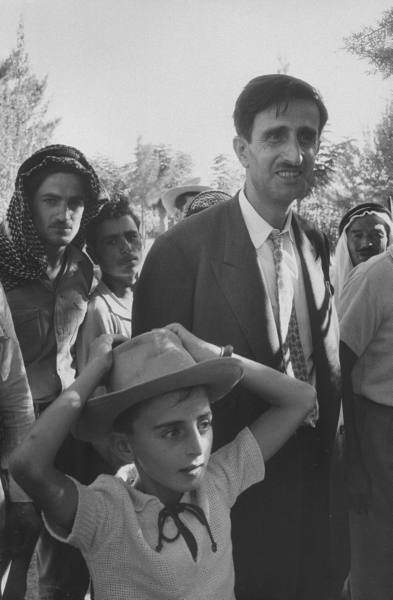
Paul Peter Meouchi

Maronite Patriarch Paul Peter Meouchi in a press conference (Image from the 1958 crisis)

On July 23, Patriarch Rai said something very surprising. I couldn’t find any English version of it, so I’m going to quote him in Arabic.

مرّةً أخرى نطالب، مع اللبنانيين المخلصين، رئيسَ المجلس النيابي ونوّابَ الأمّة الالتزامَ بالدستور الذي يوجبُ على المجلس أن ينتخب فوراً رئيساً للجمهورية، أي أن يلتئم يوميّاً لهذه الغاية ولا يكون إلّا هيئة انتخابية لا اشتراعية، بحكم المواد الدستورية 73 و74 و75 الواضحة وضوح الشمس. وكم يؤسفُنا أن يكون نصابُ الثلثَين، الذي لا يفرضه الدستور، بل توافق عليه اللبنانيون قد تحوّلَ عن غايته. لقد توافقوا على حضور ثلثَي أعضاء المجلس النيابي لانتخاب رئيسٍ للجمهورية بنصف عدد أعضاء المجلس زائد واحد، لكي تُعطى هالةٌ للرئيس المُنتخَب، وطمأنينةٌ للناخبين فأصبح نصابُ الثلثَين وسيلةً لتعطيل الانتخاب وحرمان الدولة من رأسها، من دون أن نعلم حتى متى، لكنّنا نعرفُ أن هذا يشلّ البلاد ويقوّضُ أوصالَها ويحطّم آمالَ الشعب ولا سيّما شبابه وأجياله الطالعة. ونتساءل أيُّ قيمة تبقى لنصاب الثلثَين؟ وهل النصابُ هو بعد في خدمة رئاسة الجمهورية، أم جعلها رهينةً له.

(Link)

What matters most in this paragraph is the part where the Maronite Patriarch says that there is no constitutional basis for the two thirds quorum required to elect the president.

Article 49 of the Lebanese Constitution says that “The President of the Republic shall be elected by secret ballot and by a twothirds majority of the Chamber of Deputies. After a first ballot, an absolute majority shall be sufficient. The President’s term is six years. He may not be re-elected until six years after the expiration of his last mandate. No one may be elected to the Presidency of the Republic unless he fulfills the conditions of eligibility for the Chamber of Deputies.”

There was always a huge debate whether there is actually a quorum regarding the presidential elections in Lebanon, since the Constitution stipulates that a first two-thirds majority is needed to elect a president on the first round, but doesn’t specify if the presence of 2/3 of the MPs is necessary to proceed with election of the president.

So what’s so important about Rai’s opinion on the presidential quorum?

1. It contradicts what his predecessor Sfeir said 7 years ago

August 29, 2007

“There are those who talk of boycotting presidential elections, this is unfair and disastrous for the country,” Sfeir said from Diman on Tuesday. “Elections must proceed in accordance with the Constitution, with two thirds of MPs in the first session, and after that maybe with half-plus-one of MPs,” Sfeir added.

He said if from the first electoral session a simple majority is adopted to elect a president the other side could claim this to be a violation of the Constitution which would prompt them to respond similarly.

“Thus we would get two presidents, two governments, two Lebanons and so on, which would be ruinous for the country as a whole,” Sfeir said.

Sfeir said that in Lebanon a constitutional amendment occurs at every juncture, a harmful process, adding that only the national interest should warrant an amendment.

(Link)

2. It can be bad for Christians

Political sources said Maronite Patriarch Beshara Rai’s recent speech in which he said that the Constitution did not stipulate that a two-thirds quorum was required to elect a president was an attempt by the head of the Maronite Church to break the presidential deadlock. But the sources added that some legal experts had advised Rai to refrain from starting this debate, as electing a president with a quorum of absolute majority would allow Muslim MPs to impose their preferred candidate.

(Link)

The Maronite Patriarch, on July 23, supported an explanation of the Constitution that was contradictory to his predecessor’s interpretation, and that could in the future put Christian interests at risk (In case some of the MPs decide one day to elect a Muslim president it wouldn’t be possible anymore for the other MPs to block the elections even if they had more than 33% of the seats).

Let’s put things in context here. The coalition that is boycotting the presidential election sessions is the March 8 coalition which means that the Patriarch’s speech was mainly targeting Aoun’s camp. So  the patriarch was willing to give up what’s best for Christians and Bkirki’s long-term explanation of a controversial constitutional article in order to put the Free Patriotic Movement in  a weaker position. And the Patriarch’s implicit criticism of Aoun on July 23 was only the first move.

“Humanity is the only thing we share with you. Come let’s talk and reach an understanding on this basis … you rely on the language of arms, terrorism, violence and influence, but we rely on the language of dialogue, understanding and respect for others,” Rai addressed ISIS during a speech Wednesday at a dinner of the Episcopal Media Committee.

(Link)

It’s no secret that the biggest winner with the Islamic State’s rise in Iraq is the Free Patriotic Movement who is gaining from the propaganda more than anyone. The more the Christians will fear the concept of a Sunni Caliphate, the more Aoun would probably win seats in the next parliamentary elections. For a Patriarch who once equated terrorists with atheists, it’s a very weird idea to start talks with the Islamic State and it is probably a (failed) attempt to make the Christian electorate less frightened and thus less friendly to the FPM.

That was move number 2.

July 27, 2014

“March 14 doesn’t want a president aligned with March 8, and March 8 doesn’t want a president aligned with March 14, therefore there is a need to move toward a president who is outside both blocs,” Rai said during Mass in Diman, adding that “there are many Maronite figures who are worthy of the presidency.”

(Link)

To be clear here, “A president who is outside both blocs” ≠ “Michel Aoun”

As a reminder, Bkirki used to support the election of one of the Maronite Four. So in a way,  it’s a 180° change of policy.

That was move number 3. 

July 20, 2014

Maronite Patriarch Beshara Rai Sunday said he wished the term of former President Michel Sleiman was extended until a new president is elected and urged the international community to help the Christians of Iraq.

Addressing Sleiman during a mass to commemorate the anniversary of Mar Charbel, a revered Maronite saint, Rai said he wished the former president would have stayed in office until a new head of state was elected.

“But what to do, those who support void rejected the suggestion,” Rai said in a veiled reference to the Free Patriotic Movement and Hezbollah. “They opted for shutting down the presidential palace after President Sleiman kept it open.”

(Link)

That was move number 4. (Actually it was the first move since it was on July 20, but you get the point)

So to sum things up, the Maronite Patriarch criticized the March 8 alliance 4 times in 1 week, using 4 different maneuvers, and even taking a more radical position than the anti-M8 Patriarch Sfeir.

If the Patriarch is truly siding with M14, it’s a big moral defeat for Aoun and Hezbollah. Let’s wait and see.

70 days since the 25th of May.

Two Months Of Vacuum

Image source: The Daily Star/Mohammad Azakir

Image source: The Daily Star/Mohammad Azakir

There’s nothing more lovable about these presidential elections than rumors. Every day Lebanon wakes up with no president, thousands of rumors see light. Five days ago, news reports suggested that Aoun might be elected as the next president. According to the possible deal,  Aoun leaves office two years after his election (a constitutional amendment shortens his term to two years) and he gets to name the next commander of the army.

Is it a viable deal?

Is it a humiliation for Aoun? Yes, it is. But it’s also a victory. Aoun would be elected as president in a very delicate situation: The Islamic State is making gains in Iraq, Syria is descending further into chaos, and the relative calm in Gaza is coming to end. If Aoun would have been elected in different circumstances, it could have been pure humiliation. Aoun would be forever seen as the man that has given up everything – even the two-thirds of his constitutional term – in order to become president. But in such circumstances, the FPM could be able to picture the deal as a sacrifice rather than a humiliation. Instead of becoming the next Mubarak, Aoun would look like Jesus for the Christian electorate: The politician that committed political suicide and humiliated himself in order to save the country and unify it: Not a political suicide after all. Aoun would reportedly get to nominate the next commander of the army (probably his son-in-law Shamel Roukouz) in exchange of serious efforts to put Hezbollah’s military intervention in Syria under control. For Geagea and the Kataeb, it would mean getting rid of the strongest Christian leader and paving the way to the election of an LF or Kataeb politician after Aoun’s retirement ( humiliating Aoun in the process also seems like a nice goal, although Geagea is still vetoing any scenario involving the election of Aoun). For Hariri, it would mean establishing himself as a strong Prime Minister with legitimacy across the political spectrum. For Hezbollah, it would give the party two years to finish whatever they have to finish in Syria, and for Berri and Jumblatt, it would mean two more years as speaker and kingmaker (The parliamentary elections will likely happen right before Aoun leaves so that the new parliament would elect the new president)

Everybody wins. That’s why the deal is practical. What makes it even more viable is that Annahar reported in May that the March 8 alliance pushed for the deal and Al-Akhbar is now saying that  the Future Movement is pushing for it. The main objection to the deal is coming from the Patriarch  (Link). But no one listens to the Patriarch anyway.

Jumblatt’s moves

Last week, Jumblatt mentioned three important stances: He opposed a governmental agreement between the FPM and the FM on the administrative appointments, he agreed with Berri on the need to stage the presidential elections before the parliamentary elections, and he finally said that he might consider withdrawing Helou’s candidacy if Geagea and Aoun agree to withdraw from the presidential race (Jumblatt later denied that he was willing to give up the Helou candidacy). The importance of these stances lies in Future Movement’s response: It was rather aggressive, accusing Jumblatt of trying to create a rift between the FPM and the FM. After all, the deal on the appointments was struck between Fouad Siniora and Abou Saab: If Siniora is reaching deals with the FPM ministers, that’s reason enough for Jumblatt to panic (Siniora is probably the least expected FM official to deal with the FPM – They wrote a book on his corruption when used to be in office)

Hariri’s comeback

However the most interesting stance in the few days was in Hariri’s latest speech (Link).

The first step in the former PM’s roadmap includes electing a new president and ending the vacuum at the country’s top post.

“This is a national priority,” Hariri considered.

“Secondly, (the roadmap includes) forming a new cabinet that is similar to the current one. The cabinet, alongside the new president, will rule in the coming phase and hold the parliamentary elections,” he added.

“Thirdly, Hizbullah’s withdrawal from the Syrian war. And fourthly, setting up a national comprehensive plan to confront terrorism in all its forms. This is a national duty that is the responsibility of the state, not of any sect or party.”

So what’s missing in Hariri’s roadmap?

Instead of focusing on what Hariri said, focus here on what Hariri didn’t say: Hariri says that Hezbollah should stay away from the Syrian civil war, but fails to mention anything regarding the disarmament of the party. In other words, Hariri is offering Hezbollah a deal where they get to keep the weapons (+ gain national and trans-sectarian legitimacy) in exchange of staying out of the Syrian conflict.

On the bright side, Lebanese parties are finally starting to seriously negotiate an agreement regarding the presidential elections.

Syria is bombing the Bekaa, Israel is shelling the south, we’re not having parliamentary elections anymore, and the parliament is having trouble agreeing on a president even after 2 months of vacancy in Baabda. In a parallel universe, this year could have been 1976 or 1989.

Just kidding, we’re still in the middle ages.

58 days since the 25th of May.

Is Walid Jumblatt Making A Move?

Walid Jumblatt Drinking Matte

Everyone is lazy in Summer, especially Lebanese politicians. In 2012, they were  too lazy to draft a consensual electoral law. In 2013, they were too lazy to form a government. In 2014, they’re too lazy to elect a president. But Walid Jumblatt is making an exception this month with his numerous statements and the PSP’s new maneuvers in the parliament and the cabinet. Take a look at them, one by one.

July 3

Cabinet members told Education Minister Elias Bou Saab that his agreement with the head of the parliamentary Future bloc, former Prime Minister Fouad Siniora, over appointments at the state-run university was not enough and more discussion was required to finalize the issue, sources told The Daily Star.

Ministers allied with MP Walid Jumblatt and the Kataeb Party as well as Tourism Minister Michel Pharaon opposed Bou Saab’s agreement with the March 14 coalition, prompting the Cabinet to postpone debate on the issue to the next session, the sources said.

“The Cabinet discussed the issue of appointing deans at the Lebanese University and employing some members of the teaching board in it. It decided to continue discussing this issue at the next session next Thursday,” Information Minister Ramzi Joreige told reporters after a nearly five-hour session chaired by Prime Minister Tammam Salam at the Grand Serail.

(Link)

[Note: The debate was postponed again during the Thursday session]

July 5

“Speaker Nabih Berri agreed with Progressive Socialist Party leader MP Walid Jumblat that parliamentary elections shouldn’t be staged ahead of the election of a new president.

According to al-Akhbar newspaper published on Saturday, the two officials reject parliamentary elections amid the ongoing situation in the country.

Berri and Jumblat are reportedly preparing the extension of the parliament’s term for two years and a half or even three years.

(Link)

July 15

I don’t mind … withdrawing the nomination of [Democratic Gathering bloc] MP Henry Helou if the others withdraw their candidates to facilitate a settlement that would end the presidential vacuum,” Jumblatt said in remarks published Tuesday.

He urged the various political leaders to put national interests above their own.

“We should seek to fortify the country politically through putting national interests above all else and this translates into speedy concessions by everyone, all the way to the election of a consensus president who can manage the crisis,” Jumblatt told the local daily As-Safir.”

(Link)

I don’t like to speculate, and there’s still nothing (yet) to analyze, but Jumblatt is planning something here (Perhaps giving up the Helou candidacy and the cabinet deadlock in exchange for the extension of the parliament term). As demonstrated by his three stances, he currently holds the keys to the presidential elections, the extension of the parliament term, and the administrative appointments. And he’s going to use these three negotiation cards very carefully in order to take full advantage of his kingmaker position.

Reminder: We still don’t have a president – 52 days since the 25th of May.

Wikileaks And The 2008 Presidential Elections: Behind The Scenes

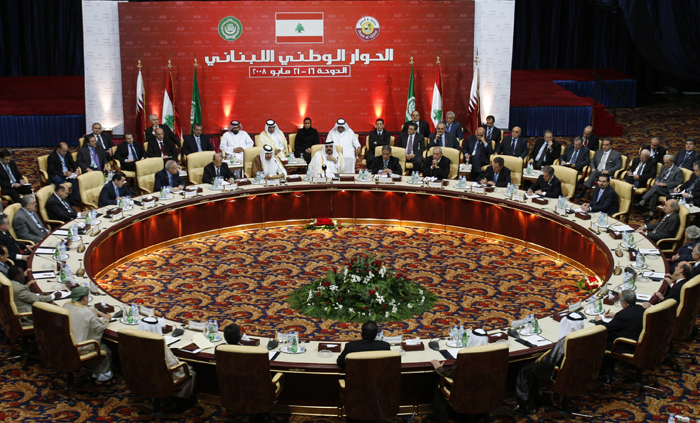
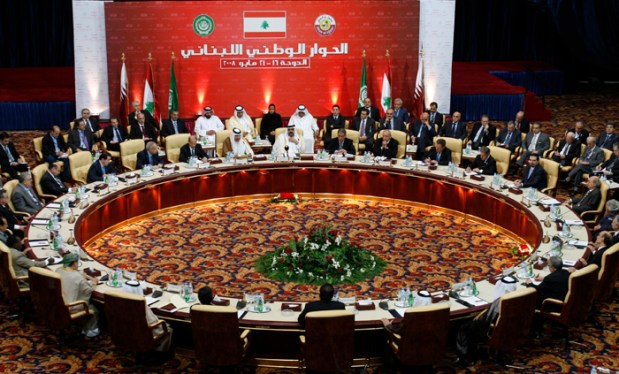
Doha Agreement

There’s not a lot to comment on concerning the presidential elections, so I thought It would be nice if I made a compilation of interesting cables connected to the 2008 presidential elections that I found on Wikileaks. What makes these texts so awesome is that they give hints on everything that happened afterwards: The May 7 events, Walid Jumblatt’s 2009 shift, Safadi and Mikati’s 2011 shift, the Sleiman-Aoun tensions, and even Michel Sleiman’s 2013 rivalry with the March 8 alliance. Elias El Murr sees his next president (Sleiman) as a coward, and Geagea wants to arm the Lebanese Forces.

Enjoy.

Pre-May 7

SAMIR GEAGEA ON AOUN’S ARMS, PRESIDENCY

Date:

2007 September 18, 12:48 (Tuesday)

Canonical ID:

07BEIRUT1435_a

The early preparations for the May 7 events?

2. (S) The Ambassador met privately with Samir Geagea in the Lebanese Forces stronghold of Bsharre, a town in north Lebanon, on 9/17 before a lunch with local officials attended by both. Geagea, with his usual intensity, zeroed in on what he insisted were tangible plans, training, and weapons distribution by pro-Syrian forces for a forcible military take-over of Lebanon. Claiming to have inside sources, Geagea said that Michel Aoun, Hizballah, Marada chief Suleiman Franjieh, Druse opposition figures Talal Arslan and Wi’am Wihab, and other pro-Syrians like Zahar Khatib were preparing their followers for militia-type street action to cut March 14 strongholds off from one another. Many things could spark putting this plan into action, Geagea said, but the election of a March 14 president without the presence of two-thirds of the parliamentary members would be the most likely.

HIZBALLAH ARMS ALLEGEDLY GO TO AOUN VIA FRANJIEH

3. (S) Geagea said that Hizballah is being careful to avoid direct military support to Aoun, which, if discovered, would discredit Aoun with the Christians and Hizballah (with its claims that its arms are directed against Israel only) more generally. Instead, Hizballah is providing arms to Franjieh. Franjieh then opens his arsenals to Aoun, making the arms transfers, if leaked, appear to be one Christian opposition leader helping another with personal protection. One of the main recipient of the arms from Franjieh is MP Selim Aoun, an Aoun bloc MP on Ily Skaff’s Zahleh list. Selim Aoun is charged with distributing the arms to others in the Aoun camp and has established strategically located cells of 50-70 fighters each. Franjieh is providing some of the training facilities and has recently opened Marada offices far beyond its Zghorta headquarters in order to serve as rallying and training points as well as safehouses. Zahar al-Khatib plays a key training role of Aounist fighters, again in order to keep Hizballah somewhat at arms distance from Aoun.

ONE EXAMPLE OF MARCH 8-AOUN PLANS: ISOLATING JUMBLATT’S FIGHTERS

4. (S) When ordered into action, the cells will immediately cut off roads and communication links, to divide and isolate March 14 groups from one another. As only one example in what he said was a long list of plans, Geagea described how Walid Jumblatt’s fighters would be bottled up. In a detailed account, Geagea said that Aoun forces in Kahali (along the Damascus highway, above Aley) have operational plans to join forces with Arslan’s anti-Jumblatt Druse forces in Aley in order to sever the Damascus highway just above Beirut. Hizballah, helped by Selim Aoun’s forces in Zahle, will cut off the Biqa’ valley end of the road. At the same time, Arslan’s people will join with the PFLP-GC and Hizballah to cut the southern highway out of Beirut south of the airport. This will prevent Walid Jumblatt’s Druse fighters from being able to reach Beirut from the Chouf and west Biqa’. Hizballah, while part of this, will attempt to stay in the background, using, for example, orange shirts in the Zahleh area to imply that the Aounists are more numerous than they are.

GEAGEA CLAIMS LAF KNOWS BUT CHOOSES TO DO NOTHING

5. (S) Geagea expressed deep frustration with the Lebanese Armed Forces (LAF). G-2 (army intelligence) chief Georges Khoury is aware of these plans. Not only has Geagea shared his information, but Khoury has his own confirmation. But the LAF is doing nothing. If the LAF would raid a single safehouse of Selim Aoun, for example, it would put a chill through the entire operation. But the LAF has too many Aoun sympathizers within its officer ranks to move against what Aoun is doing. Geagea claimed to have pushed for Zahar Khatib (once close to Jumblatt but now a staunch ally of Syria) to be pulled in for questioning, as a fall-back to questioning Aoun’s followers. But the LAF refuses to move. 6. (S) The Ambassador suggested that the LAF may be looking at weapons distributions by Aoun, Jumblatt, Franjieh, and Geagea himself as all part of the same pattern of increased personal protection and preparedness. Shaking his head, Geagea said that, were the LAF to look into the weapons distribution by Aoun and Franjieh, they would see offensive, not defensive, plans. If the LAF would call in some of Aoun’s weapons distributors, such as Selim Aoun, for questioning, then all of the arms dealing would decrease. Geagea asked for USG pressure on the LAF to respond to the growing threat: “they (the March 8-Aoun forces) already have an army, Hizballah. Now they’re building another army (the alleged arming of Aoun forces). They can’t have the LAF, too.” (We note that Georges Khoury has recently expressed anger and bitterness about March 14 complaints regarding LAF performance; Geagea’s comments are surely among the type that annoy Khoury.)

“He expressed concern, however, about whether Mohammed Safadi and the Tripoli MPs would be with March 14 when needed.”

HARB’S FLIRTATION WITH BERRI: METHOD IN HIS MADNESS

7. (S) The Ambassador asked Geagea about the presidential race. Geagea repeated the familiar two-pronged March 14 strategy: to welcome unconditional dialogue to seek a consensus candidate, while simultaneously shoring up March 14 ranks in preparation of electing Nassib Lahoud with an absolute majority (but without two-thirds quorum) if attempts to find a consensus candidate fail. He expressed concern, however, about whether Mohammed Safadi and the Tripoli MPs would be with March 14 when needed. The Ambassador asked, realistically, who would be acceptable consensus candidates for March 14. Maybe Charles Rizk, Geagea said, but certainly not LAF Commander Michel Sleiman. He expressed some concern about whether Saad Hariri might be willing to do a deal regarding Central Bank Governor Riad Salameh, whom Geagea dismissed as too close to the Syrians. 8. (S) The Ambassador asked whether Geagea thought Boutros Harb’s current, exaggerated courtship of Parliament Speaker Nabih Berri might make Harb acceptable to the March 8-Aoun forces. Unlike Saad Hariri’s concern (reftel), Geagea said that he was not worried about the constant verbal bouquets Harb throws Berri’s way. While he judged Harb to only have 10-15 percent chance of getting Berri on board, it was worth trying. If Harb can be elected as a consensus candidate with two-thirds quorum, then everybody is better off. Harb starts out his presidency with sufficient credibility and backing to work. Nassib Lahoud, on the other hand, is a better candidate, “the best,” Geagea said (reversing his previous ranking, which put Harb above Lahoud). But Nassib, despite his fortitude, would be at a great disadvantage in taking office, if half the country questions his legitimacy and the March 8-Aoun forces militarily take over sections of the country. Better to have Harb, if he can win consensus.

Read the full text here.

LEBANON: MICHEL SLEIMAN ANNOYED AT AOUN

Date:

2007 December 7, 17:09 (Friday)

Canonical ID:

07BEIRUT1928_a

“That man needs to see a doctor!”

4. (C) The Ambassador asked Sleiman about Aoun’s other public pronouncements and demands, such as the proportional split of the cabinet according to parliamentary bloc representation. “That man needs to see a doctor!” Sleiman said, wiggling his forefinger to the side of his head as if indicating mental illness). Aoun claims to want to strengthen the president. But, instead, Aoun wants to deny Sleiman one of the few absolute powers accruing to the president — the ability to co-sign with the PM the cabinet formation decree, naming ministers and portfolios. Sleiman indicated that he would use that signatory authority in order to place some of his own people on the cabinet. He said that, in his view, his ministers should, by swinging between March 14 and March 8 blocs within the cabinet, be able to provide the decisive cabinet votes.

Read the full text here.

LEBANON: JUMBLATT CONCERNED ABOUT UNIIIC DELAYS, SUNNI MILITIAS, AND HIZBALLAH FIBER OPTIC NETWORK

Date:

2008 April 8, 15:59 (Tuesday)

Canonical ID:

08BEIRUT490_a

The Sunnis are arming themselves, the army has no morale, and a  fiber optics network creates problems

8. (S) The second issue Jumblatt raised was Saad’s reported training of Sunni militias in Lebanon (allegedly 15,000 members in Beirut and more in Tripoli). In establishing his own “security agencies” in Beirut and Tripoli, Saad was being badly advised by “some people,” Jumblatt said, such as ISF General Ashraf Rifi. In his meeting with Jumblatt, Hassan admitted having knowledge that members of Saad’s Future Movement were being trained. Hassan reportedly opposed such training, but “people around Saad” (i.e., Rifi) were telling him to go ahead. (Note: The Jordanians have refused to train Internal Security Forces (ISF) members hand-picked and vetted by the Embassy to participate in a DA/ATA-funded Terrorism Crime Scene Investigation program, reportedly because they don’t want to be involved in training “Saad’s militia.” End note.) Jumblatt said Saad’s militia would cause significant damage to March 14, especially because Geagea’s Lebanese Forces and Suleiman Franjieh’s Marada were in line to train their own forces.

9. (C) Meanwhile, the LAF has lost its morale after the January 27 clash with Shia protesters. Jumblatt also decried the casualties inflicted on innocent civilians every time celebratory — and illegal — gunshots are fired following a major political speech.

HIZBALLAH’S FIBER OPTIC NETWORK

10. (C) Jumblatt’s last agenda item was the recent report on Hizballah’s (illegal) fiber optics network in Lebanon. According to fellow Druze and Telecom Minister Marwan Hamadeh, under whose auspices the report had been prepared, the report had not yet officially been presented to PM Siniora, because the “security apparatus” was hesitating to make it official. Jumblatt said that LAF G-2 Intelligence Director George Khoury and ISF General Rifi were talking about coordinating the report with Hizballah security chief Wafiq Safa, who reportedly warned that any action taken against the network would be considered an “act of war.” Jumblatt provided Charge with a copy of the map indicating the location of the network.

11. (C) Jumblatt expressed perplexity at Siniora’s failure to push on the report. (Note: LAF Commander Sleiman asked the same question in his conversation last week with the Charge. End Note.) Defense Minister Elias Murr reportedly was blaming Khoury for the delay.

NEXT STEPS FOR MARCH 14

12. (C) Jumblatt complained that March 14 (in part due to Saad’s absence) did not yet have a unified position on cabinet expansion, nor on how to respond to Speaker Berri’s call for a new National Dialogue. Pulling out a power point presentation prepared by the March 14 Secretariat, he confirmed, however, that the Secretariat was consulting with March 14 leaders on the way forward. One of the Secretariat’s ideas was to hold an international conference SIPDIS for Lebanon, though it was not clear how, where, or who would host such a conference. He agreed with the Charge that March 14 needed to be proactive, especially to combat the “Lebanon fatigue” that was spreading not only in the international community, but also in his hometown Chouf region, where the people he met with were fed up with the situation.

Jumblatt Says Sleiman’s statement is stupid

MICHEL SLEIMAN’S STATEMENT “STUPID”

13. (C) Never one to mince words, Jumblatt called Lebanese Armed Forces (LAF) Commander Michel Sleiman’s recent announcement that he planned to retire August 21, three months before the end of his commission, “stupid.” Jumblatt interpreted the announcement as a warning to both the majority and opposition to hurry up with the election. It’s as if he’s asking us to beg him to stay, Jumblatt said, adding, “He’s a nice guy, but not too bright.” He called the As-Safir newspaper editor who had interviewed Sleiman “a bad egg.”

Read the full text here.

Post-May 7

LEBANON: MINDEF MURR MEETING ON 11 MAY 2008

Date:

2008 May 13, 21:32 (Tuesday)

Canonical ID:

08BEIRUT681_a

“These are Sleiman’s three C’s; caution, coward, collusion.”

2. (C) Charge, accompanied by Defense Attach and PolOff, met with Deputy Prime Minister and Minister of Defense Elias Murr at his residence in Rabieh on Sunday, May 11 at 10:00 a.m.

HIZBALLAH IS JUST OUTSIDE MY WALLS OVER 200 FIGHTERS MOVED IN LAST NIGHT

3. (C) Murr set the stage for our early Sunday morning by telling us about his newest neighbors. Evidently, Free Patriotic Movement (FPM) leader Michel Aoun has received 200 new body guards to protect his residence in Rabieh which is not far from Murr’s home. These fighters had infiltrated into Rabieh on dirt tracks that were not guarded. Now, according to Murr, his nine year old daughter asks him, “who are those dirty men with beards outside?” (Comment. If Murr were really in distress about this new development, it is unlikely that he would still have his two children in the house while his ex-wife was out of the country. End Comment.) 4. (C) In addition to the 200 fighters around his house, Murr told us that he knew of an additional 400 fighters that had infiltrated the Dikwayne areas of the Metn. Murr assessed that all of these forces were being brought in to intimidate Amine Gemayel’s Phalange Party and to prepare to cut the main highway leading north out of Beirut. (Note. Defense Attach noted a significant increase in the number of LAF armored vehicles deployed on this highway on the morning of 11 May. This was the first time Defense Attach has seen armored personnel carriers on this highway in the last two years. End Note.)

ARMY COMMANDER AND INTELLIGENCE CHIEF IN HIZBULLAH’S BACK POCKET

5. (C) Murr, clearly upset with the LAF’s lack of performance, told Charge that Sleiman was a “coward.” Charge recalled USDP Edelman’s question to Sleiman about a lack of LAF action leading to questions of either caution or collusion on the part of the LAF. Murr agreed saying , “these are Sleiman’s three C’s; caution, coward, collusion.” (Note. Former President

Read the full text here.

LEBANON: GEAGEA DROPS BY AGAIN

Date:

2008 May 12, 21:34 (Monday)

Canonical ID:

08BEIRUT669_a

Geagea wants to arm the Lebanese Forces…via Rifi!

10. (C) Geagea noted that the current situation is not terrible, but that March 14 needed something significant to “hold Hizballah back.” He offered, “We could turn a defeat into a victory.” He told the Charge that the focus needs to shift to a more long-term look at how to defeat Hizballah.

11. (C) Privately, Geagea followed up on his previous requests for ammunition for his LF fighters (Ref D), and informed the Charge that he had seen Internal Security Forces (ISF) Director General Ashraf Rifi earlier in the day. Geagea reported that he is working with Rifi on buying ammunition at list price from other countries for himself and Walid Jumblatt. (Comment: We visited Rifi at 1300 today, May 12, and then saw him later in the afternoon at his close friend Saad’s residence, septel. It looks like Geagea is moving along with his preparations to arm his fighters. End comment.) COMMENT

12. (C) Geagea approached us to ask that we urge Saad and Jumblatt to ease their pressure on Siniora to agree to withdraw the Cabinet’s decisions. While Siniora has been resolute in upholding the Cabinet’s decisions, to the point of choosing to resign rather than concede on this issue, it is interesting to note that we were told by several interlocutors that Siniora had walked into the May 5 Cabinet meeting believing the head of airport security Wafiq Chucair should be investigated before a transfer decision was made. Always thinking strategically, Geagea appeared indifferent as to whether the Cabinet withdrew its decisions or not, and was more interested in moving beyond the “issue of the day” so that the bigger problems (Hizballah) can be tackled. 13. (C) We hear Saad Hariri and Geagea when they say that they do not want the Arab League delegation to be in “listening-mode” during their visit. We agree that the delegation can be most helpful if it brings a serious program to table. Geagea and Siniora have started thinking along these lines by suggesting that the Cabinet’s decisions be discussed in a National Dialogue. To make this visit effective, we suggest the delegation draws up a firm program prior to its arrival. End comment. SISON

Read the full text here.

LEBANON: PARLIAMENT ELECTS MICHEL SLEIMAN AS PRESIDENT

Date:

2008 May 26, 14:04 (Monday)

Canonical ID:

08BEIRUT766_a

A Resistance In The Past Tense

10. (C) Most of our interlocutors deemed Sleiman’s speech, which they believed he drafted himself, as “unexpectedly” strong. One contact said Sleiman had been overheard to say “they won’t be expecting this” just moments before entering the plenary. Caretaker FM Tareq Mitri noted as significant Sleiman’s references to the “resistance” in the past tense, as assessment shared by Justice Minister Rizk and UAE Foreign Minister Abdullah bin Zayed al Nahyan, who believed it was a deliberate nuance that merited attention. Seated at dinner with the Charge and Pol/Econ Chief, Internal Security Forces (ISF) General Ashraf Rifi, Surete Generale head Wafiq Jezzini and Lebanese Armed Forces G-2 (military intelligence) Director BG Georges Khoury expressed surprise that Sleiman’s remarks had been as hard-hitting as they were. All three believed he had drafted the text himself.

“This is how it starts. Remember this moment. Walid is moving toward Hizballah.”

15. (C) Following the election, Speaker Berri hosted a dinner in honor of the Qatari Emir at the Biel convention center, where Patchi chocolates were placed at each plate with the words “Thank you Qatar” inscribed on the wrapping. While many of the foreign dignitaries had departed, the Lebanese were out in full force. Druze leader Walid Jumblatt created great consternation at the Charge’s dinner table when he walked across the room to greet FM Mottaki. Surete General Gen. Jezzine told the Charge, “This is how it starts. Remember this moment. Walid is moving toward Hizballah.” Jumblatt later pooh-poohed the encounter, telling the Charge FM Mottaki did not even know who Jumblatt was.

Read the full text here.

A Month Of Vacuum

Baabda Palace Chair

The last time I wrote a blog post, Michel Sleiman was leaving office. One week before that, vacuum was more probable than ever. And here we are, one month after the 25th of May, with no president, with a caretaker cabinet, and with a parliament whose term expires in November. What a lovely way to start the summer. Not much has changed since last month. Michel Aoun is still trying to strike a deal with Hariri – the latest maneuver was his vow to protect him if he’s elected as a president – while Geagea is still maintaining his candidacy in order to block any possible agreement. The PSP – and to a greater extent Nabih Berri and the Kataeb – are enjoying the show, hoping that a centrist closer to one of them might emerge as a consensual candidate.

Welcome to Lebanon, the only republic in the world that – instead of actually electing a president – spends huge amounts of time trying to figure out how a caretaker cabinet should handle the presidential powers.

A new maneuver…

Michel Aoun made a strategic mistake on the 21st of May. While he was trying – in one of his interviews – to convince the Future Movement of electing him as a president, he said something that would probably haunt him for the next few months. “Former Prime Minister Saad Hariri, Sayyed Hassan Nasrallah and I should be a three-sided triangle, and triangles cannot be broken up”. Unless Aoun is a fan of political suicide, he meant that a tripartite alliance between Hezbollah, the FPM, and the FM would be the best for the three. The three parties form a majority in the parliament, wouldn’t compete with each other – they do not appeal to the same religious electorates, and would destroy any rival alliance in most of the mixed districts.

But in Lebanese politics, you don’t mention the names of one Christian and two Muslims in the same sentence. Especially if one of the Muslims is a Shia and the other is Sunni. M14 took advantage of Aoun’s political faux-pas, successfully accusing him of trying to establish a 33% Shia – 33% Sunni – 33% Christian formula instead of the existing 50% Christian – 50% Muslim one. On the eve of the 25th of May, Aoun wasn’t anymore the man who was willing to send the country to vacuum in order to become president: He became the man who was willing to challenge Christian interests and even the very foundation of the Taef regime for personal gains.

…and a fast response

“We extremely regret recent remarks accusing our camp, especially the Shiite duo, of seeking tripartite power-sharing, and someone is trying to say that we want a presidential void because we want to reach tripartite power sharing. […] Years ago, the French were the first party to raise this issue in Tehran. They told the Iranians that the Taef Accord had become outdated and asked them about their opinion regarding tripartite power-sharing. The Iranians had never thought of this matter, but they asked us about it and we said that it is totally out of the question.” Nasrallah clarified.

A media campaign by M14 accusing Aoun of trying to implement a tripartite power sharing agreement would have destroyed Aoun and the FPM in the Christian camp. Hezbollah’s response was fast – it had to be. Nasrallah scored several mini-victories in his speech:

(1) By using the words “Shiite duo” he sent a message to Aoun reminding him that Berri – who was excluded by Aoun in his interview as Aoun only mentioned Nasrallah, Hariri and himself – would not under any circumstances be excluded in any deal regarding the presidential elections.

(2) Nasrallah distanced M8 from this controversy and threw it on the French. You know he succeeded when in the following morning the Kataeb had the “moral Christian political obligation” to ask the French embassy for clarifications.

(3) Nasrallah knows how to use his words. The Iranians had never thought of this matter, but they asked us about it and we said that it is totally out of the question. In a Middle-Eastern context where M14 accuses Hezbollah of following the orders from Iran’s Qassem Suleimani, Hezbollah’s secretary-general gave the impression to the Lebanese public that Hezbollah does not receive orders from Iran and always has the last say in local politics.

So how bad is the vacuum? It’s so bad that on the 22nd of June, we’re still tackling events that happened between the 21st of May and the 6th of June…

When the fear of not broadcasting the world cup makes a nation panic more than the fear of not electing a president, know two things: (1) The Lebanese president is as relevant as a soccer ball, and (2) we have been so accustomed to power vacuum that even a football game is more interesting for a Lebanese than the prospect of electing a new president.

At least in the world cup, a team is expected to win. In the matter of a month. And It’s not a consensual winner.

Reminder: We still don’t have a president – 29 days since the 25th of May.

Lack Of Quorum, And What It Means

Yep, that's Walid Jumblatt

Yep, that’s Walid Jumblatt

Lebanon had two busy weeks. Actually, not so busy, since the parliament failed to convene twice to elect the next Lebanese president. With approximately 57 MPs from M8, 52 from M14, and 19 centrists, things aren’t looking good so far for the primary Lebanese candidates (the Maronite Four, Geagea, Gemayel, Aoun and Frangieh).

Samir Geagea and Michel  Aoun are still hoping to relocate to the Baabda palace. Samir Geagea’s candidacy is currently being overshadowed by Amine Gemayel, who is trying to champion himself as Lebanon’s next consensual candidate by visiting every politician that has ever lived on Lebanese territory (see here, here, here). As predicted on the blog two months earlier, both Michel Aoun and Amine Gemayel are trying to gather parliamentary support by showing themselves as consensual strong candidates close to all parties.

However, with none of the Maronite Four expected to win the presidential elections, M8’s decision to boycott the session and deny quorum confirms one undeniable fact: Walid Jumblatt isn’t trusted by M8.  In fact, there is no way that any candidate might win the elections without the support of 65 MPs. The regular scenario implies that all rounds – if the status-quo stays the same – would bring in the same results of the first one. In other words, no candidate can secure the required 65 votes unless centrists side with M8 or M14. But since the M8 alliance is boycotting the sessions, the only explanation available is that it doesn’t believe that the Jumblatt bloc is going to vote for Helou in the second round of the elections – But instead for a moderate M14 candidate. M14 and Jumblatt together have more than 65 MPs,  and such a move from Jumblatt would  halt any Aoun-Hariri deal (by electing Hariri’s main candidate). After all, Walid Jumblatt isn’t very predictable, and he hasn’t stopped changing sides for the past ten years. And the very fact that he precisely waited for this week to reiterate his support for the Syrian opposition isn’t encouraging M8 to trust him more. Needless to say that Kamal Jumblatt voted against his ally’s candidate, Elias Sarkis in 1970. That’s why it’s not very wise from M8 to let the elections proceed normally – even if it means getting criticized by Bkirki for denying quorum.

Lebanon elects its president once every 6 years, which means that if by any mistake – such as providing quorum and Jumblatt supporting M14’s candidate – an anti-M8 president reaches power, it would be total chaos for the March 8 alliance. They would have lost a key position, and more importantly their main negotiation card for the next phase would turn to ashes. If you think that it’s only about the president, think again. There’s the prime minister that comes with him, the cabinet that rules till November, the electoral law, the parliamentary elections, and a whole new era after that. That’s why, for most politicians, a temporary vacuum –  while waiting for a huge deal covering the rest of the issues – doesn’t look so bad.

While Michel Sleiman is expected to leave office in two weeks, there are two things to keep in mind: Vacuum in the presidency is more probable than ever, and politicians don’t trust one another – What a precious discovery.

14 days till the 25th of May.

When Warlords Become Presidential Candidates

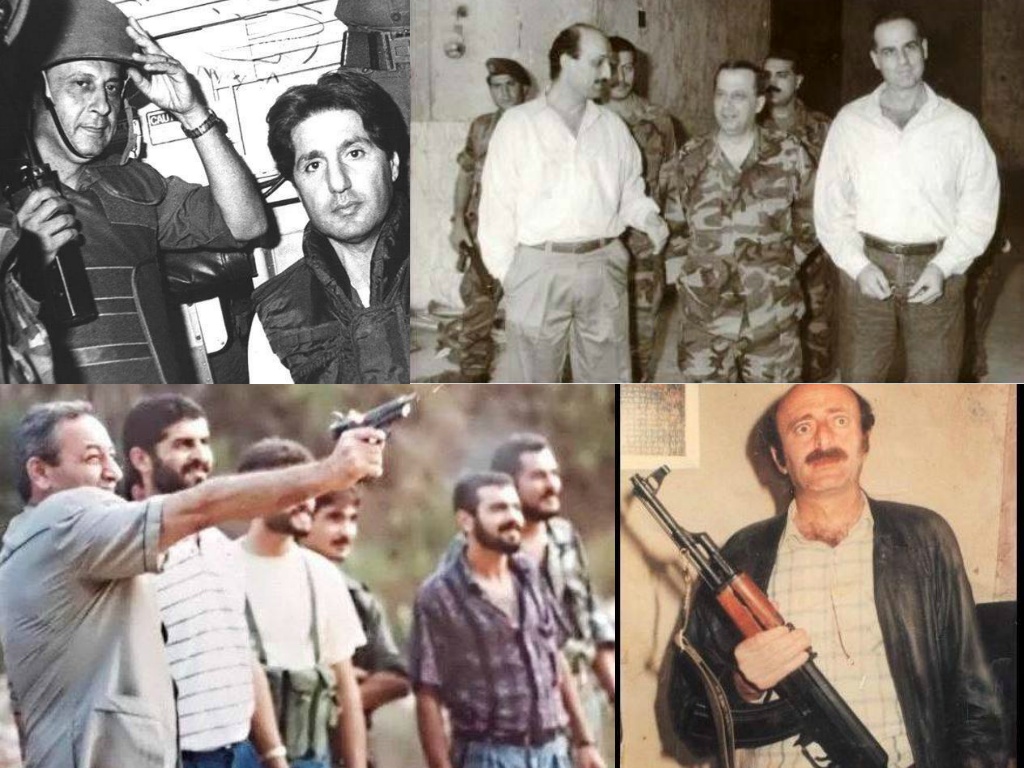
Warlord Collage

Reading and watching Geagea give press statements on his candidacy, I remember the space of terror he used to occupy for myself and my friends in Tariq al-Jadidah. I remember watching mortars explode from a window with a view of the northern coast with my grade school classmates during the Aoun-Geagea war. I remember a year spent in a mountainous Beirut suburb, away from school and from an apartment untenably close to “the Green Line.” Today, I try to imagine what a Palestinian in Lebanon thinks when she sees Geagea on TV confidently lay out why he should be president. Does her heartbreak as one by one, journalists fail to ask Geagea about his involvement in war time massacres? Has her heart been broken too many times in Lebanon, and does she simply change the channel? No one asks Geagea, or his rival Gemeyyel, about their wartime alliances with Israel, or their complicity in the siege of West Beirut, or their wars with rival Maronite leaders that left thousands dead and maimed.

I remember listening to the news with my family on the way to school the day that Gemeyyel left Beirut for Paris—It was a happy day. Years earlier, my five-year-old self had found an unexploded ordinance on our balcony in Tariq al-Jadidah. Amin Gemeyyel was President and he had ordered the army to shell the area. Many refused the order and deserted. I like to think that the unexploded ordinance on our balcony was the result of a soldier consciously removing explosive materials from mortal shells, knowing that his act would save the lives of residents. In reality, however, we have no idea why that shell did not explode. We were just lucky.

We were lucky again when the Lebanese army shelled our neighborhood during Aoun’s “War of Liberation” against the Syrian army, a war which apparently required the Lebanese army to shell heavily congested civilian areas in West Beirut. One particularly terrifying night, as my family was clustered in our foyer where we had been sleeping for days, my mother spread her arms across a wall and kissed it. This is the first memory I have of my parents as ordinary people; fragile, afraid, vulnerable. I have never been as profoundly shaken in my life as I was in that moment, watching my mother hug a concrete wall during a night of heavy shelling.

(Link)

Brainwashing

Goebbels would have been proud. If you repeat a lie often enough, people will believe it, and you will even come to believe it yourself. 

The war is over. The war is over. The war is over. The war is over. The war is over. The war is over. The war is over. The war is over. The war is over. The war is over. The war is over. The war is over. The war is over. The war is over. The war is over. The war is over. The war is over. The war is over. The war is over. The war is over. The war is over. The war is over. The war is over. The war is over. The war is over. The war is over. The war is over. The war is over. The war is over. The war is over. The war is over. The war is over. The war is over. The war is over. The war is over. The war is over. The war is over. The war is over. The war is over. The war is over. The war is over. The war is over. The war is over. The war is over. The war is over. The war is over. The war is over. The war is over. The war is over. The war is over. The war is over. The war is over. The war is over. The war is over. The war is over. The war is over. The war is over. The war is over. The war is over. The war is over. The war is over. The war is over. The war is over. The war is over. The war is over. The war is over. The war is over. The war is over. The war is over. The war is over. The war is over. The war is over. The war is over.

It is ok for the warlords who slaughtered your families, burned your houses, raped your women, enslaved your sons and brothers to fight their wars, and collaborated with the neighbors in the east or/and south to rule you. It is ok for the warlords who slaughtered your families, burned your houses, raped your women, enslaved your sons and brothers to fight their wars, and collaborated with the neighbors in the east or/and south to rule you. It is ok for the warlords who slaughtered your families, burned your houses, raped your women, enslaved your sons and brothers to fight their wars, and collaborated with the neighbors in the east or/and south to rule you. It is ok for the warlords who slaughtered your families, burned your houses, raped your women, enslaved your sons and brothers to fight their wars, and collaborated with the neighbors in the east or/and south to rule you. It is ok for the warlords who slaughtered your families, burned your houses, raped your women, enslaved your sons and brothers to fight their wars, and collaborated with the neighbors in the east or/and south to rule you. It is ok for the warlords who slaughtered your families, burned your houses, raped your women, enslaved your sons and brothers to fight their wars, and collaborated with the neighbors in the east or/and south to rule you. It is ok for the warlords who slaughtered your families, burned your houses, raped your women, enslaved your sons and brothers to fight their wars, and collaborated with the neighbors in the east or/and south to rule you. It is ok for the warlords who slaughtered your families, burned your houses, raped your women, enslaved your sons and brothers to fight their wars, and collaborated with the neighbors in the east or/and south to rule you.

Now repeat, we are a democracy.

Carefully watch as Lebanon’s parliament speaker, a former warlord, calls for presidential elections where three of the four main candidates – also former warlords – are competing with the fourth candidate, who happens to be the grandson of the president that led Lebanon into civil war in 1975. While the parliamentary ‘swing votes’ depend on the opinion of yet another warlord, the next Lebanese president will be the most illegitimate one since 1943: In 2020, he would have been elected by the parliament of 2009 – a parliament that ironically extended its term for failing to vote a law. As the civil war rages in Syria, the presidential elections happen at a time when in the executive power rules no one other than the son of the prime minister whose last irresponsible years in power saw the beginning of what would later become a civil war.

This is Lebanon’s biggest irony. Not the power vacuum, not the civil war, not even this play they call the presidential elections. I tried to find a detail concerning the presidential elections that doesn’t involve civil-war related issues. En vain. The candidates are of the civil war era, their programs are of the civil war era, the parties are of the civil war era, the lawmakers are of the civil war era, the absence of parliamentary elections is of the civil war era, and even our former overlord to the East is in a civil war.

What scares me most isn’t a warlord ruling from Baabda. What scares me is the idea that a young sous-lieutenant would one day manipulate the army as he wishes so that he can become president. What scares me is the idea that a failed president and warlord can become president again. What scares me is the idea that someone can become president for the simple fact that his grandfather was once one. What scares me is the idea that a Medical student who dropped out of medical school in order to commit war massacres might one day become president.

So while you’re happily watching the presidential elections on TV, my dear reader, think of the following: When the war comes – God forbid – do you want a president whose election inspires the medical student to carry his rifle and slaughter you, or save your children in the hospitals?

This isn’t about what these men want. It’s about what their election represents.

When war comes, the Lebanese will cry for peace. But always remember: They were the ones who worshiped the gods of war in times of peace.

30 days till the 25th of May.